

Comprehensive Guide to Website Development Agreements

Website Development Agreements

A well-structured website development agreement is crucial for ensuring that the process of creating or updating a website runs smoothly. This document outlines the responsibilities, expectations, and legal protections for both the client and the developer. In this article, we will delve into the key components of a website development agreement, offering detailed insights and guidance to help you craft a comprehensive and effective contract.

Introduction to Website Development Agreements

A website development agreement is a formal contract between a client and a web developer or development company. This agreement serves as a blueprint for the project, detailing everything from project scope and deliverables to timelines and payment terms. Having a clear and detailed agreement can prevent misunderstandings and disputes, ensuring a successful project outcome.

Key Components of a Website Development Agreement

1. Project Scope and Objectives

Defining the Project Scope is the first step in any website development agreement. This section should outline the purpose of the website, the target audience, and the specific features and functionalities that the site will include. Clear objectives help both parties understand the project’s goals and ensure alignment throughout the development process.

2. Deliverables and Milestones

Detailing Deliverables and Milestones is essential for tracking progress and managing expectations. This section should specify the key deliverables, such as design mockups, development sprints, and final site launch. Additionally, setting milestones with corresponding deadlines helps keep the project on schedule and provides a framework for evaluating progress.

3. Timeline and Deadlines

A well-defined Timeline and Deadlines section is crucial for ensuring that the project stays on track. This part of the agreement should include a detailed project timeline, outlining when each phase of the project will be completed. Clearly defined deadlines help manage client expectations and keep the development team accountable.

4. Payment Terms and Schedule

The Payment Terms and Schedule section outlines how and when payments will be made. This includes the total project cost, payment milestones, and any additional fees that may apply. It’s important to specify the payment method and the terms for late payments to avoid any financial disputes.

5. Intellectual Property Rights

Intellectual Property Rights are a critical aspect of any website development agreement. This section should clearly define who owns the rights to the website’s design, code, and content. Typically, the client retains ownership of the website, while the developer may retain rights to any pre-existing tools or code used in the project.

6. Confidentiality and Non-Disclosure

Ensuring Confidentiality and Non-Disclosure is vital to protect sensitive information. This section should outline the obligations of both parties to maintain the confidentiality of proprietary information and trade secrets. Including a non-disclosure agreement (NDA) within the contract can provide additional legal protection.

7. Warranties and Representations

Warranties and Representations provide assurances regarding the quality and functionality of the website. This section should detail any warranties offered by the developer, such as guarantees for bug-free code or compliance with web standards. Additionally, it should outline the client’s responsibilities, such as providing accurate content and timely feedback.

8. Limitation of Liability

The Limitation of Liability section protects both parties from potential legal claims. This part of the agreement should specify the extent of each party’s liability in the event of a dispute or project failure. Limiting liability can help prevent costly legal battles and provide peace of mind for both the client and the developer.

9. Termination Clause

Including a Termination Clause in the agreement is essential for outlining the conditions under which the contract can be terminated. This section should detail the process for terminating the agreement, including any notice periods and financial implications. A clear termination clause ensures that both parties understand their rights and obligations if the project needs to be halted.

10. Post-Launch Support and Maintenance

Post-Launch Support and Maintenance is an often-overlooked aspect of website development agreements. This section should outline the developer’s responsibilities for ongoing support and maintenance after the website goes live. Specifying the terms for updates, bug fixes, and technical support ensures that the website remains functional and up-to-date.

Best Practices for Drafting a Website Development Agreement

1. Use Clear and Concise Language

When drafting a website development agreement, it’s important to use Clear and Concise Language. Avoid technical jargon and legalese that could confuse the client. Instead, use straightforward language that clearly communicates the terms and conditions of the contract.

2. Be Specific and Detailed

Being Specific and Detailed in the agreement helps prevent misunderstandings and disputes. Include as much detail as possible about the project scope, deliverables, timelines, and payment terms. The more specific the agreement, the easier it is to hold both parties accountable.

3. Include Appendices and Exhibits

Adding Appendices and Exhibits to the agreement can provide additional clarity and detail. These attachments might include project timelines, detailed specifications, design mockups, and payment schedules. Including these documents as part of the contract ensures that all relevant information is easily accessible.

4. Review and Revise Regularly

Regularly Review and Revise the agreement to ensure that it remains up-to-date and relevant. As the project progresses, new details may emerge that need to be incorporated into the contract. Regular reviews help ensure that the agreement accurately reflects the current state of the project.

5. Seek Legal Advice

Finally, it’s always a good idea to Seek Legal Advice when drafting a website development agreement. A lawyer with experience in contract law can provide valuable insights and ensure that the agreement is legally sound. This can help prevent potential legal issues and provide additional protection for both parties.

Conclusion

A well-crafted website development agreement is essential for the success of any web development project. By clearly defining the project scope, deliverables, timelines, payment terms, and other critical aspects, both the client and the developer can ensure a smooth and productive working relationship. Following best practices for drafting and regularly reviewing the agreement can help prevent misunderstandings and disputes, paving the way for a successful project outcome.
iOS 18 Features : What to Expect from Apple’s Latest Update

iOS 18 Features

iOS 18 Features updates are always highly anticipated, and iOS 18 is no exception. Packed with new features and improvements, this latest iteration promises to enhance user experience significantly. In this comprehensive guide, we delve into the most notable features of iOS 18, exploring their potential impact on your daily use of Apple devices.

Revamped User Interface

One of the standout features of iOS 18 is its revamped user interface. Apple has made subtle yet impactful changes to the design, providing a more streamlined and visually appealing experience. The new interface includes:

  • Enhanced Widgets: Widgets are now more interactive and customizable, allowing users to access essential information at a glance without opening apps.
  • Dynamic Wallpapers: These new wallpapers change based on the time of day and user interactions, adding a dynamic touch to the home screen.
  • Redesigned Control Center: The Control Center has been reorganized for easier access to frequently used settings, improving overall navigation.

Advanced Privacy Features

Privacy has always been a cornerstone of Apple’s ecosystem, and iOS 18 takes it a step further with advanced privacy features designed to protect user data. Some of the key enhancements include:

  • App Privacy Report: This new report provides detailed insights into how apps use your data, helping you make more informed decisions about which apps to trust.
  • Mail Privacy Protection: This feature prevents senders from knowing when you open an email, safeguarding your privacy and reducing tracking.
  • Secure Clipboard: The clipboard now automatically deletes copied data after a set period, preventing apps from accessing sensitive information without your knowledge.

Improved Siri Functionality

Siri, Apple’s virtual assistant, has received a significant upgrade in iOS 18. The improvements aim to make Siri more intuitive and responsive, enhancing its usefulness in everyday tasks. Notable updates include:

  • Contextual Awareness: Siri can now understand context better, allowing for more natural and fluid conversations.
  • Offline Capabilities: Certain Siri functions can now be performed without an internet connection, ensuring assistance even in areas with poor connectivity.
  • Expanded Language Support: Siri now supports more languages and dialects, making it accessible to a broader range of users worldwide.

Enhanced Messaging Experience

Messaging is a critical function for any mobile operating system, and iOS 18 brings several enhancements to the messaging experience. These updates aim to make communication more engaging and efficient:

  • Improved Group Chats: New features for group chats include inline replies, better management options, and more expressive reactions.
  • Augmented Reality (AR) Stickers: Users can now create and send AR stickers, adding a fun and immersive element to conversations.
  • Message Scheduling: This feature allows users to schedule messages to be sent at a later time, ensuring timely communication even when busy.

Proactive Health and Fitness Features

With a growing emphasis on health and wellness, iOS 18 introduces proactive health and fitness features designed to help users maintain a healthy lifestyle. Key additions include:

  • Sleep Tracking Enhancements: Improved sleep tracking provides more detailed insights into your sleep patterns, helping you optimize your rest.
  • Mindfulness App: A new app focused on mindfulness and mental well-being, offering guided meditations and relaxation exercises.
  • Activity Sharing: Users can now share their fitness activities with friends and family, fostering a sense of community and motivation.

Advanced Augmented Reality Capabilities

Apple continues to push the boundaries of augmented reality (AR) with iOS 18. The new AR features promise to deliver more immersive and interactive experiences:

  • ARKit 5: The latest version of Apple’s AR development framework includes improvements in motion tracking, face tracking, and spatial audio integration.
  • Live Text in AR: This feature allows users to interact with text in the real world through the camera, making it easier to copy, paste, and translate text on the go.
  • Collaborative AR Experiences: Multiple users can now participate in shared AR experiences, enhancing gaming, education, and collaborative work applications.

Refined Notification System

Notifications are a crucial aspect of mobile usability, and iOS 18 brings a more refined notification system to keep users informed without overwhelming them. The enhancements include:

  • Notification Summaries: Important notifications are grouped into summaries, delivered at scheduled times to avoid constant interruptions.
  • Focus Modes: Customizable focus modes allow users to filter notifications based on their current activity, such as work, sleep, or personal time.
  • Interactive Notifications: Notifications are now more interactive, enabling quick actions directly from the notification banner.

Seamless Ecosystem Integration

Apple’s ecosystem is known for its seamless integration, and iOS 18 further enhances the interconnectedness of Apple devices. Key improvements include:

  • Universal Control: This feature allows users to control multiple Apple devices with a single keyboard and mouse, streamlining workflow across Mac, iPad, and iPhone.
  • Air Play Enhancements: Air Play now supports more devices and offers improved performance, making it easier to share content across your Apple ecosystem.
  • Handoff for Media: Users can seamlessly transfer media playback between devices, ensuring an uninterrupted entertainment experience.

Conclusion

iOS 18 is set to revolutionize the user experience with its plethora of new features and improvements. From enhanced privacy controls and improved Siri functionality to advanced AR capabilities and seamless ecosystem integration, Apple continues to push the envelope in mobile technology. As we await the official release, the anticipation only grows for what promises to be a game-changing update.

Top 8 Software Design Principles

Software Design Principles In the ever- evolving geography of software development, clinging to robust software design principles is consummate for creating justifiable, scalable, and effective operations. These principles serve as foundational guidelines that help inventors navigate the complications of software armature, icing that the final product is both functional and sustainable. In this comprehensive companion, we claw into the key software design principles that every inventor should master.

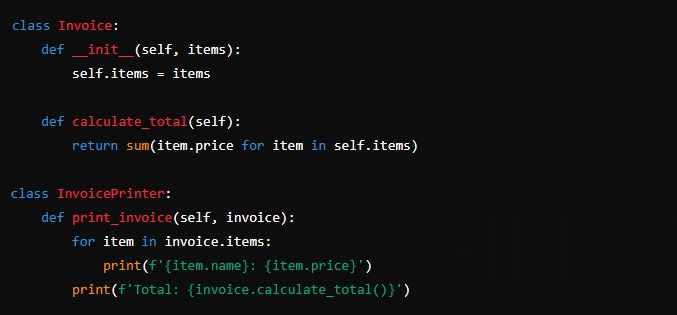
1. Single Responsibility Principle( SRP)

The Single Responsibility Principle dictates that a class or module should have only one reason to change, meaning it should have only one job or responsibility. This principle aims to reduce the complexity and increase the cohesion of the law, making it easier to understand and maintain

Benefits of SRP

Enhanced Readability When a class is responsible for only one task, it becomes easier to understand its purpose and functionality.

Simplified Testing segregating liabilities makes it easier to write unit tests for individual factors. bettered Maintainability Changes in the conditions of one responsibility don’t affect other corridor of the law.

Example

Top 8 Software Design Principles

2. Open/ Closed Principle( OCP)

The Open/ Closed Principle states that software realities( classes, modules, functions ,etc.) should be open for extension but closed for revision. This means you should be suitable to add new functionality without altering being law, therefore reducing the threat of introducing bugs.

Benefits of OCP

Reduced Risk : By not modifying being law, you minimize the chances of introducing new crimes.

Ease of Extension : New features can be added with minimum impact on being functionality. Encapsulation Promotes the use of abstraction to cover the integrity of the codebase.

Example

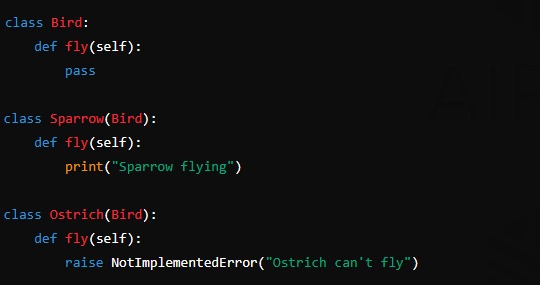
3. Liskov Substitution Principle( LSP)

The Liskov Substitution Principle asserts that objects of a superclass should be interchangeable with objects of a class without affecting the correctness of the program. This principle ensures that a class can stand in for its superclass.

Benefits of LSP

Predictable Behavior : Sorts can be used interchangeably with their base classes, icing thickness.

Advanced Interoperability : Promotes the use of polymorphism and interfaces. Simplified Codebase Reduces complexity by allowing the use of generalized law. illustration

Example

4. Interface Segregation Principle( ISP)

The Interface Segregation Principle advises that no customer should be forced to depend on styles it doesn’t use. rather of having one large, bloated interface, it’s better to have multiple lower, more specific interfaces.

Benefits of ISP

Enhanced Inflexibility : guests depend only on the interfaces that are applicable to them. bettered Maintainability lower interfaces are easier to understand and modify.

Reduced reliance : lower coupling between classes leads to a further modular codebase. illustration

Example

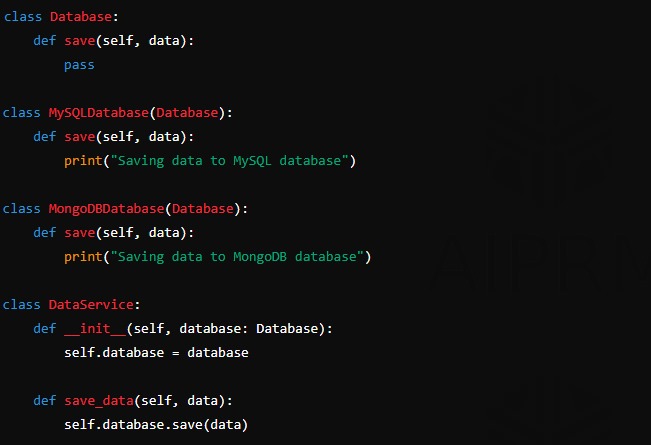
5. reliance Inversion Principle( DIP)

The Dependency Inversion Principle suggests that high- position modules shouldn’t depend on low- position modules. Both should depend on abstractions. also, abstractions shouldn’t depend on details; details should depend on abstractions.

Benefits of DIP

Increased Inflexibility : By depending on abstractions, the law becomes more flexible and easier to refactor.

Advanced Testability : Dependences can be fluently mocked or snubbed in tests.

Enhanced Decoupling : Promotes a more modular and justifiable armature. illustration

Example

6. Do not Repeat Yourself( DRY)

The DRY Principle emphasizes the significance of reducing the reiteration of law. It encourages inventors to abstract common functionality to avoid redundancy and insure that changes are made in a single place.

Benefits of DRY

Reduced Redundancy : Centralizes the operation of common functionality.

Simplified conservation : Changes are made in one place, reducing the threat of inconsistencies.

Enhanced Clarity : Less reiteration leads to cleaner and further accessible law. illustration

Example

7. Keep It Simple, Stupid( KISS)

The KISS Principle advocates for simplicity in design and perpetration. It suggests that utmost systems work stylish if they’re kept simple rather than made complex. Simplicity should be a crucial thing in design.

Benefits of KISS

Ease of Understanding: Simple systems are easier to comprehend and reason about.

Advanced Maintainability : Less complex systems are easier to maintain and extend.

Enhanced trust ability : Smaller complications reduce the eventuality for bugs and crimes. illustration.

Example

8. You Are not Gon na Need It( YAGNI)

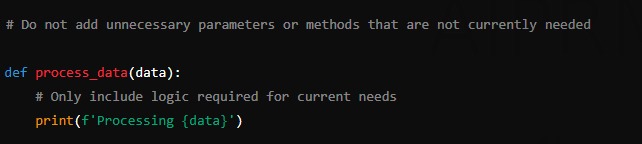
The YAGNI Principle is a mantra of extreme programming that stands for” You Are not Gon na Need It.” It implies that you shouldn’t add functionality until it’s necessary. Over-engineering and unseasonable optimization should be avoided.

Benefits of YAGNI

Reduced Waste : Prevents the addition of gratuitous features. concentrated Development Encourages working on features that deliver immediate value.

Simplified Codebase: Keeps the codebase spare and manageable. illustration

Example

Conclusion

Adhering to solid software design principles is essential for developing robust, scalable, and maintainable software. Principles like SRP, OCP, LSP, ISP, DIP, DRY, KISS, YAGNI, and Composition Over Inheritance provide a framework that guides developers in creating high-quality software systems. By understanding and implementing these principles, development teams can significantly enhance the efficiency and effectiveness of their software development processes.

Top 10 AI Websites

Top 10 AI Websites

Introduction : AI Websites

The rapid advancement of artificial intelligence (AI) has resulted in an explosion of resources available online. Whether you are a seasoned AI professional, a curious beginner, or a business looking to integrate AI solutions, there are countless websites offering valuable insights, tools, and communities. Here, we present the top 10 AI websites that you should explore to stay ahead in the AI landscape.

1. OpenAI

OpenAI is a leading organization in AI research and development. It has made significant contributions to the field, including the development of the well-known GPT-3 language model. The website offers a wealth of resources, including research papers, blog posts, and access to their AI models via the OpenAI API. OpenAI’s commitment to ensuring that artificial general intelligence (AGI) benefits all of humanity is evident in their transparent and collaborative approach.

Key Features:

  • Comprehensive research papers and articles.
  • Access to cutting-edge AI models and APIs.
  • Regular updates on the latest AI advancements.

2. AI Alignment Forum

The AI Alignment Forum is a specialized platform for discussions and resources related to AI alignment and safety. It brings together researchers and practitioners focused on ensuring that AI systems are aligned with human values and can be safely integrated into society. The forum hosts a variety of posts, discussions, and papers that delve deeply into technical and philosophical aspects of AI safety.

Key Features:

  • Expert discussions on AI alignment and safety.
  • Access to a community of AI safety researchers.
  • Extensive library of technical papers and essays.

3. MIT AI Lab

The MIT AI Lab is part of the Massachusetts Institute of Technology and is a hub for groundbreaking AI research. The lab’s website provides access to a plethora of resources, including research publications, news updates, and information about ongoing projects. The MIT AI Lab is known for its interdisciplinary approach, integrating AI with fields like robotics, cognitive science, and linguistics.

Key Features:

  • Access to cutting-edge research publications.
  • Information on interdisciplinary AI projects.
  • Regular news updates on AI advancements.

4. Google AI

Google AI is at the forefront of AI innovation, leveraging its vast resources and expertise to drive advancements in machine learning, natural language processing, and computer vision. The Google AI website offers a wealth of resources, including research papers, open-source tools, and educational materials. Google’s AI initiatives, such as TensorFlow and AI for Social Good, highlight their commitment to making AI accessible and beneficial to all.

Key Features:

  • Extensive library of research papers and articles.
  • Access to open-source tools like TensorFlow.
  • Educational resources and tutorials.

5. Towards Data Science

Towards Data Science is a popular platform on Medium that publishes articles and tutorials on AI, machine learning, and data science. It features contributions from experts and enthusiasts alike, providing a diverse range of perspectives and insights. The website covers a wide array of topics, from beginner guides to advanced techniques, making it an invaluable resource for anyone interested in AI and data science.

Key Features:

  • Wide range of articles and tutorials.
  • Contributions from a diverse community of experts.
  • Topics covering both beginner and advanced levels.

6. DeepMind

DeepMind is a pioneer in AI research, known for its work on reinforcement learning and neural networks. Acquired by Google, DeepMind’s website showcases their groundbreaking research, including their famous AlphaGo project. The site offers access to research papers, news updates, and information about their AI initiatives aimed at solving complex real-world problems.

Key Features:

  • Access to pioneering research papers.
  • Information on high-profile AI projects like AlphaGo.
  • News updates on AI research and developments.

7. Kaggle

Kaggle is the world’s largest community of data scientists and machine learning practitioners. It offers a platform for competitions, datasets, and notebooks that enable users to practice and hone their skills. Kaggle’s community-driven approach fosters collaboration and innovation, making it an essential resource for anyone looking to deepen their understanding of AI and data science.

Key Features:

  • Access to a vast repository of datasets.
  • Interactive coding notebooks and tutorials.
  • Community-driven competitions and discussions.

8. AI Trends

AI Trends is a leading source of news and information on AI and machine learning. The website covers a broad spectrum of AI-related topics, including industry trends, research breakthroughs, and case studies. AI Trends is an excellent resource for staying up-to-date with the latest developments in the AI world and understanding how AI is being applied across various industries.

Key Features:

  • Comprehensive news coverage on AI and machine learning.
  • In-depth articles and case studies.
  • Insights into industry trends and developments.

9. The AI Report

The AI Report is a specialized platform that offers in-depth analysis and insights into AI technologies and their impact on society. The website features expert commentary, research reports, and interviews with leading AI professionals. The AI Report is designed to provide a deeper understanding of how AI is shaping the future and the challenges and opportunities it presents.

Key Features:

  • In-depth analysis and expert commentary.
  • Comprehensive research reports.
  • Interviews with AI professionals.

10. Coursera AI Courses

Coursera offers a wide range of online courses on AI, machine learning, and data science, created by top universities and companies. These courses provide high-quality education and practical skills that are essential for anyone looking to pursue a career in AI. The Coursera platform is known for its flexibility, allowing learners to study at their own pace and earn certifications upon completion.

Key Features:

  • High-quality courses from top universities and companies.
  • Flexible learning schedules and certification.
  • Wide range of topics and specializations.

Conclusion

These top 10 AI websites provide a comprehensive suite of resources for anyone interested in artificial intelligence. From cutting-edge research and tools to educational materials and community forums, these websites are invaluable for staying informed and advancing your knowledge in the rapidly evolving field of AI.

How to Password Protect a File on Mac

How to Password Protect a File on Mac

Introduction : Password Protect a File on Mac

Password Protect a File on Mac. In today’s digital age, the security of your personal and professional data is paramount. Whether you are safeguarding sensitive documents, protecting personal photos, or ensuring the confidentiality of business files, password protection on a Mac is an essential step. This comprehensive guide will walk you through the various methods available to password protect your files on a Mac, ensuring your information remains secure.

Method 1: Password Protecting with Disk Utility

Disk Utility is a powerful tool included with macOS that allows you to create encrypted disk images. Here’s how to use it to password protect your files:

  1. Open Disk Utility: You can find it by navigating to Applications > Utilities > Disk Utility.
  2. Create a New Disk Image: Click on File > New Image > Image from Folder.
  3. Select the Folder: Choose the folder you wish to password protect and click Open.
  4. Set the Encryption: In the window that appears, select 128-bit AES encryption (sufficient for most uses) or 256-bit AES encryption (more secure but slower).
  5. Choose a Password: Enter a strong password in the pop-up window. Ensure you remember this password, as it cannot be recovered if forgotten.
  6. Save the Disk Image: Choose the location where you want to save the encrypted disk image and click Save.

Now, you can delete the original folder, leaving only the password-protected disk image. To access your files, simply double-click the disk image and enter your password.

Method 2: Password Protecting with Third-Party Software

Several third-party applications provide robust file encryption and password protection features. Some popular options include:

1. VeraCrypt:

  • Download and Install: Visit the VeraCrypt website and download the software.
  • Create a Volume: Open VeraCrypt and click Create Volume. Follow the prompts to create an encrypted file container.
  • Select Encryption Options: Choose the type of encryption and hashing algorithm you prefer.
  • Set a Password: Enter a strong password for the encrypted volume.
  • Save and Mount: Save the encrypted volume to your desired location. To access your files, mount the volume in VeraCrypt and enter your password.

2. Hider 2:

  • Download and Install: Obtain Hider 2 from the MacPaw website.
  • Add Files: Open Hider 2 and add the files or folders you wish to encrypt.
  • Set a Password: Assign a password to the application. Each time you open Hider 2, you’ll need to enter this password to access your hidden files.

Method 3: Password Protecting PDF Files

If you need to protect PDF files, macOS Preview offers a simple way to do so:

  1. Open the PDF in Preview: Navigate to the PDF file, right-click, and select Open with > Preview.
  2. Export the PDF: Click File > Export.
  3. Enable Encryption: In the export window, check the Encrypt box.
  4. Set a Password: Enter a strong password and confirm it.
  5. Save the PDF: Choose your save location and click Save.

The PDF file is now password protected. Each time you or anyone else tries to open it, the password will be required.

Tips for Creating Strong Passwords

Creating a strong password is crucial for ensuring the security of your files. Here are some tips to keep in mind:

  • Length: Aim for at least 12 characters.
  • Complexity: Use a mix of uppercase and lowercase letters, numbers, and special characters.
  • Unpredictability: Avoid common words, phrases, or easily guessable information like birthdays or names.
  • Uniqueness: Use a different password for each file or service to minimize risk.

Conclusion

Password protecting your files on a Mac is a straightforward process that significantly enhances your data security. Whether you prefer using built-in macOS tools like Disk Utility and Preview, leveraging Terminal for command-line encryption, or opting for third-party applications like VeraCrypt and Hider 2, there are multiple methods available to suit your needs.

Casino Games App Developer: Crafting Winning Experiences

Casino Games App Developer

In today’s digital age, the casino games app developer plays a crucial role in the entertainment industry. These skilled professionals are the architects behind engaging, thrilling, and visually stunning casino games that captivate millions of players worldwide. As the demand for mobile gaming continues to soar, the significance of innovative and immersive casino game apps cannot be overstated. This article delves into the multifaceted world of casino games app development, exploring the essential skills, technologies, and trends that define this dynamic field.

Understanding the Role of a Casino Games App Developer

A casino games app developer is responsible for designing, coding, testing, and maintaining mobile applications that replicate the excitement of traditional casino games. These games include classics like poker, blackjack, roulette, and slots, as well as modern variations and hybrid games that offer unique gameplay experiences. The goal is to create apps that are not only entertaining but also secure, fair, and user-friendly.

Key Skills and Competencies

To excel as a casino games app developer, one must possess a diverse set of skills and competencies:

  • Programming Proficiency: Mastery of programming languages such as C++, Java, Swift, and JavaScript is essential. These languages are used to develop the core functionalities of the app.
  • Understanding of Game Mechanics: A deep knowledge of game design principles, including player psychology, reward systems, and game balancing, is crucial.
  • Graphic Design: Proficiency in graphic design tools like Adobe Photoshop, Illustrator, and Unity3D ensures the creation of visually appealing and engaging game environments.
  • Mathematics and Probability: A strong grasp of mathematical concepts and probability theory is necessary to design fair and unpredictable games.
  • Cybersecurity: Implementing robust security measures to protect user data and prevent fraud is a fundamental aspect of casino game development.

Technologies Shaping Casino Game Development

The technological landscape of casino game development is ever-evolving. Developers leverage cutting-edge technologies to enhance gameplay, improve user experience, and stay ahead of the competition.

Artificial Intelligence and Machine Learning

Artificial Intelligence (AI) and Machine Learning (ML) are revolutionizing the way casino games are developed and played. These technologies enable the creation of intelligent opponents, personalized gaming experiences, and sophisticated fraud detection systems. AI-driven analytics also help developers understand player behavior, allowing for the optimization of game design and marketing strategies.

Virtual Reality and Augmented Reality

Virtual Reality (VR) and Augmented Reality (AR) are transforming the casino gaming experience by providing immersive and interactive environments. VR enables players to step into a virtual casino, interact with other players, and experience games in a lifelike setting. AR enhances traditional gameplay by overlaying digital elements onto the real world, offering innovative game mechanics and increased engagement.

Blockchain Technology

Blockchain technology is gaining traction in the casino gaming industry due to its potential to ensure transparency, fairness, and security. Blockchain can be used to create provably fair games, where the randomness and outcomes can be independently verified by players. Additionally, blockchain-based cryptocurrencies offer secure and anonymous payment options, enhancing the overall user experience.

The Development Process

The development of a casino game app involves several stages, each requiring meticulous planning and execution.

Conceptualization and Planning

The first step is to conceptualize the game, defining its core mechanics, features, and target audience. This stage involves market research to identify trends, player preferences, and potential competitors. A detailed project plan is created, outlining the development timeline, resource allocation, and budget.

Design and Prototyping

In this stage, developers create wireframes and prototypes to visualize the game’s layout and functionality. Graphic designers work on creating the visual elements, including characters, backgrounds, and animations. Prototypes are tested to gather feedback and make necessary adjustments before proceeding to full-scale development.

Coding and Development

During the coding phase, developers write the code that brings the game to life. This includes implementing game logic, user interfaces, and backend systems. Collaboration between developers, designers, and testers is crucial to ensure a seamless and bug-free gaming experience.

Testing and Quality Assurance

Comprehensive testing is conducted to identify and resolve any issues or bugs. Quality assurance ensures that the game meets industry standards and provides a smooth and enjoyable experience for players.

Deployment and Maintenance

Once the game is fully developed and tested, it is deployed to app stores such as Google Play and the Apple App Store. Ongoing maintenance and updates are essential to address any emerging issues, introduce new features, and keep the game compatible with the latest devices and operating systems.

Trends in Casino Game Development

The casino gaming industry is continually evolving, with new trends shaping the future of game development.

Social Gaming

Social gaming elements, such as leaderboards, tournaments, and multiplayer modes, are becoming increasingly popular. These features enhance player engagement by fostering a sense of community and competition.

Mobile-First Approach

With the majority of players accessing casino games via mobile devices, developers are adopting a mobile-first approach. This involves designing games specifically for mobile platforms, ensuring optimized performance and user experience.

Live Dealer Games

Live dealer games, which feature real dealers conducting games in real-time via video streaming, are gaining traction. These games offer an authentic casino experience and appeal to players seeking a more interactive and social gaming environment.

Cross-Platform Compatibility

Ensuring that games are compatible across multiple platforms, including smartphones, tablets, and desktops, is becoming a standard practice. Cross-platform compatibility allows players to enjoy a seamless gaming experience across different devices.

Conclusion

The role of a casino games app developer is both challenging and rewarding, requiring a blend of technical expertise, creativity, and a deep understanding of player psychology. As technology continues to advance, the opportunities for innovation in casino game development are boundless. By staying abreast of industry trends and leveraging the latest technologies, developers can create captivating and immersive gaming experiences that keep players coming back for more.

Advantages and Disadvantages of Using JavaScript and TypeScript

JavaScript VS TypeScript

In the world of web development, JavaScript and TypeScript are two popular programming languages that play pivotal roles. JavaScript, known for its flexibility and widespread use, has been a staple in web development for decades. On the other hand, TypeScript, a superset of JavaScript, offers additional features such as static typing and enhanced tooling support. In this article, we’ll explore the advantages and disadvantages of using both JavaScript and TypeScript in web development.

Advantages of Using JavaScript

Flexibility and Versatility

JavaScript is renowned for its flexibility, allowing developers to create dynamic and interactive web experiences. Its versatility enables the development of various applications, ranging from simple scripts to complex web applications.

Large Ecosystem of Libraries and Frameworks

With a vast ecosystem of libraries and frameworks such as React, Angular, and Vue.js, JavaScript empowers developers to leverage pre-built solutions and streamline development processes. These libraries and frameworks provide tools for building scalable and maintainable web applications.

JavaScript Vs TypeScript

Client-side Interactivity

JavaScript enables client-side interactivity, allowing developers to create responsive and interactive user interfaces. With features like event handling and DOM manipulation, JavaScript enhances the user experience by enabling dynamic content updates without requiring page reloads.

Enhanced User Experience

By facilitating dynamic content rendering and interactive features, JavaScript contributes to a more engaging user experience. From animated transitions to real-time updates, JavaScript empowers developers to create immersive web applications that captivate users.

Faster Load Times

JavaScript’s ability to execute code on the client-side reduces server load and improves page load times. By offloading computation to the client’s browser, JavaScript enables faster rendering of web pages, resulting in a smoother user experience.

Disadvantages of Using JavaScript

Browser Compatibility Issues

One of the primary challenges of JavaScript development is browser compatibility. Different browsers may interpret JavaScript code differently, leading to inconsistencies and compatibility issues. Developers often need to test and debug their code across multiple browsers to ensure consistent behavior.

Lack of Type Safety

JavaScript is a dynamically typed language, meaning variable types are determined at runtime. This lack of type safety can lead to runtime errors and unexpected behavior, especially in large codebases. Without compile-time type checking, developers may encounter difficulties in detecting and preventing type-related issues.

Callback Hell

Asynchronous programming in JavaScript often leads to callback hell, a situation where nested callbacks result in convoluted and hard-to-maintain code. Callback hell can make code difficult to read, debug, and reason about, posing challenges for developers, especially when handling asynchronous operations.

Debugging Challenges

Debugging JavaScript code can be challenging due to its dynamic nature and the presence of browser-specific behaviors. Identifying and fixing bugs may require extensive testing and debugging tools, adding complexity to the development process.

Security Vulnerabilities

JavaScript’s client-side execution exposes it to various security vulnerabilities, such as cross-site scripting (XSS) and injection attacks. Developers need to implement proper security measures, such as input validation and output encoding, to mitigate these risks.

Introduction to TypeScript

What is TypeScript?

TypeScript is a statically typed superset of JavaScript that compiles to plain JavaScript code. It introduces static typing, allowing developers to define variable types at compile time and catch type-related errors early in the development process.

Relationship with JavaScript

TypeScript builds on top of JavaScript, maintaining compatibility with existing JavaScript codebases. Developers can gradually adopt TypeScript in their projects, leveraging its features while still benefiting from the extensive JavaScript ecosystem.

Advantages of TypeScript over JavaScript

Advantages of Using TypeScript

Static Typing

TypeScript’s static typing enables developers to declare variable types and perform type checking at compile time. This helps catch type-related errors early in the development process, improving code quality and reliability.

Enhanced Code Quality

By enforcing strict typing and providing advanced language features, TypeScript promotes cleaner and more maintainable code. Features such as interfaces and generics enable developers to express their intent more clearly, leading to higher code quality and better documentation.

JavaScript vs TypeScript

Improved Scalability and Maintainability

TypeScript’s static typing and tooling support facilitate the development of large-scale applications. With features like type inference and code navigation, developers can easily navigate and refactor codebases, making them more scalable and maintainable.

Early Error Detection

TypeScript’s static type system detects errors at compile time, allowing developers to catch and fix issues before runtime. This reduces the likelihood of bugs and runtime errors, leading to more robust and reliable applications.

Better Tooling Support

TypeScript’s rich ecosystem of tools and IDE support enhances developer productivity and collaboration. With features like code completion, refactoring, and integrated debugging, TypeScript provides a more seamless development experience compared to traditional JavaScript.

Disadvantages of Using TypeScript

Learning Curve

Adopting TypeScript may require developers to learn new syntax and concepts, especially if they are accustomed to dynamically typed languages like JavaScript. The learning curve associated with TypeScript can pose challenges for developers, particularly those new to statically typed languages.

Compilation Overhead

TypeScript code must be transpiled to JavaScript before execution, introducing an additional compilation step in the development process. While this compilation overhead is minimal for small projects, it can become noticeable in larger codebases, impacting development time and workflow.

Limited Ecosystem Compared to JavaScript

Despite its growing popularity, TypeScript’s ecosystem still lags behind JavaScript in terms of libraries and frameworks. While many JavaScript libraries are compatible with TypeScript, developers may encounter limitations or integration challenges when using TypeScript in certain contexts.

Integration Issues with Existing JavaScript Code

Migrating existing JavaScript code to TypeScript can pose integration challenges, especially in large and legacy codebases. Developers may need to refactor code, address type inconsistencies, and resolve compatibility issues to ensure smooth integration with TypeScript.

Need for Regular Updates

TypeScript is continuously evolving, with regular updates and new features being introduced by the development team. While these updates bring improvements and enhancements, they also require developers to stay updated and adapt their codebases accordingly.

Comparison between JavaScript and TypeScript

Syntax and Features

JavaScript and TypeScript share similar syntax, with TypeScript introducing additional features such as static typing and type annotations. While JavaScript offers more flexibility and simplicity, TypeScript provides stronger type checking and tooling support.

Performance

Both JavaScript and TypeScript ultimately compile to JavaScript code and run on the same JavaScript engine. Therefore, there is no significant performance difference between the two languages at runtime. However, TypeScript’s static typing can lead to optimizations and improved code quality, potentially resulting in better runtime performance.

JavaScript and TypeScript

Community Support

JavaScript boasts a vast and mature ecosystem with extensive community support, encompassing libraries, frameworks, and resources. While TypeScript’s community is smaller in comparison, it is rapidly growing, with an active developer community and increasing adoption in industry and open-source projects.

Use Cases

JavaScript remains the go-to language for web development, offering unparalleled flexibility and compatibility. It is well-suited for a wide range of applications, from simple websites to complex web applications. TypeScript, on the other hand, shines in large-scale projects where type safety, scalability, and maintainability are paramount.

Conclusion

In conclusion, both JavaScript and TypeScript offer unique advantages and disadvantages in the realm of web development. JavaScript’s flexibility and ubiquity make it an essential tool for building interactive and dynamic web applications. However, TypeScript introduces static typing and advanced tooling support, enhancing code quality and developer productivity. When choosing between JavaScript and TypeScript, developers should consider project requirements, team expertise, and long-term maintainability to make an informed decision.

FAQs

  1. Is TypeScript better than JavaScript?

Ans. TypeScript offers additional features such as static typing and enhanced tooling support, which can lead to improved code quality and developer productivity in certain contexts. However, the choice between TypeScript and JavaScript depends on project requirements and developer preferences.

  1. Can TypeScript be used instead of JavaScript?

Ans. Yes, TypeScript is a superset of JavaScript, meaning any valid JavaScript code is also valid TypeScript code. Developers can gradually adopt TypeScript in their projects and leverage its features while still benefiting from the extensive JavaScript ecosystem.

  1. What are some popular JavaScript libraries and frameworks?

Ans. Some popular JavaScript libraries and frameworks include React, Angular, Vue.js, jQuery, and Express.js. These libraries and frameworks provide tools for building scalable and maintainable web applications.

  1. How does TypeScript improve code quality?

Ans. TypeScript introduces static typing, allowing developers to declare variable types and perform type checking at compile time. This helps catch type-related errors early in the development process, leading to cleaner and more maintainable code.

  1. Are there any security concerns specific to JavaScript or TypeScript?

Ans. JavaScript’s client-side execution exposes it to various security vulnerabilities, such as cross-site scripting (XSS) and injection attacks. While TypeScript itself does not introduce additional security risks, developers should follow best practices and implement proper security measures to mitigate risks in both languages.

Our website has been reviewed and approved by uklistings.org – Greater London Website Directory

How to Fix Projector Screen Wrinkles: Your Ultimate Guide

Projector Screen Wrinkles

Introduction: Projector Screen Wrinkles

Projector screens are fantastic for creating a cinematic experience in your home or office. However, wrinkles on the screen can significantly degrade the image quality, affecting your viewing pleasure. In this guide, we’ll delve into effective methods to eliminate those pesky wrinkles and restore your screen to its pristine condition.

Identifying the Problem

Wrinkles on a projector screen are not only unsightly but also interfere with the clarity of the projected image. Before diving into solutions, it’s essential to understand why these wrinkles occur. Typically, they result from improper storage, transportation, or installation of the screen.

Projector screens are often made of materials like vinyl or fabric, which can easily crease if mishandled. Additionally, environmental factors such as humidity can exacerbate the issue.

Inspecting Your Screen

Before attempting to fix the wrinkles, carefully inspect your projector screen. Identify the severity of the wrinkles and whether they are minor creases or significant folds. This inspection will help determine the appropriate method for addressing the problem.

Gathering Necessary Supplies

To effectively remove wrinkles from your projector screen, you’ll need a few basic supplies. These may include a handheld steamer, a clean microfiber cloth, mild detergent, a spray bottle filled with water, and masking tape.

Preparation and Safety Measures

Safety should always come first when working with electronic devices and accessories. Before fixing the wrinkles on your projector screen, ensure that the projector is turned off and unplugged from the power source. This precaution prevents any potential accidents or damage to the equipment.

How to Fix Projector Screen Wrinkles

1. Using a Handheld Steamer

Using a handheld steamer is one of the most effective methods for removing wrinkles from a projector screen. Fill the steamer with water, then gently run it over the wrinkled areas, holding it a few inches away from the screen surface. The steam will relax the fabric, causing the wrinkles to gradually disappear.

2. Tensioning the Screen

Tensioning involves stretching the screen to eliminate wrinkles and create a smooth surface for projection. Start by removing the screen from its mounting brackets, then gently pull it taut from all sides. Use masking tape to secure the edges in place, maintaining the tension until the wrinkles vanish.

3. Ironing with a Cloth Barrier

If wrinkles persist after steaming or tensioning, you can use a low-heat iron to smoothen the screen. However, it’s crucial to place a clean cloth or pillowcase between the iron and the screen to prevent direct contact. Glide the iron over the cloth-covered surface, applying gentle pressure until the wrinkles flatten out.

FAQs

  • 1 How do I prevent wrinkles on my projector screen?

Ans. To prevent wrinkles, store the screen properly in a dry, cool place, avoiding any folding or bending. Additionally, handle the screen with care during installation and avoid exposing it to extreme temperatures or humidity.

  • 2 Can I use a hairdryer to remove wrinkles from the projector screen?

Ans. While a hairdryer may provide temporary relief, it’s not recommended for long-term wrinkle removal. The heat from a hairdryer can damage the screen material and potentially cause more wrinkles.

  • 3 Is it safe to wash my projector screen?

Ans. Yes, you can wash your projector screen, but it’s essential to follow the manufacturer’s instructions carefully. Use a mild detergent diluted in water and a soft cloth to gently wipe the surface. Avoid scrubbing or using harsh chemicals, as they can damage the screen.

  • 4 Can I fix wrinkles on a motorized projector screen?

Ans. Yes, you can fix wrinkles on a motorized projector screen using similar methods mentioned earlier. However, exercise caution when working with motorized screens to avoid damaging the internal components.

  • 5 How often should I clean my projector screen?

Ans. It’s advisable to clean your projector screen periodically to maintain optimal image quality. Depending on usage and environmental factors, aim to clean the screen at least once every few months.

        Q. 6 What should I do if the wrinkles persist despite my efforts?

Ans. If the wrinkles persist after attempting various methods, consider consulting a professional technician or contacting the manufacturer for further assistance.

Conclusion

A wrinkled projector screen can detract from the immersive viewing experience that projectors offer. By following the methods outlined in this guide, you can effectively eliminate wrinkles and restore your screen to its original smoothness. Remember to handle the screen with care and follow safety precautions to avoid causing any damage during the process.

Differences Between Java and C++: A Comprehensive Comparison

Differences Between Java and C++

Introduction : Differences Between Java and C++

In the vast landscape of programming languages, Java and C++ stand out as two powerful contenders. While both are widely used for various applications, they possess distinct characteristics that cater to different programming paradigms and development scenarios. Understanding the dissimilarities between Java and C++ is essential for developers aiming to leverage their strengths effectively. In this article, we delve deep into the differences between Java and C++, shedding light on their syntax, features, performance, and more.

Syntax and Structure

Java and C++ differ significantly in their syntax and structure, impacting how developers write and organize code.

Java, being a high-level, object-oriented language, boasts a simpler syntax compared to C++. Its syntax is designed to be more human-readable and less prone to errors, making it an ideal choice for large-scale projects requiring maintainability and scalability.

C++, on the other hand, is a multi-paradigm language that combines procedural, object-oriented, and generic programming features. Its syntax is more complex than Java, offering developers greater control over memory management and system resources. However, this complexity can also introduce a steeper learning curve, especially for novice programmers.

Memory Management

Memory management is a critical aspect where Java and C++ diverge significantly.

In Java, memory management is handled automatically by the Java Virtual Machine (JVM) through garbage collection. Developers need not worry about deallocating memory manually, reducing the risk of memory leaks and segmentation faults.

In contrast, C++ requires manual memory management, giving developers explicit control over memory allocation and deallocation. While this level of control can lead to more efficient memory usage, it also increases the likelihood of bugs such as memory leaks and dangling pointers if not handled properly.

Performance and Efficiency

When it comes to performance and efficiency, Java and C++ exhibit varying characteristics based on their design principles and execution environments.

Java, being an interpreted language, relies on the JVM to execute code, resulting in slightly lower performance compared to C++, which is compiled directly into machine code. However, advancements in just-in-time (JIT) compilation and runtime optimizations have significantly improved Java’s performance over the years, narrowing the gap between the two languages.

C++, being a compiled language, offers superior performance in scenarios where speed is paramount, such as system programming and game development. Its direct interaction with hardware and minimal runtime overhead make it a preferred choice for performance-critical applications.

Platform Independence

Java is renowned for its platform independence, thanks to its “write once, run anywhere” mantra. Java programs can be executed on any platform with a compatible JVM, providing unparalleled portability and flexibility.

C++, while not inherently platform-independent, offers a degree of portability through the use of compilers targeting different platforms. However, achieving true platform independence with C++ often requires additional effort and may involve platform-specific code optimizations.

Security

Security is a crucial consideration in modern software development, and both Java and C++ offer distinct approaches to ensuring code security.

Java’s robust security model, which includes features like bytecode verification and sandboxing, makes it inherently more secure than C++. By running code within a controlled environment (JVM), Java mitigates the risk of common security vulnerabilities such as buffer overflows and pointer arithmetic errors.

C++, being a lower-level language, places greater responsibility on the developer to write secure code and implement proper security measures. While C++ provides tools for secure coding practices, such as memory-safe constructs and libraries, developers must exercise caution to prevent security breaches.

Application Domains

Java and C++ find applications across a wide range of domains, each excelling in specific areas due to its inherent strengths.

Java is widely used in enterprise software development, web application development, and Android app development. Its platform independence, robust ecosystem (including frameworks like Spring and Hibernate), and garbage collection make it a top choice for building scalable, reliable, and secure applications.

C++, with its emphasis on performance and efficiency, is commonly employed in system programming, game development, embedded systems, and high-performance computing. Its ability to directly interact with hardware and optimize resource utilization makes it indispensable in scenarios where raw computational power is paramount.

Learning Curve and Accessibility

The learning curve associated with Java and C++ varies depending on factors such as prior programming experience and familiarity with object-oriented concepts.

Java’s simpler syntax and automatic memory management make it more accessible to beginners, enabling rapid prototyping and experimentation without the overhead of manual memory management.

C++, while more challenging to master due to its complex syntax and manual memory management, offers a deeper understanding of computer science fundamentals and system-level programming concepts. Its extensive use in industries requiring high performance and low-level control makes it a valuable skill for experienced developers.

Community and Support

Both Java and C++ boast vibrant communities and extensive support resources, including documentation, forums, and online tutorials.

Java benefits from Oracle’s stewardship and a vast ecosystem of developers contributing to open-source projects and libraries. The availability of comprehensive documentation and official tutorials makes it easy for developers to learn and troubleshoot Java-related issues.

C++, with its long-standing history and widespread adoption in industries like gaming and finance, enjoys strong community support from organizations such as the C++ Foundation and platforms like Stack Overflow. Developers seeking assistance or collaboration can find a wealth of resources catering to various proficiency levels and application domains.

Future Trends

The future of Java and C++ is shaped by evolving technologies, industry trends, and community-driven innovations.

Java continues to evolve with updates like Project Loom and Project Panama, aimed at improving concurrency and native interoperability, respectively. Its continued relevance in enterprise software development and emerging domains like cloud computing and big data analytics ensures a promising future for Java developers.

C++, despite facing competition from newer languages like Rust and Go, remains indispensable in domains requiring low-level control and performance optimization. Advancements in areas such as standardization (C++20) and tooling (LLVM) ensure that C++ remains a viable choice for mission-critical applications and performance-sensitive industries.

Conclusion

In conclusion, the differences between Java and C++ encompass various aspects, including syntax, memory management, performance, security, and application domains. While Java excels in platform independence and ease of learning, C++ offers superior performance and control over system resources. Understanding the strengths and weaknesses of each language is crucial for developers seeking to make informed decisions based on project requirements and development objectives.

Frequently Asked Questions

  • Which is easier to learn, Java or C++? Java is generally considered easier to learn due to its simpler syntax and automatic memory management.
  • Which programming language is better for game development, Java or C++? C++ is preferred for game development due to its superior performance and direct interaction with hardware.
  • Does Java offer better security than C++? Yes, Java offers better security due to its robust security model and sandboxing features.
  • Can I use C++ for Android app development While technically possible, Java is the preferred language for Android app development due to its official support and robust ecosystem.
  • Is C++ still relevant in today’s software development landscape? Yes, C++ remains relevant, particularly in domains requiring high performance, low-level control, and system programming.
  • Which language is more suitable for enterprise software development, Java or C++? Java is more suitable for enterprise software development due to its platform independence, robust ecosystem, and enterprise-level frameworks.

Mandisa, ‘American Idol’ singer and Grammy winner, dies at 47

Grammy-winning singer Mandisa, who rose to fame on the fifth season of ‘American Idol’, has passed away. She was 47 years old. “We can confirm that Mandisa was found dead in her home yesterday, “We do not know the cause of death or other details at this time,” he said.

“We ask for your prayers for his family and close friends during this difficult time.” He was found dead in his home in Nashville, according to The Tennessean.

A post on the artist’s Facebook page said: “Mandisa was a voice of support and truth for people with health issues around the world. He wrote this song for a close friend who passed away in 2017.”

“His words speak so well. I’m already home / You should let him go / ’cause Jesus is helping me right now – / And I’m not the only one.

This singer, whose full name is Mandisa Lynn Hundley, became famous by finishing ninth in the ‘American Idol’ competition. In 2014, he won a Grammy in the Contemporary Christian Music Album category for his album “Overcoming.”

Born in Sacramento, California, Mandisa grew up singing in church and studied voice at American River College. According to the artist’s biography, she continued her studies at Fisk University in Nashville, Tennessee. After college, she worked as a teacher and fill-in artist for artists like Shania Twain and Trisha Yearwood, and then moved on to “American Idol.” The singer told “Good Morning America” ​​in 2017 that she fell into a deep depression and was on the verge of suicide after the death of her best friend Lakisha Mitchell, who contracted breast cancer in 2014.

TikTok Video Download: Everything You Need to Know

TikTok Video Download

Introduction to TikTok Video Download

TikTok, the wildly popular social media platform, has taken the world by storm with its short-form videos that captivate audiences globally. With a plethora of content ranging from comedic skits to dance challenges and educational snippets, TikTok has become a treasure trove of entertainment. However, users often find themselves wanting to save their favorite videos for offline viewing or sharing with friends. This leads to the need for understanding how to download TikTok videos effectively.

Understanding the Need for Downloading TikTok Videos

The desire to download TikTok videos stems from various reasons. Users may wish to save videos for personal enjoyment, archive content they find inspiring or informative, or share TikTok videos across other social media platforms. Additionally, downloading TikTok videos can be useful for creators who want to analyze trends or study specific video styles for inspiration.

Legal Considerations and Copyright Issues

Before delving into methods for downloading TikTok videos, it’s essential to address legal considerations and copyright issues. While TikTok allows users to download videos through its platform under certain conditions, users must be aware of copyright laws and respect the intellectual property rights of content creators.

Fair Use Policy

TikTok’s Fair Use Policy permits users to download videos for personal, non-commercial use only. Any redistribution or commercial use of downloaded content may infringe upon copyright laws and result in legal repercussions.

Copyright Infringement

Downloading and redistributing TikTok videos without proper authorization from the content creator constitutes copyright infringement. Users should exercise caution and adhere to copyright laws to avoid legal penalties.

Methods for Downloading TikTok Videos

There are several methods available for downloading TikTok videos, each with its own set of advantages and considerations.

Using Built-in TikTok Features

TikTok offers a built-in feature that allows users to save videos to their device for offline viewing. This feature is convenient and straightforward, requiring minimal effort on the part of the user.

Third-Party Apps and Websites

Alternatively, users can explore third-party apps and websites that specialize in downloading TikTok videos. These platforms often provide additional features such as video editing tools and batch downloading capabilities.

Step-by-Step Guide: Downloading TikTok Videos

For users interested in downloading TikTok videos, here’s a step-by-step guide outlining two methods: using TikTok’s built-in save feature and exploring third-party apps and websites.

Using TikTok’s Built-in Save Feature

  1. Open the TikTok app and navigate to the video you wish to download.
  2. Tap the share icon located on the right side of the screen.
  3. Select the “Save video” option from the menu.
  4. The video will be saved to your device’s gallery for offline viewing.

Exploring Third-Party Apps and Websites

  1. Identify a reputable third-party app or website for downloading TikTok videos.
  2. Copy the link of the TikTok video you want to download.
  3. Paste the link into the designated area on the third-party app or website.
  4. Follow the on-screen instructions to initiate the download process.
  5. Once the download is complete, the video will be saved to your device.

Tips for Choosing the Right Download Method

When selecting a method for downloading TikTok videos, consider factors such as convenience, safety, and legality. Choose a method that aligns with your preferences and ensures the protection of copyright laws.

Ensuring Quality and Safety

Regardless of the download method chosen, it’s essential to prioritize quality and safety. Avoid downloading TikTok videos from suspicious sources or platforms that may compromise the security of your device. Additionally, be mindful of copyright laws and respect the intellectual property rights of content creators.

Conclusion

Downloading TikTok videos can enhance the user experience by allowing individuals to access their favorite content offline or share it with others. However, it’s crucial to approach the process with caution and adhere to legal guidelines regarding copyright and fair use. By following the methods and tips outlined in this article, users can enjoy the convenience of downloading TikTok videos while respecting the rights of content creators.

Frequently Asked Questions

  1. Is it legal to download TikTok videos?
    • Downloading TikTok videos for personal, non-commercial use is generally permitted under TikTok’s Fair Use Policy. However, redistribution or commercial use of downloaded content may infringe upon copyright laws.
  2. Can I download any TikTok video?
    • While TikTok allows users to download videos through its platform, some creators may restrict downloading for specific videos. Additionally, users should respect copyright laws and obtain proper authorization before downloading and sharing content.
  3. Are there any risks associated with downloading TikTok videos?
    • Downloading TikTok videos from unauthorized sources or using unreliable third-party apps may pose risks to the security of your device. It’s essential to exercise caution and choose reputable platforms for downloading content.
  4. How can I ensure the safety of my device when downloading TikTok videos?
    • To ensure the safety of your device, only download TikTok videos from trusted sources and reputable third-party apps. Additionally, keep your device’s security software up to date to protect against potential threats.
  5. Can I download TikTok videos on both Android and iOS devices?
    • Yes, TikTok videos can be downloaded on both Android and iOS devices using the methods outlined in this article. Simply follow the appropriate steps based on your device’s operating system.

Finding Your Perfect Match: The Best AI Girlfriend App

AI Girlfriend App

Artificial intelligence (AI) has revolutionized many aspects of our lives, including personal relationships. The emergence of AI girlfriend apps has gained attention in recent years as individuals seek companionship and emotional support in digital formats. These apps offer a variety of features that simulate the experience of a real girlfriend, giving users companionship, conversation, and emotional connection.

Benefits of using the AI ​​Girlfriend app

Emotional Support One of the main benefits of the AI Girlfriend app is that it can provide you with emotional support. These apps are programmed to be sensitive to users’ emotions and provide comfort and encouragement in times of distress or loneliness.

Companionship

For those who feel isolated or lack social connections, the AI ​​Girlfriend app acts as a constant companion. Whether it’s having casual conversations or sharing personal anecdotes, these apps give users a sense of camaraderie and belonging.

Personalized Interactions

Unlike traditional mobile applications, the AI ​​Girlfriend app uses advanced algorithms to personalize interactions based on user preferences and behaviors. From remembering past conversations to recommending activities, these apps adapt to your individual needs and foster a deeper sense of connection.

Features to look for in the best AI girlfriend app

When choosing an AI girlfriend app, several important features will improve the user experience.

Conversation Skills

The best AI girlfriend app has advanced conversation skills that can attract users. Have meaningful conversations on a variety of topics. Natural language processing (NLP) algorithms enable fluid communication and mimic human conversation patterns.

Customization Options

Users appreciate the AI ​​Girlfriend app, which offers extensive customization options and lets you tailor your virtual companion to your preferences. From choosing your personality traits to choosing your interests and hobbies, customization makes your girlfriend experience more authentic.

Privacy and Security Measures

AI Girlfriend app. The best apps respect user privacy and implement robust encryption protocols and data protection measures to protect sensitive information.

Top AI Girlfriend Apps of 2024

AI Girlfriend AppsPriceDevice/Platform My RatingsApp Link
SoulGen$9.99/monthiOS and Android5/5iOS Android
Character aiFree with premium upgradeiOS and Android4.8/5iOS & Android
Candy aiFree trial, then $4.99-$9.99/month tiersiOS and Android4.8/5iOS Android
Romantic ai$6.99 weekly subscriptioniOS and Android4.8/5iOS & Android
Myainma ai$3.99-$19.99/month membership tiersiOS and Android4.5/5iOS & Android
Soulchat ai$9.99/monthiOS and Android4.5/5iOS & Android
Replika aiFree limited version, or $14.99/month ProiOS and Android4.5/5iOS & Android
Eva AIFreeiOS and Android4.3/5iOS Android
iGirlFreeAndroid4.3/5Android
YouCam AI ProFreeiOS 4.2/5iOS 
DreamGF.AI$10.79/monthiOS and Android4/5iOS Android
AI GirlfriendFreeiOS and Android4/5iOS Android
My Virtual GirlfriendFree, with in-app purchasesiOS and Android4/5iOS Android
PicSo.aiFreeiOS and Android3.8/5iOS Android
Kindroid$9.99/monthAndroid3.5/5Android

How the AI ​​Girlfriend App Works

Natural Language Processing

Natural language processing algorithms allow the AI ​​Girlfriend app to understand and generate human language. These algorithms enable seamless communication between users and virtual companions by analyzing text input and generating contextually relevant responses.

Machine Learning Algorithms

Machine learning algorithms support the adaptive features of the AI ​​Girlfriend app. These algorithms continually analyze user interactions and feedback to improve the app’s responsiveness and improve the overall user experience over time.

Addressing Concerns and Misconceptions

Although the AI ​​Girlfriend app has several benefits, it also raises concerns and misconceptions, including: Questions about consent, autonomy, and emotional authenticity prompt us to reflect on the ethical dimensions of our friendships with AI.

Conclusion

AI girlfriend apps represent a fascinating intersection of technology and human psychology, offering companionship and emotional support in digital form. While these apps provide valuable benefits, it’s essential to approach them thoughtfully, considering ethical considerations and maintaining a healthy balance between digital and real-world interactions.

FAQs

  1. Are AI girlfriend apps capable of genuine emotional connection? While AI girlfriend apps can simulate empathy and emotional support, genuine emotional connection requires human-to-human interaction.
  2. Are AI girlfriend apps suitable for everyone? AI girlfriend apps can provide companionship and support for individuals who feel isolated or lonely, but they may not be suitable for everyone’s emotional needs.
  3. How do AI girlfriend apps ensure user privacy? Leading AI girlfriend apps employ robust encryption and data protection measures to safeguard user privacy and confidentiality.
  4. Can AI girlfriend apps replace real relationships? While AI girlfriend apps offer companionship and support, they cannot replicate the depth and complexity of genuine human relationships.
  5. What are the ethical considerations of using AI girlfriend apps? Ethical considerations include questions of consent, autonomy, and the potential impact on users’ emotional well-being.