

Top 10 Software Testing Tools: A Comprehensive Guide

Software Testing Tools

Introduction: Software Testing Tools

In today’s fast-paced digital landscape, ensuring the quality and reliability of software applications is more critical than ever. Software testing tools have become indispensable for developers and QA teams, enabling them to identify bugs, improve performance, and enhance user satisfaction. Here, we delve into the best software testing tools available, exploring their features, benefits, and why they are essential for any software development process.

1. Selenium: The Versatile Automation Framework

It is an open-source framework that supports multiple programming languages like Java, Python, C#, and Ruby. Selenium is particularly known for its robust integration with web browsers, making it ideal for testing web applications.

Key Features:

  • Cross-Browser Testing: Selenium supports all major browsers, including Chrome, Firefox, Safari, and Edge.
  • Multi-Language Support: Write tests in multiple languages.
  • Selenium Grid: Execute tests in parallel across different machines and browsers.
  • Extensive Community Support: Benefit from a large community of developers and testers.

Benefits:

  • Cost-Effective: Being open-source, Selenium is free to use.
  • Flexibility: Integrates with various CI/CD tools like Jenkins and Maven.
  • Scalability: Suitable for small to large-scale applications.

2. JUnit: The Gold Standard for Java Testing

JUnit is a unit testing framework specifically designed for Java programming. It is widely used for writing and running repeatable automated tests, ensuring that the code is robust and functions as expected.

Key Features:

  • Annotations: Simplifies test writing with annotations like @Test, @Before, and @After.
  • Test Runners: Customizable test runners for different test requirements.
  • Assertions: A comprehensive set of assertions to validate test outcomes.
  • Integration: Works seamlessly with build tools like Ant and Maven.

Benefits:

  • Enhanced Code Quality: Promotes test-driven development (TDD).
  • Easy Maintenance: Simplifies regression testing.
  • Speed: Fast execution of tests.

3. LoadRunner: Performance Testing at Its Best

LoadRunner by Micro Focus is a premier performance testing tool designed to test applications under load. It simulates thousands of users interacting with the application, helping identify performance bottlenecks.

Key Features:

  • Protocol Support: Supports a wide range of protocols such as HTTP, Web Sockets, and SAP.
  • Realistic Load Testing: Simulates real user behavior under various conditions.
  • Comprehensive Analysis: Provides detailed performance metrics and analysis.
  • Cloud Integration: Can execute tests in cloud environments.

Benefits:

  • Scalability: Tests applications of any size.
  • Accuracy: Generates precise performance data.
  • Flexibility: Can test applications in diverse environments.

4. Test Complete: All-in-One Test Automation

Test Complete by Smart Bear is a powerful tool for functional testing of desktop, web, and mobile applications. Its easy-to-use interface and robust features make it a favorite among testers.

Key Features:

  • Record and Playback: Create tests without writing code.
  • Scripted Testing: Supports multiple scripting languages including JavaScript, Python, and VBScript.
  • Integration: Integrates with CI/CD tools like Jenkins and Azure DevOps.
  • Object Recognition: Advanced object recognition technology for accurate test creation.

Benefits:

  • User-Friendly: Suitable for testers with varying levels of expertise.
  • Comprehensive: Supports a wide range of applications.
  • Efficient: Reduces time to market with fast and reliable test execution.

5. Appium: Leader in Mobile App Testing

Appium is an open-source mobile application testing tool that allows for the automation of native, hybrid, and mobile web applications on iOS and Android platforms. Its flexibility and comprehensive features make it an essential tool for mobile testing.

Key Features:

  • Cross-Platform Testing: Supports both iOS and Android.
  • Language Flexibility: Write tests in any language that has a Selenium client library.
  • Real Devices and Emulators: Tests can be run on real devices, simulators, and emulators.
  • Community Support: Strong community backing and regular updates.

Benefits:

  • Open-Source: Free to use with extensive community resources.
  • Versatile: Supports a wide range of mobile applications.
  • Integration: Easily integrates with other testing frameworks.

6. Postman: Simplifying API Testing

Postman is a popular tool for API testing, allowing developers and testers to create, share, and test APIs efficiently. It simplifies the process of developing APIs and ensures they function correctly.

Key Features:

  • User Interface: Intuitive interface for creating and managing API requests.
  • Collaboration: Team workspaces for collaborative API development.
  • Automated Testing: Supports automated testing and continuous integration.
  • Comprehensive Documentation: Generate and share API documentation.

Benefits:

  • Efficiency: Speeds up API development and testing.
  • Collaboration: Enhances teamwork and communication.
  • Automation: Streamlines testing with automated scripts.

7. QTP/UFT: Unified Functional Testing by Micro Focus

Quick Test Professional (QTP), now known as Unified Functional Testing (UFT), is a robust tool for functional and regression testing. It supports a wide range of applications and offers advanced test automation capabilities.

Key Features:

  • Keyword-Driven Testing: Simplifies test creation with keyword-driven actions.
  • Scripting Support: Uses VBScript for test scripting.
  • Extensive Protocol Support: Supports testing of web, mobile, and enterprise applications.
  • Integration: Works with various ALM and CI/CD tools.

Benefits:

  • Efficiency: Automates complex testing processes.
  • Flexibility: Supports a wide array of applications and protocols.
  • Robust Reporting: Detailed test reports and analysis.

8. SoapUI: Powerful API Testing Tool

SoapUI is a leading tool for API testing, particularly SOAP and REST APIs. It provides a comprehensive solution for functional, security, and load testing of APIs.

Key Features:

  • Extensive Protocol Support: Supports SOAP, REST, JMS, AMF, and JDBC.
  • Automation: Enables automated testing and CI/CD integration.
  • Security Testing: Includes tools for API security testing.
  • Mock Services: Create mock services to simulate API behavior.

Benefits:

  • Comprehensive: Covers all aspects of API testing.
  • Flexible: Supports a wide range of protocols and use cases.
  • Scalable: Suitable for small to large-scale API projects.

9. Cucumber: Bridging the Gap Between Developers and Testers

It allows testers to write test cases in plain language, facilitating better collaboration between developers, testers, and business stakeholders.

Key Features:

  • Gherkin Language: Write tests in a human-readable format.
  • Integration: Works with various test automation frameworks.
  • Reports: Generates detailed and readable test reports.
  • Multi-Language Support: Supports multiple programming languages.

Benefits:

  • Collaboration: Enhances communication among team members.
  • Clarity: Clear and understandable test cases.
  • Flexibility: Integrates with existing test automation tools.

10. Jira: Beyond Issue Tracking

Jira by Atlassian is not just an issue tracking tool but also an essential component of the software testing lifecycle. It helps teams plan, track, and manage software development projects.

Key Features:

  • Issue and Project Tracking: Manage bugs, tasks, and projects efficiently.
  • Agile Boards: Supports Scrum and Kanban methodologies.
  • Customization: Highly customizable to fit any workflow.
  • Integration: Seamlessly integrates with various development and testing tools.

Benefits:

  • Efficiency: Streamlines project management and bug tracking.
  • Collaboration: Enhances team collaboration and communication.
  • Flexibility: Adapts to diverse project management needs.

In conclusion, selecting the right software testing tools is crucial for ensuring the quality and performance of your applications. Each tool offers unique features and benefits, making them suitable for different testing needs. By leveraging these tools effectively, development and QA teams can deliver high-quality software that meets user expectations and stands out in the competitive market.

Comprehensive Guide to Website Development Agreements

Website Development Agreements

A well-structured website development agreement is crucial for ensuring that the process of creating or updating a website runs smoothly. This document outlines the responsibilities, expectations, and legal protections for both the client and the developer. In this article, we will delve into the key components of a website development agreement, offering detailed insights and guidance to help you craft a comprehensive and effective contract.

Introduction to Website Development Agreements

A website development agreement is a formal contract between a client and a web developer or development company. This agreement serves as a blueprint for the project, detailing everything from project scope and deliverables to timelines and payment terms. Having a clear and detailed agreement can prevent misunderstandings and disputes, ensuring a successful project outcome.

Key Components of a Website Development Agreement

1. Project Scope and Objectives

Defining the Project Scope is the first step in any website development agreement. This section should outline the purpose of the website, the target audience, and the specific features and functionalities that the site will include. Clear objectives help both parties understand the project’s goals and ensure alignment throughout the development process.

2. Deliverables and Milestones

Detailing Deliverables and Milestones is essential for tracking progress and managing expectations. This section should specify the key deliverables, such as design mockups, development sprints, and final site launch. Additionally, setting milestones with corresponding deadlines helps keep the project on schedule and provides a framework for evaluating progress.

3. Timeline and Deadlines

A well-defined Timeline and Deadlines section is crucial for ensuring that the project stays on track. This part of the agreement should include a detailed project timeline, outlining when each phase of the project will be completed. Clearly defined deadlines help manage client expectations and keep the development team accountable.

4. Payment Terms and Schedule

The Payment Terms and Schedule section outlines how and when payments will be made. This includes the total project cost, payment milestones, and any additional fees that may apply. It’s important to specify the payment method and the terms for late payments to avoid any financial disputes.

5. Intellectual Property Rights

Intellectual Property Rights are a critical aspect of any website development agreement. This section should clearly define who owns the rights to the website’s design, code, and content. Typically, the client retains ownership of the website, while the developer may retain rights to any pre-existing tools or code used in the project.

6. Confidentiality and Non-Disclosure

Ensuring Confidentiality and Non-Disclosure is vital to protect sensitive information. This section should outline the obligations of both parties to maintain the confidentiality of proprietary information and trade secrets. Including a non-disclosure agreement (NDA) within the contract can provide additional legal protection.

7. Warranties and Representations

Warranties and Representations provide assurances regarding the quality and functionality of the website. This section should detail any warranties offered by the developer, such as guarantees for bug-free code or compliance with web standards. Additionally, it should outline the client’s responsibilities, such as providing accurate content and timely feedback.

8. Limitation of Liability

The Limitation of Liability section protects both parties from potential legal claims. This part of the agreement should specify the extent of each party’s liability in the event of a dispute or project failure. Limiting liability can help prevent costly legal battles and provide peace of mind for both the client and the developer.

9. Termination Clause

Including a Termination Clause in the agreement is essential for outlining the conditions under which the contract can be terminated. This section should detail the process for terminating the agreement, including any notice periods and financial implications. A clear termination clause ensures that both parties understand their rights and obligations if the project needs to be halted.

10. Post-Launch Support and Maintenance

Post-Launch Support and Maintenance is an often-overlooked aspect of website development agreements. This section should outline the developer’s responsibilities for ongoing support and maintenance after the website goes live. Specifying the terms for updates, bug fixes, and technical support ensures that the website remains functional and up-to-date.

Best Practices for Drafting a Website Development Agreement

1. Use Clear and Concise Language

When drafting a website development agreement, it’s important to use Clear and Concise Language. Avoid technical jargon and legalese that could confuse the client. Instead, use straightforward language that clearly communicates the terms and conditions of the contract.

2. Be Specific and Detailed

Being Specific and Detailed in the agreement helps prevent misunderstandings and disputes. Include as much detail as possible about the project scope, deliverables, timelines, and payment terms. The more specific the agreement, the easier it is to hold both parties accountable.

3. Include Appendices and Exhibits

Adding Appendices and Exhibits to the agreement can provide additional clarity and detail. These attachments might include project timelines, detailed specifications, design mockups, and payment schedules. Including these documents as part of the contract ensures that all relevant information is easily accessible.

4. Review and Revise Regularly

Regularly Review and Revise the agreement to ensure that it remains up-to-date and relevant. As the project progresses, new details may emerge that need to be incorporated into the contract. Regular reviews help ensure that the agreement accurately reflects the current state of the project.

5. Seek Legal Advice

Finally, it’s always a good idea to Seek Legal Advice when drafting a website development agreement. A lawyer with experience in contract law can provide valuable insights and ensure that the agreement is legally sound. This can help prevent potential legal issues and provide additional protection for both parties.

Conclusion

A well-crafted website development agreement is essential for the success of any web development project. By clearly defining the project scope, deliverables, timelines, payment terms, and other critical aspects, both the client and the developer can ensure a smooth and productive working relationship. Following best practices for drafting and regularly reviewing the agreement can help prevent misunderstandings and disputes, paving the way for a successful project outcome.

Unlocking the Potential of Data Analysis Web Applications

 Data Analysis Web Applications

In today’s digital age, data is the lifeblood of successful businesses. The ability to collect, analyze, and interpret data effectively can be the difference between success and failure. Data analysis web applications have emerged as indispensable tools for organizations seeking to gain insights from their data, make informed decisions, and drive growth. In this article, we will delve into the intricacies of data analysis web applications, exploring their benefits, key features, and the impact they have on various industries.

Understanding Data Analysis Web Applications

Data analysis web applications are sophisticated software platforms that enable users to process and analyze data over the web. These applications provide a range of functionalities, from basic data visualization to advanced predictive analytics. They are designed to handle large datasets, perform complex computations, and present results in an easily interpretable format. The primary goal of these applications is to transform raw data into actionable insights.

Key Features of Data Analysis Web Applications

1. User-Friendly Interface

One of the most critical features of a data analysis web application is its user-friendly interface. A well-designed interface allows users to navigate through the application effortlessly, access different tools, and perform analyses without requiring extensive technical knowledge. Drag-and-drop functionalities, customizable dashboards, and intuitive design elements enhance the user experience.

2. Data Integration

Effective data analysis applications must support seamless integration with various data sources. Whether it’s SQL databases, NoSQL databases, cloud storage, or APIs, the ability to import and synchronize data from multiple sources is crucial. This integration capability ensures that users have access to the most up-to-date and relevant data for their analyses.

3. Advanced Analytics

Advanced analytics capabilities are at the core of data analysis web applications. These include statistical analysis, machine learning algorithms, predictive modeling, and data mining techniques. With these tools, users can uncover hidden patterns, forecast future trends, and make data-driven decisions.

4. Real-Time Processing

In today’s fast-paced business environment, real-time data processing is a necessity. Data analysis web applications equipped with real-time processing capabilities allow users to analyze data as it is generated. This immediacy is vital for applications such as fraud detection, stock market analysis, and operational monitoring.

5. Data Visualization

Data visualization is a powerful feature that helps users understand complex data sets through graphical representations. Charts, graphs, heatmaps, and other visual tools make it easier to identify trends, outliers, and correlations. Effective visualization aids in communicating findings to stakeholders and facilitates better decision-making.

Benefits of Using Data Analysis Web Applications

1. Enhanced Decision-Making

By providing actionable insights, data analysis web applications empower organizations to make informed decisions. Whether it’s identifying market opportunities, optimizing operations, or improving customer experiences, the ability to base decisions on solid data is a significant advantage.

2. Increased Efficiency

Automation of data processing tasks reduces the time and effort required to analyze data manually. Data analysis web applications streamline workflows, allowing employees to focus on more strategic activities. This efficiency translates into cost savings and improved productivity.

3. Competitive Advantage

Organizations that leverage data analysis web applications gain a competitive edge. Access to real-time data and advanced analytics enables businesses to respond swiftly to market changes, anticipate customer needs, and stay ahead of competitors.

4. Improved Accuracy

Manual data analysis is prone to errors and inconsistencies. Data analysis web applications minimize these risks by automating calculations and standardizing processes. The result is more accurate and reliable data, leading to better outcomes.

Impact on Various Industries

1. Healthcare

In the healthcare industry, data analysis web applications play a pivotal role in patient care, medical research, and operational efficiency. By analyzing patient data, healthcare providers can identify trends, predict disease outbreaks, and tailor treatments to individual patients. Additionally, these applications help in optimizing hospital operations and managing resources effectively.

2. Finance

The finance sector relies heavily on data analysis for risk management, investment strategies, and regulatory compliance. Data analysis web applications provide real-time insights into market conditions, assist in fraud detection, and support algorithmic trading. Financial institutions use these tools to enhance decision-making and ensure stability in volatile markets.

3. Retail

Retailers use data analysis web applications to understand customer behavior, optimize inventory, and personalize marketing efforts. By analyzing sales data and customer feedback, retailers can identify popular products, predict demand, and improve the overall shopping experience. These insights drive sales and enhance customer loyalty.

4. Manufacturing

In manufacturing, data analysis web applications are used for quality control, predictive maintenance, and supply chain optimization. By monitoring production processes and analyzing data from sensors, manufacturers can detect anomalies, prevent equipment failures, and streamline operations. This results in higher efficiency and reduced downtime.

Future Trends in Data Analysis Web Applications

1. Artificial Intelligence and Machine Learning

The integration of artificial intelligence (AI) and machine learning (ML) is transforming data analysis web applications. AI and ML algorithms enable applications to learn from data, improve over time, and provide more accurate predictions. This advancement is driving innovation across various industries.

2. Big Data Analytics

As the volume of data continues to grow, big data analytics is becoming increasingly important. Data analysis web applications are evolving to handle massive datasets, providing the tools needed to analyze and extract valuable insights from big data. This capability is crucial for industries such as e-commerce, social media, and IoT.

3. Enhanced Data Security

With the rise of data breaches and cyber threats, data security is a top priority. Future data analysis web applications will incorporate advanced security measures, such as encryption, access controls, and secure data storage, to protect sensitive information. Ensuring data privacy and compliance with regulations will be paramount.

4. Cloud-Based Solutions

The adoption of cloud-based data analysis web applications is on the rise. Cloud solutions offer scalability, flexibility, and cost-effectiveness, making them an attractive option for businesses of all sizes. These applications enable remote access, collaboration, and integration with other cloud services, enhancing their utility and accessibility.

Conclusion

Data analysis web applications are revolutionizing the way organizations harness the power of data. With features like user-friendly interfaces, data integration, advanced analytics, real-time processing, and data visualization, these applications provide immense value. They enhance decision-making, increase efficiency, and offer a competitive advantage across various industries. As technology continues to evolve, data analysis web applications will become even more sophisticated, driving innovation and growth.

iOS 18 Features : What to Expect from Apple’s Latest Update

iOS 18 Features

iOS 18 Features updates are always highly anticipated, and iOS 18 is no exception. Packed with new features and improvements, this latest iteration promises to enhance user experience significantly. In this comprehensive guide, we delve into the most notable features of iOS 18, exploring their potential impact on your daily use of Apple devices.

Revamped User Interface

One of the standout features of iOS 18 is its revamped user interface. Apple has made subtle yet impactful changes to the design, providing a more streamlined and visually appealing experience. The new interface includes:

  • Enhanced Widgets: Widgets are now more interactive and customizable, allowing users to access essential information at a glance without opening apps.
  • Dynamic Wallpapers: These new wallpapers change based on the time of day and user interactions, adding a dynamic touch to the home screen.
  • Redesigned Control Center: The Control Center has been reorganized for easier access to frequently used settings, improving overall navigation.

Advanced Privacy Features

Privacy has always been a cornerstone of Apple’s ecosystem, and iOS 18 takes it a step further with advanced privacy features designed to protect user data. Some of the key enhancements include:

  • App Privacy Report: This new report provides detailed insights into how apps use your data, helping you make more informed decisions about which apps to trust.
  • Mail Privacy Protection: This feature prevents senders from knowing when you open an email, safeguarding your privacy and reducing tracking.
  • Secure Clipboard: The clipboard now automatically deletes copied data after a set period, preventing apps from accessing sensitive information without your knowledge.

Improved Siri Functionality

Siri, Apple’s virtual assistant, has received a significant upgrade in iOS 18. The improvements aim to make Siri more intuitive and responsive, enhancing its usefulness in everyday tasks. Notable updates include:

  • Contextual Awareness: Siri can now understand context better, allowing for more natural and fluid conversations.
  • Offline Capabilities: Certain Siri functions can now be performed without an internet connection, ensuring assistance even in areas with poor connectivity.
  • Expanded Language Support: Siri now supports more languages and dialects, making it accessible to a broader range of users worldwide.

Enhanced Messaging Experience

Messaging is a critical function for any mobile operating system, and iOS 18 brings several enhancements to the messaging experience. These updates aim to make communication more engaging and efficient:

  • Improved Group Chats: New features for group chats include inline replies, better management options, and more expressive reactions.
  • Augmented Reality (AR) Stickers: Users can now create and send AR stickers, adding a fun and immersive element to conversations.
  • Message Scheduling: This feature allows users to schedule messages to be sent at a later time, ensuring timely communication even when busy.

Proactive Health and Fitness Features

With a growing emphasis on health and wellness, iOS 18 introduces proactive health and fitness features designed to help users maintain a healthy lifestyle. Key additions include:

  • Sleep Tracking Enhancements: Improved sleep tracking provides more detailed insights into your sleep patterns, helping you optimize your rest.
  • Mindfulness App: A new app focused on mindfulness and mental well-being, offering guided meditations and relaxation exercises.
  • Activity Sharing: Users can now share their fitness activities with friends and family, fostering a sense of community and motivation.

Advanced Augmented Reality Capabilities

Apple continues to push the boundaries of augmented reality (AR) with iOS 18. The new AR features promise to deliver more immersive and interactive experiences:

  • ARKit 5: The latest version of Apple’s AR development framework includes improvements in motion tracking, face tracking, and spatial audio integration.
  • Live Text in AR: This feature allows users to interact with text in the real world through the camera, making it easier to copy, paste, and translate text on the go.
  • Collaborative AR Experiences: Multiple users can now participate in shared AR experiences, enhancing gaming, education, and collaborative work applications.

Refined Notification System

Notifications are a crucial aspect of mobile usability, and iOS 18 brings a more refined notification system to keep users informed without overwhelming them. The enhancements include:

  • Notification Summaries: Important notifications are grouped into summaries, delivered at scheduled times to avoid constant interruptions.
  • Focus Modes: Customizable focus modes allow users to filter notifications based on their current activity, such as work, sleep, or personal time.
  • Interactive Notifications: Notifications are now more interactive, enabling quick actions directly from the notification banner.

Seamless Ecosystem Integration

Apple’s ecosystem is known for its seamless integration, and iOS 18 further enhances the interconnectedness of Apple devices. Key improvements include:

  • Universal Control: This feature allows users to control multiple Apple devices with a single keyboard and mouse, streamlining workflow across Mac, iPad, and iPhone.
  • Air Play Enhancements: Air Play now supports more devices and offers improved performance, making it easier to share content across your Apple ecosystem.
  • Handoff for Media: Users can seamlessly transfer media playback between devices, ensuring an uninterrupted entertainment experience.

Conclusion

iOS 18 is set to revolutionize the user experience with its plethora of new features and improvements. From enhanced privacy controls and improved Siri functionality to advanced AR capabilities and seamless ecosystem integration, Apple continues to push the envelope in mobile technology. As we await the official release, the anticipation only grows for what promises to be a game-changing update.

Top 8 Software Design Principles

Software Design Principles In the ever- evolving geography of software development, clinging to robust software design principles is consummate for creating justifiable, scalable, and effective operations. These principles serve as foundational guidelines that help inventors navigate the complications of software armature, icing that the final product is both functional and sustainable. In this comprehensive companion, we claw into the key software design principles that every inventor should master.

1. Single Responsibility Principle( SRP)

The Single Responsibility Principle dictates that a class or module should have only one reason to change, meaning it should have only one job or responsibility. This principle aims to reduce the complexity and increase the cohesion of the law, making it easier to understand and maintain

Benefits of SRP

Enhanced Readability When a class is responsible for only one task, it becomes easier to understand its purpose and functionality.

Simplified Testing segregating liabilities makes it easier to write unit tests for individual factors. bettered Maintainability Changes in the conditions of one responsibility don’t affect other corridor of the law.

Example

Top 8 Software Design Principles

2. Open/ Closed Principle( OCP)

The Open/ Closed Principle states that software realities( classes, modules, functions ,etc.) should be open for extension but closed for revision. This means you should be suitable to add new functionality without altering being law, therefore reducing the threat of introducing bugs.

Benefits of OCP

Reduced Risk : By not modifying being law, you minimize the chances of introducing new crimes.

Ease of Extension : New features can be added with minimum impact on being functionality. Encapsulation Promotes the use of abstraction to cover the integrity of the codebase.

Example

3. Liskov Substitution Principle( LSP)

The Liskov Substitution Principle asserts that objects of a superclass should be interchangeable with objects of a class without affecting the correctness of the program. This principle ensures that a class can stand in for its superclass.

Benefits of LSP

Predictable Behavior : Sorts can be used interchangeably with their base classes, icing thickness.

Advanced Interoperability : Promotes the use of polymorphism and interfaces. Simplified Codebase Reduces complexity by allowing the use of generalized law. illustration

Example

4. Interface Segregation Principle( ISP)

The Interface Segregation Principle advises that no customer should be forced to depend on styles it doesn’t use. rather of having one large, bloated interface, it’s better to have multiple lower, more specific interfaces.

Benefits of ISP

Enhanced Inflexibility : guests depend only on the interfaces that are applicable to them. bettered Maintainability lower interfaces are easier to understand and modify.

Reduced reliance : lower coupling between classes leads to a further modular codebase. illustration

Example

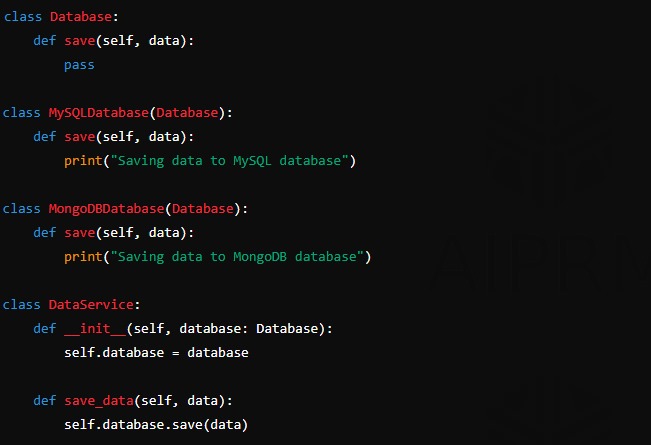
5. reliance Inversion Principle( DIP)

The Dependency Inversion Principle suggests that high- position modules shouldn’t depend on low- position modules. Both should depend on abstractions. also, abstractions shouldn’t depend on details; details should depend on abstractions.

Benefits of DIP

Increased Inflexibility : By depending on abstractions, the law becomes more flexible and easier to refactor.

Advanced Testability : Dependences can be fluently mocked or snubbed in tests.

Enhanced Decoupling : Promotes a more modular and justifiable armature. illustration

Example

6. Do not Repeat Yourself( DRY)

The DRY Principle emphasizes the significance of reducing the reiteration of law. It encourages inventors to abstract common functionality to avoid redundancy and insure that changes are made in a single place.

Benefits of DRY

Reduced Redundancy : Centralizes the operation of common functionality.

Simplified conservation : Changes are made in one place, reducing the threat of inconsistencies.

Enhanced Clarity : Less reiteration leads to cleaner and further accessible law. illustration

Example

7. Keep It Simple, Stupid( KISS)

The KISS Principle advocates for simplicity in design and perpetration. It suggests that utmost systems work stylish if they’re kept simple rather than made complex. Simplicity should be a crucial thing in design.

Benefits of KISS

Ease of Understanding: Simple systems are easier to comprehend and reason about.

Advanced Maintainability : Less complex systems are easier to maintain and extend.

Enhanced trust ability : Smaller complications reduce the eventuality for bugs and crimes. illustration.

Example

8. You Are not Gon na Need It( YAGNI)

The YAGNI Principle is a mantra of extreme programming that stands for” You Are not Gon na Need It.” It implies that you shouldn’t add functionality until it’s necessary. Over-engineering and unseasonable optimization should be avoided.

Benefits of YAGNI

Reduced Waste : Prevents the addition of gratuitous features. concentrated Development Encourages working on features that deliver immediate value.

Simplified Codebase: Keeps the codebase spare and manageable. illustration

Example

Conclusion

Adhering to solid software design principles is essential for developing robust, scalable, and maintainable software. Principles like SRP, OCP, LSP, ISP, DIP, DRY, KISS, YAGNI, and Composition Over Inheritance provide a framework that guides developers in creating high-quality software systems. By understanding and implementing these principles, development teams can significantly enhance the efficiency and effectiveness of their software development processes.

Top 10 AI Websites

Top 10 AI Websites

Introduction : AI Websites

The rapid advancement of artificial intelligence (AI) has resulted in an explosion of resources available online. Whether you are a seasoned AI professional, a curious beginner, or a business looking to integrate AI solutions, there are countless websites offering valuable insights, tools, and communities. Here, we present the top 10 AI websites that you should explore to stay ahead in the AI landscape.

1. OpenAI

OpenAI is a leading organization in AI research and development. It has made significant contributions to the field, including the development of the well-known GPT-3 language model. The website offers a wealth of resources, including research papers, blog posts, and access to their AI models via the OpenAI API. OpenAI’s commitment to ensuring that artificial general intelligence (AGI) benefits all of humanity is evident in their transparent and collaborative approach.

Key Features:

  • Comprehensive research papers and articles.
  • Access to cutting-edge AI models and APIs.
  • Regular updates on the latest AI advancements.

2. AI Alignment Forum

The AI Alignment Forum is a specialized platform for discussions and resources related to AI alignment and safety. It brings together researchers and practitioners focused on ensuring that AI systems are aligned with human values and can be safely integrated into society. The forum hosts a variety of posts, discussions, and papers that delve deeply into technical and philosophical aspects of AI safety.

Key Features:

  • Expert discussions on AI alignment and safety.
  • Access to a community of AI safety researchers.
  • Extensive library of technical papers and essays.

3. MIT AI Lab

The MIT AI Lab is part of the Massachusetts Institute of Technology and is a hub for groundbreaking AI research. The lab’s website provides access to a plethora of resources, including research publications, news updates, and information about ongoing projects. The MIT AI Lab is known for its interdisciplinary approach, integrating AI with fields like robotics, cognitive science, and linguistics.

Key Features:

  • Access to cutting-edge research publications.
  • Information on interdisciplinary AI projects.
  • Regular news updates on AI advancements.

4. Google AI

Google AI is at the forefront of AI innovation, leveraging its vast resources and expertise to drive advancements in machine learning, natural language processing, and computer vision. The Google AI website offers a wealth of resources, including research papers, open-source tools, and educational materials. Google’s AI initiatives, such as TensorFlow and AI for Social Good, highlight their commitment to making AI accessible and beneficial to all.

Key Features:

  • Extensive library of research papers and articles.
  • Access to open-source tools like TensorFlow.
  • Educational resources and tutorials.

5. Towards Data Science

Towards Data Science is a popular platform on Medium that publishes articles and tutorials on AI, machine learning, and data science. It features contributions from experts and enthusiasts alike, providing a diverse range of perspectives and insights. The website covers a wide array of topics, from beginner guides to advanced techniques, making it an invaluable resource for anyone interested in AI and data science.

Key Features:

  • Wide range of articles and tutorials.
  • Contributions from a diverse community of experts.
  • Topics covering both beginner and advanced levels.

6. DeepMind

DeepMind is a pioneer in AI research, known for its work on reinforcement learning and neural networks. Acquired by Google, DeepMind’s website showcases their groundbreaking research, including their famous AlphaGo project. The site offers access to research papers, news updates, and information about their AI initiatives aimed at solving complex real-world problems.

Key Features:

  • Access to pioneering research papers.
  • Information on high-profile AI projects like AlphaGo.
  • News updates on AI research and developments.

7. Kaggle

Kaggle is the world’s largest community of data scientists and machine learning practitioners. It offers a platform for competitions, datasets, and notebooks that enable users to practice and hone their skills. Kaggle’s community-driven approach fosters collaboration and innovation, making it an essential resource for anyone looking to deepen their understanding of AI and data science.

Key Features:

  • Access to a vast repository of datasets.
  • Interactive coding notebooks and tutorials.
  • Community-driven competitions and discussions.

8. AI Trends

AI Trends is a leading source of news and information on AI and machine learning. The website covers a broad spectrum of AI-related topics, including industry trends, research breakthroughs, and case studies. AI Trends is an excellent resource for staying up-to-date with the latest developments in the AI world and understanding how AI is being applied across various industries.

Key Features:

  • Comprehensive news coverage on AI and machine learning.
  • In-depth articles and case studies.
  • Insights into industry trends and developments.

9. The AI Report

The AI Report is a specialized platform that offers in-depth analysis and insights into AI technologies and their impact on society. The website features expert commentary, research reports, and interviews with leading AI professionals. The AI Report is designed to provide a deeper understanding of how AI is shaping the future and the challenges and opportunities it presents.

Key Features:

  • In-depth analysis and expert commentary.
  • Comprehensive research reports.
  • Interviews with AI professionals.

10. Coursera AI Courses

Coursera offers a wide range of online courses on AI, machine learning, and data science, created by top universities and companies. These courses provide high-quality education and practical skills that are essential for anyone looking to pursue a career in AI. The Coursera platform is known for its flexibility, allowing learners to study at their own pace and earn certifications upon completion.

Key Features:

  • High-quality courses from top universities and companies.
  • Flexible learning schedules and certification.
  • Wide range of topics and specializations.

Conclusion

These top 10 AI websites provide a comprehensive suite of resources for anyone interested in artificial intelligence. From cutting-edge research and tools to educational materials and community forums, these websites are invaluable for staying informed and advancing your knowledge in the rapidly evolving field of AI.

How to Password Protect a File on Mac

How to Password Protect a File on Mac

Introduction : Password Protect a File on Mac

Password Protect a File on Mac. In today’s digital age, the security of your personal and professional data is paramount. Whether you are safeguarding sensitive documents, protecting personal photos, or ensuring the confidentiality of business files, password protection on a Mac is an essential step. This comprehensive guide will walk you through the various methods available to password protect your files on a Mac, ensuring your information remains secure.

Method 1: Password Protecting with Disk Utility

Disk Utility is a powerful tool included with macOS that allows you to create encrypted disk images. Here’s how to use it to password protect your files:

  1. Open Disk Utility: You can find it by navigating to Applications > Utilities > Disk Utility.
  2. Create a New Disk Image: Click on File > New Image > Image from Folder.
  3. Select the Folder: Choose the folder you wish to password protect and click Open.
  4. Set the Encryption: In the window that appears, select 128-bit AES encryption (sufficient for most uses) or 256-bit AES encryption (more secure but slower).
  5. Choose a Password: Enter a strong password in the pop-up window. Ensure you remember this password, as it cannot be recovered if forgotten.
  6. Save the Disk Image: Choose the location where you want to save the encrypted disk image and click Save.

Now, you can delete the original folder, leaving only the password-protected disk image. To access your files, simply double-click the disk image and enter your password.

Method 2: Password Protecting with Third-Party Software

Several third-party applications provide robust file encryption and password protection features. Some popular options include:

1. VeraCrypt:

  • Download and Install: Visit the VeraCrypt website and download the software.
  • Create a Volume: Open VeraCrypt and click Create Volume. Follow the prompts to create an encrypted file container.
  • Select Encryption Options: Choose the type of encryption and hashing algorithm you prefer.
  • Set a Password: Enter a strong password for the encrypted volume.
  • Save and Mount: Save the encrypted volume to your desired location. To access your files, mount the volume in VeraCrypt and enter your password.

2. Hider 2:

  • Download and Install: Obtain Hider 2 from the MacPaw website.
  • Add Files: Open Hider 2 and add the files or folders you wish to encrypt.
  • Set a Password: Assign a password to the application. Each time you open Hider 2, you’ll need to enter this password to access your hidden files.

Method 3: Password Protecting PDF Files

If you need to protect PDF files, macOS Preview offers a simple way to do so:

  1. Open the PDF in Preview: Navigate to the PDF file, right-click, and select Open with > Preview.
  2. Export the PDF: Click File > Export.
  3. Enable Encryption: In the export window, check the Encrypt box.
  4. Set a Password: Enter a strong password and confirm it.
  5. Save the PDF: Choose your save location and click Save.

The PDF file is now password protected. Each time you or anyone else tries to open it, the password will be required.

Tips for Creating Strong Passwords

Creating a strong password is crucial for ensuring the security of your files. Here are some tips to keep in mind:

  • Length: Aim for at least 12 characters.
  • Complexity: Use a mix of uppercase and lowercase letters, numbers, and special characters.
  • Unpredictability: Avoid common words, phrases, or easily guessable information like birthdays or names.
  • Uniqueness: Use a different password for each file or service to minimize risk.

Conclusion

Password protecting your files on a Mac is a straightforward process that significantly enhances your data security. Whether you prefer using built-in macOS tools like Disk Utility and Preview, leveraging Terminal for command-line encryption, or opting for third-party applications like VeraCrypt and Hider 2, there are multiple methods available to suit your needs.

Top 5 iOS App Development Programming Languages

Top 5 iOS App Development Programming Languages

The development of iOS applications is an intricate and rewarding process that demands a comprehensive understanding of various programming languages. With the rapid evolution of technology, the selection of the appropriate programming language becomes critical for the success of an app. In this article, we explore the top 5 iOS app development programming languages that developers can use to create robust, high-performing, and user-friendly applications.

1. Swift

Swift is a powerful and intuitive programming language developed by Apple for iOS, macOS, watchOS, and tvOS app development. Launched in 2014, Swift has quickly become the go-to language for iOS developers due to its modern features and ease of use.

Advantages of Swift

  • Modern Syntax: Swift’s syntax is clean and expressive, making it easier to read and write code. It reduces the complexity of coding, which enhances productivity.
  • Safety: Swift is designed with safety in mind. Its strong typing system and error handling mechanisms help prevent common programming errors.
  • Performance: Swift is compiled to machine code, making it faster than interpreted languages. Its performance is comparable to C++, which is crucial for high-performance apps.
  • Interoperability: Swift is fully compatible with Objective-C, allowing developers to use both languages within the same project.

Applications of Swift

Swift is ideal for developing all kinds of iOS applications, from simple games to complex enterprise solutions. Its ability to handle performance-intensive tasks makes it suitable for real-time applications and data-heavy operations.

2. Objective-C

Objective-C was the primary programming language for iOS development before Swift’s introduction. Despite being overshadowed by Swift, it remains a vital language for maintaining and updating existing iOS applications.

Advantages of Objective-C

  • Maturity: With over three decades of use, Objective-C is a mature and stable language with a rich set of libraries and frameworks.
  • Dynamic Runtime: Objective-C’s dynamic runtime allows for greater flexibility in executing tasks, which can be beneficial for certain types of applications.
  • Compatibility: It works seamlessly with Swift, providing a bridge between new and legacy code.

Applications of Objective-C

Objective-C is often used for maintaining legacy codebases. It’s also preferred in situations where developers need to leverage its dynamic runtime capabilities. Enterprises with long-standing iOS applications often continue using Objective-C to ensure stability and continuity.

3. JavaScript

JavaScript is not traditionally associated with iOS app development, but with the advent of frameworks like React Native, it has become a popular choice for building cross-platform applications.

Advantages of JavaScript

  • Cross-Platform Development: JavaScript, combined with frameworks like React Native, enables developers to write code once and deploy it across both iOS and Android platforms.
  • Large Community: JavaScript boasts a vast and active community, providing extensive resources, libraries, and support.
  • Flexibility: JavaScript’s flexibility allows developers to create dynamic and interactive user interfaces with ease.

Applications of JavaScript

JavaScript is ideal for developing cross-platform applications that need to run on multiple devices with a single codebase. It is particularly beneficial for startups and small businesses looking to maximize their reach while minimizing development costs.

4. Kotlin

Kotlin is primarily known as the preferred language for Android development, but it can also be used for iOS development through Kotlin Multiplatform.

Advantages of Kotlin

  • Conciseness: Kotlin reduces boilerplate code, making development faster and more efficient.
  • Safety: Kotlin’s null safety features help eliminate the notorious NullPointerExceptions, improving app stability.

Applications of Kotlin

Kotlin is useful for developing cross-platform applications where code sharing between iOS and Android is crucial. It is an excellent choice for teams with Java expertise looking to expand their app’s reach to iOS.

5. Python

Python is an increasingly popular language for various types of software development, including iOS app development through tools like Kivy and BeeWare.

Advantages of Python

  • Ease of Learning: Python’s simple and readable syntax makes it accessible to beginners and experienced developers alike.
  • Versatility: Python can be used for web development, data analysis, machine learning, and more, making it a versatile choice.
  • Community Support: Python has a large and active community, providing a wealth of libraries, frameworks, and tools.

Applications of Python

Python is suitable for building prototype applications, educational tools, and integrating machine learning features into iOS apps. It’s a great choice for developers looking to leverage their existing Python knowledge in the realm of mobile app development.

Conclusion

Choosing the right programming language for iOS app development is a pivotal decision that can impact the success and efficiency of your project. Swift stands out as the most popular and efficient choice for most iOS applications due to its modern features and robust performance. Objective-C remains relevant for maintaining legacy applications. For cross-platform development, JavaScript and Kotlin offer versatile solutions, while Python provides a unique advantage for specific use cases like machine learning and prototyping.

Casino Games App Developer: Crafting Winning Experiences

Casino Games App Developer

In today’s digital age, the casino games app developer plays a crucial role in the entertainment industry. These skilled professionals are the architects behind engaging, thrilling, and visually stunning casino games that captivate millions of players worldwide. As the demand for mobile gaming continues to soar, the significance of innovative and immersive casino game apps cannot be overstated. This article delves into the multifaceted world of casino games app development, exploring the essential skills, technologies, and trends that define this dynamic field.

Understanding the Role of a Casino Games App Developer

A casino games app developer is responsible for designing, coding, testing, and maintaining mobile applications that replicate the excitement of traditional casino games. These games include classics like poker, blackjack, roulette, and slots, as well as modern variations and hybrid games that offer unique gameplay experiences. The goal is to create apps that are not only entertaining but also secure, fair, and user-friendly.

Key Skills and Competencies

To excel as a casino games app developer, one must possess a diverse set of skills and competencies:

  • Programming Proficiency: Mastery of programming languages such as C++, Java, Swift, and JavaScript is essential. These languages are used to develop the core functionalities of the app.
  • Understanding of Game Mechanics: A deep knowledge of game design principles, including player psychology, reward systems, and game balancing, is crucial.
  • Graphic Design: Proficiency in graphic design tools like Adobe Photoshop, Illustrator, and Unity3D ensures the creation of visually appealing and engaging game environments.
  • Mathematics and Probability: A strong grasp of mathematical concepts and probability theory is necessary to design fair and unpredictable games.
  • Cybersecurity: Implementing robust security measures to protect user data and prevent fraud is a fundamental aspect of casino game development.

Technologies Shaping Casino Game Development

The technological landscape of casino game development is ever-evolving. Developers leverage cutting-edge technologies to enhance gameplay, improve user experience, and stay ahead of the competition.

Artificial Intelligence and Machine Learning

Artificial Intelligence (AI) and Machine Learning (ML) are revolutionizing the way casino games are developed and played. These technologies enable the creation of intelligent opponents, personalized gaming experiences, and sophisticated fraud detection systems. AI-driven analytics also help developers understand player behavior, allowing for the optimization of game design and marketing strategies.

Virtual Reality and Augmented Reality

Virtual Reality (VR) and Augmented Reality (AR) are transforming the casino gaming experience by providing immersive and interactive environments. VR enables players to step into a virtual casino, interact with other players, and experience games in a lifelike setting. AR enhances traditional gameplay by overlaying digital elements onto the real world, offering innovative game mechanics and increased engagement.

Blockchain Technology

Blockchain technology is gaining traction in the casino gaming industry due to its potential to ensure transparency, fairness, and security. Blockchain can be used to create provably fair games, where the randomness and outcomes can be independently verified by players. Additionally, blockchain-based cryptocurrencies offer secure and anonymous payment options, enhancing the overall user experience.

The Development Process

The development of a casino game app involves several stages, each requiring meticulous planning and execution.

Conceptualization and Planning

The first step is to conceptualize the game, defining its core mechanics, features, and target audience. This stage involves market research to identify trends, player preferences, and potential competitors. A detailed project plan is created, outlining the development timeline, resource allocation, and budget.

Design and Prototyping

In this stage, developers create wireframes and prototypes to visualize the game’s layout and functionality. Graphic designers work on creating the visual elements, including characters, backgrounds, and animations. Prototypes are tested to gather feedback and make necessary adjustments before proceeding to full-scale development.

Coding and Development

During the coding phase, developers write the code that brings the game to life. This includes implementing game logic, user interfaces, and backend systems. Collaboration between developers, designers, and testers is crucial to ensure a seamless and bug-free gaming experience.

Testing and Quality Assurance

Comprehensive testing is conducted to identify and resolve any issues or bugs. Quality assurance ensures that the game meets industry standards and provides a smooth and enjoyable experience for players.

Deployment and Maintenance

Once the game is fully developed and tested, it is deployed to app stores such as Google Play and the Apple App Store. Ongoing maintenance and updates are essential to address any emerging issues, introduce new features, and keep the game compatible with the latest devices and operating systems.

Trends in Casino Game Development

The casino gaming industry is continually evolving, with new trends shaping the future of game development.

Social Gaming

Social gaming elements, such as leaderboards, tournaments, and multiplayer modes, are becoming increasingly popular. These features enhance player engagement by fostering a sense of community and competition.

Mobile-First Approach

With the majority of players accessing casino games via mobile devices, developers are adopting a mobile-first approach. This involves designing games specifically for mobile platforms, ensuring optimized performance and user experience.

Live Dealer Games

Live dealer games, which feature real dealers conducting games in real-time via video streaming, are gaining traction. These games offer an authentic casino experience and appeal to players seeking a more interactive and social gaming environment.

Cross-Platform Compatibility

Ensuring that games are compatible across multiple platforms, including smartphones, tablets, and desktops, is becoming a standard practice. Cross-platform compatibility allows players to enjoy a seamless gaming experience across different devices.

Conclusion

The role of a casino games app developer is both challenging and rewarding, requiring a blend of technical expertise, creativity, and a deep understanding of player psychology. As technology continues to advance, the opportunities for innovation in casino game development are boundless. By staying abreast of industry trends and leveraging the latest technologies, developers can create captivating and immersive gaming experiences that keep players coming back for more.

Top Casino Apps for iPhone: A Comprehensive Guide

 Casino Apps for iPhone

Introduction

In today’s fast-paced digital world, mobile gaming has become a significant part of our daily lives. Among the various genres of mobile games, casino apps have carved a niche for themselves, offering the thrill and excitement of gambling right at your fingertips. With the increasing popularity of smartphones, particularly the iPhone, casino apps have seen a surge in downloads and user engagement. This article delves into the top casino apps available for iPhone, providing an in-depth analysis of their features, benefits, and much more.

Top Casino Apps for iPhone

Criteria for Selection

When selecting the top casino apps for iPhone, several factors are considered to ensure a comprehensive and fair evaluation. These criteria include user interface, game variety, security measures, customer support, and user reviews. By adhering to these standards, we can present a list of the most reliable and entertaining casino apps available on the App Store.

Overview of Top Apps

The following sections will detail the top casino apps for iPhone, highlighting their unique features, the variety of games they offer, user experiences, and their respective pros and cons.

1. Slotomania

Features

Slotomania is a well-known casino app that has gained immense popularity among iPhone users. The app offers a wide range of slot games, each with unique themes and features. It provides daily bonuses, free spins, and various in-app events to keep players engaged.

Games Available

Slotomania boasts an extensive collection of over 160 slot games. These games range from classic three-reel slots to modern five-reel video slots, ensuring there is something for everyone.

User Experience

The user experience on Slotomania is seamless, with intuitive navigation and vibrant graphics. The app’s social features, such as the ability to send and receive gifts, enhance the overall gaming experience.

Pros and Cons

Pros:

  • Wide variety of slot games
  • Engaging social features
  • Regular updates and new game additions

Cons:

  • Heavy emphasis on in-app purchases
  • Limited availability of other casino games like poker or blackjack

2. 888 Casino

Features

888 Casino is a reputable name in the online gambling industry, and its app lives up to the brand’s high standards. The app offers a comprehensive casino experience with a wide range of games, secure transactions, and excellent customer support.

Games Available

Players can enjoy a variety of games on 888 Casino, including slots, blackjack, roulette, and live dealer games. The app continuously updates its game library to include the latest and most popular titles.

User Experience

888 Casino provides a smooth and enjoyable user experience, with easy navigation and high-quality graphics. The app’s live dealer feature offers an immersive casino experience, replicating the feel of a real-life casino.

Pros and Cons

Pros:

  • Extensive game selection
  • High-quality graphics and sound effects
  • Secure and fast transactions

Cons:

  • Can be overwhelming for new users
  • Occasional technical glitches

3. Poker Stars Casino

Features

Poker Stars Casino is renowned for its poker games, but its casino app offers much more. The app provides a wide range of casino games, including slots, blackjack, roulette, and live dealer games. It also offers various promotions and bonuses for both new and existing players.

Games Available

Poker Stars Casino offers an impressive selection of games, with a strong emphasis on poker. However, players can also enjoy a variety of other casino games, making it a versatile choice for casino enthusiasts.

User Experience

The app is user-friendly, with a clean and intuitive interface. The high-quality graphics and seamless gameplay contribute to a positive user experience, making it a favorite among many players.

Pros and Cons

Pros:

  • Excellent variety of poker games
  • User-friendly interface
  • Regular promotions and bonuses

Cons:

  • Limited game variety outside of poker
  • Can be competitive and challenging for beginners

4. Caesars Casino

Features

Caesars Casino app brings the grandeur of the iconic Caesars Palace to your iPhone. The app offers a wide range of casino games, daily bonuses, and a loyalty program that rewards players with real-world benefits.

Games Available

Players can enjoy a plethora of games on Caesars Casino, including slots, poker, blackjack, and roulette. The app frequently updates its game library to keep things fresh and exciting.

User Experience

The user experience on Caesars Casino is top-notch, with smooth navigation and engaging graphics. The app’s loyalty program adds an extra layer of excitement, rewarding players with perks and benefits.

Pros and Cons

Pros:

  • Wide range of games
  • Attractive loyalty program
  • Regular updates and new game additions

Cons:

  • Heavy emphasis on in-app purchases
  • Occasional lag during peak times

5. Big Fish Casino

Features

Big Fish Casino is a popular choice among iPhone users for its variety of casino games and interactive social features. The app offers daily bonuses, special events, and a vibrant community of players.

Games Available

Big Fish Casino offers a diverse selection of games, including slots, blackjack, poker, and roulette. The app also features unique games like Texas Hold’em and Baccarat.

User Experience

The app provides an engaging user experience with its colorful graphics and interactive features. The social aspect of the app, where players can chat and compete with friends, enhances the overall gaming experience.

Pros and Cons

Pros:

  • Diverse selection of games
  • Interactive social features
  • Daily bonuses and special events

Cons:

  • In-app purchases can be costly
  • Some games require a stable internet connection

How to Download and Install Casino Apps

Step-by-Step Guide

  1. Open the App Store on your iPhone.
  2. Search for the Casino App you want to download.
  3. Tap “Get” to download the app.
  4. Enter your Apple ID password if prompted.
  5. Open the App once the download is complete.
  6. Sign Up or Log In to start playing.

Troubleshooting Common Issues

  • App Not Downloading: Ensure you have a stable internet connection and enough storage space.
  • App Crashing: Restart your iPhone or reinstall the app.
  • Login Issues: Check your internet connection and ensure you’re entering the correct login credentials.

User Guides and Tutorials

How to Play Popular Casino Games

Slots: Select your bet amount, spin the reels, and aim to match symbols. Blackjack: Try to get as close to 21 as possible without going over. Roulette: Place your bets on numbers, colors, or sections and watch the wheel spin.

Strategies for Winning

Slots: Look for games with high RTP (Return to Player) percentages. Blackjack: Learn basic strategy and practice to improve your skills. Poker: Develop a solid understanding of the rules and practice bluffing techniques.

FAQs

What are the best casino apps for iPhone?

Some of the best casino apps for iPhone include Slotomania, 888 Casino, PokerStars Casino, Caesars Casino, and Big Fish Casino.

Are casino apps legal?

Casino apps are legal in many jurisdictions, but it’s essential to check the local laws and regulations in your area.

Can you win real money on casino apps?

Yes, many casino apps offer real money games where you can win actual cash. However, it’s crucial to play responsibly and be aware of the risks.

Conclusion

Casino apps for iPhone offer a convenient and exciting way to enjoy gambling on the go. With a wide variety of games, secure transactions, and engaging social features, these apps provide an immersive casino experience. While there are challenges and limitations, such as in-app purchases and data privacy concerns, the benefits often outweigh the drawbacks. As technology continues to evolve, the future of mobile casino gaming looks promising, with more innovations and improvements on the horizon. So, whether you’re a seasoned gambler or a casual player, there’s a casino app out there that will meet your needs and provide hours of entertainment.

Metropolitan Area Networks: The Backbone of Urban Connectivity

Metropolitan Area Networks

Introduction : Metropolitan Area Networks

In today’s interconnected world, the need for efficient and reliable communication networks is more critical than ever. Among various types of networks, Metropolitan Area Networks (MANs) stand out for their unique capabilities and applications. But what exactly is a Metropolitan Area Network, and why is it so important? Let’s dive into the world of MANs and explore their significance in modern communication.

What is a Metropolitan Area Network (MAN)?

A Metropolitan Area Network, commonly known as MAN, is a network that spans a metropolitan area, typically a city or a large campus. It bridges the gap between smaller Local Area Networks (LANs) and more extensive Wide Area Networks (WANs), offering a medium-range connectivity solution. Unlike LANs, which are confined to a single building or a small cluster of buildings, and WANs, which cover broader geographical areas, MANs provide a network infrastructure that supports high-speed connectivity across a metropolitan region.

Historical Development of MANs

The concept of MANs dates back to the late 20th century when cities started to realize the need for a more cohesive communication network. Initially, MANs were simple and often relied on telephone lines and basic coaxial cables. Over the decades, advancements in technology have transformed MANs into sophisticated networks utilizing fiber optics, wireless technologies, and Ethernet, significantly enhancing their speed, reliability, and efficiency.

Key Features of Metropolitan Area Networks

Coverage Area

MANs typically cover areas ranging from several kilometers to a few dozen kilometers. This makes them ideal for city-wide networks that need to connect multiple buildings, campuses, or business districts.

High-Speed Connectivity

One of the standout features of MANs is their high-speed connectivity. By leveraging advanced technologies such as fiber optics and Ethernet, MANs can offer data transfer rates that are much higher than traditional networks.

Integration with Other Networks

MANs are designed to seamlessly integrate with both LANs and WANs, providing a versatile and scalable solution for urban networking needs. This integration ensures smooth data flow and communication across different network types.

Types of Metropolitan Area Networks

Ethernet MAN

Ethernet MANs use Ethernet technology to provide high-speed connectivity across metropolitan areas. They are known for their reliability and ease of integration with existing Ethernet-based LANs.

Wireless MAN

Wireless MANs utilize wireless technologies such as Wi-Fi, WiMAX, and 4G/5G to deliver network services without the need for extensive cabling. This makes them particularly useful in areas where laying cables is impractical or too costly.

Optical MAN

Optical MANs rely on fiber optic cables to transmit data. These networks offer the highest speeds and are often used in scenarios where large volumes of data need to be transferred quickly and efficiently.

Technologies Used in MANs

Fiber Optics

Fiber optics are a cornerstone of modern MANs, providing high-speed data transmission with minimal loss over long distances. They are particularly favored for their capacity to handle large data volumes and their resilience to electromagnetic interference.

Ethernet

Ethernet technology is widely used in MANs due to its simplicity, reliability, and cost-effectiveness. It supports high data transfer rates and can be easily integrated with existing network infrastructures.

Wireless Technologies

Wireless technologies, including Wi-Fi, WiMAX, and 4G/5G, enable MANs to offer flexible and scalable connectivity solutions. These technologies are essential for creating networks in areas where traditional cabling is not feasible.

Components of a Metropolitan Area Network

Routers

Routers play a crucial role in MANs by directing data traffic between different network segments. They ensure that data packets reach their intended destinations efficiently and securely.

Switches

Switches are responsible for connecting various devices within a MAN. They facilitate the smooth transfer of data between different parts of the network, helping to maintain high-speed connectivity.

Transmission Media

Transmission media in MANs can include fiber optic cables, copper wires, and wireless signals. Each type of media has its advantages and is chosen based on the specific requirements of the network.

Advantages of Metropolitan Area Networks

Enhanced Communication Speed

MANs provide significantly higher communication speeds compared to traditional networks. This is particularly beneficial for businesses and institutions that require fast and reliable data transfer.

Cost-Effectiveness

By leveraging existing infrastructure and integrating various network types, MANs can be a cost-effective solution for metropolitan connectivity. They reduce the need for redundant systems and streamline network management.

Scalability

MANs are highly scalable, allowing for easy expansion as the network needs grow. This makes them an ideal choice for cities and large organizations looking to future-proof their communication infrastructure.

Challenges in Implementing MANs

Infrastructure Costs

Setting up a MAN can be expensive, especially when it involves laying new fiber optic cables or installing advanced wireless systems. However, these initial costs are often offset by the long-term benefits.

Maintenance and Management

Maintaining and managing a MAN requires specialized skills and resources. Regular maintenance is essential to ensure the network operates smoothly and efficiently.

Security Issues

Security is a significant concern for MANs, given their extensive coverage area and the critical nature of the data they transmit. Implementing robust security measures is essential to protect against cyber threats and data breaches.

Applications of Metropolitan Area Networks

Business Enterprises

Businesses use MANs to connect different office locations within a city, enabling seamless communication and collaboration. This is especially useful for companies with multiple branches that need to share resources and data.

Educational Institutions

Universities and colleges leverage MANs to connect different campuses and facilitate online learning, research collaboration, and administrative functions. This ensures that students and staff have access to high-speed internet and digital resources.

Government Agencies

Government agencies use MANs to improve communication between departments, enhance public services, and support emergency response systems. This integration helps in creating a more connected and efficient urban infrastructure.

Case Studies: Successful MAN Implementations

Example 1: City-wide MAN in New York

New York City has implemented a comprehensive MAN to connect its various boroughs and public institutions. This network supports everything from public Wi-Fi to emergency services, showcasing the potential of MANs in enhancing urban connectivity.

Example 2: University Campus Network

A major university implemented a MAN to connect its multiple campuses, providing high-speed internet access, supporting online learning platforms, and facilitating research collaboration. This has significantly improved the institution’s operational efficiency and academic performance.

Future Trends in Metropolitan Area Networks

Integration with 5G

The integration of MANs with 5G technology promises to enhance network speeds and connectivity further. This will enable the development of smart cities and support advanced applications such as autonomous vehicles and IoT devices.

Advancements in Optical Technology

Continuous advancements in optical technology are expected to boost the performance of MANs, offering even higher data transfer rates and greater reliability. This will make MANs an even more attractive option for urban networking.

Increased Use of IoT

The rise of the Internet of Things (IoT) will drive the demand for MANs, as these networks provide the necessary infrastructure to support a large number of connected devices. This will enable more efficient city management and innovative services.

How to Set Up a Metropolitan Area Network

Planning and Design

The first step in setting up a MAN is thorough planning and design. This involves assessing the network requirements, choosing the appropriate technologies, and designing the network layout.

Hardware and Software Requirements

Next, procure the necessary hardware and software components, including routers, switches, transmission media, and network management tools. Ensure that these components are compatible and capable of meeting the network’s demands.

Step-by-Step Setup Process

  1. Install the transmission media: Lay fiber optic cables or set up wireless access points across the metropolitan area.
  2. Configure the network devices: Set up routers and switches, ensuring they are correctly configured to handle data traffic.
  3. Integrate with existing networks: Connect the MAN to existing LANs and WANs, ensuring seamless data flow.
  4. Test the network: Conduct thorough testing to identify and resolve any issues before the network goes live.

Comparing MANs with Other Network Types

MAN vs LAN

While LANs are confined to a single building or a small group of buildings, MANs cover a larger geographic area, typically a city. MANs offer higher speeds and greater capacity, making them suitable for connecting multiple LANs across a metropolitan region.

MAN vs WAN

WANs cover much larger areas than MANs, often spanning entire countries or continents. MANs provide a middle ground, offering higher speeds and lower latency within a metropolitan area, making them ideal for urban networking needs.

Conclusion

Metropolitan Area Networks play a crucial role in modern urban communication, offering high-speed connectivity and seamless integration with other network types. As technology continues to evolve, MANs will become even more vital in supporting smart cities, advanced applications, and the ever-growing demand for data. Understanding and leveraging the potential of MANs can significantly enhance the efficiency and connectivity of urban environments.

FAQs

What is the typical range of a MAN?

A MAN typically covers an area ranging from several kilometers to a few dozen kilometers, making it ideal for city-wide networks.

How does a MAN differ from a LAN?

A MAN covers a larger geographic area than a LAN and offers higher speeds and greater capacity, making it suitable for connecting multiple LANs across a metropolitan region.

What are the security measures for a MAN?

Security measures for a MAN include encryption, firewalls, intrusion detection systems, and regular security audits to protect against cyber threats and data breaches.

Can MANs be used in rural areas?

While MANs are primarily designed for metropolitan areas, they can be adapted for use in rural areas with the appropriate infrastructure, though this may involve higher costs.

What are the costs associated with setting up a MAN?

The costs of setting up a MAN include infrastructure investments such as fiber optic cables, routers, switches, and ongoing maintenance and management expenses.

Best Typing App for Kids : Mastering Typing Skills While Having Fun

Typing App for Kids

Introduction:Typing App for Kids

In today’s digital age, typing proficiency is essential for success in both academics and the professional world. As technology continues to evolve, the ability to type quickly and accurately has become a fundamental skill. For kids, mastering typing at an early age can significantly enhance their educational experience and future career prospects. Fortunately, there are numerous typing apps designed specifically for children to make learning enjoyable and engaging.

Technical Specifications of Typing Apps

Typing apps for kids come with various technical specifications to cater to different age groups and skill levels. Some common technical features include:

  • Compatibility: Ensuring compatibility with different devices, including computers, tablets, and smartphones.
  • User Interface: Intuitive interfaces designed specifically for children, with colorful graphics and easy navigation.
  • Customization Options: Allowing users to personalize their typing experience, such as adjusting difficulty levels or selecting themes.
  • Progress Tracking: Providing feedback on typing speed, accuracy, and progress over time to motivate children and track their improvement.

Applications of Typing Skills in Education and Beyond

The ability to type proficiently opens up a world of opportunities for children, both academically and professionally. Some key applications of typing skills include:

  • Academic Assignments: Completing essays, research papers, and online assignments efficiently.
  • Test-taking: Taking standardized tests and exams that require typing skills, such as the SAT or ACT.
  • Professional Communication: Writing emails, reports, and memos in the workplace with speed and accuracy.

Benefits of Using Typing Apps for Kids

Typing apps offer numerous benefits for children learning to type, including:

  • Engagement: Making learning fun and engaging through interactive games and activities.
  • Accessibility: Providing anytime, anywhere access to typing practice on various devices.
  • Progress Tracking: Allowing parents and educators to monitor children’s typing progress and identify areas for improvement.
  • Skill Development: Helping children develop essential typing skills, such as finger placement, typing speed, and accuracy.

Challenges and Limitations of Typing Apps

While typing apps can be effective tools for learning, they also have some limitations and challenges to consider:

  • Screen Time: Excessive use of typing apps can contribute to increased screen time for children, which may have negative effects on their health and well-being.
  • Skill Retention: Some children may struggle to retain typing skills learned through apps without regular practice and reinforcement.
  • Technical Issues: Glitches, bugs, or compatibility issues with devices can disrupt the learning experience and frustrate users.

Latest Innovations in Typing Technology

The field of typing technology is constantly evolving, with new innovations and updates to existing apps. Some recent advancements include:

  • Adaptive Learning Algorithms: Apps that use artificial intelligence to adapt to each user’s unique learning style and pace.
  • Virtual Reality Typing Simulators: Immersive experiences that allow children to practice typing in virtual environments.
  • Gamification Features: Incorporating elements of gamification, such as badges, rewards, and leaderboards, to motivate and incentivize typing practice.

Future Prospects of Typing Apps for Kids

Looking ahead, the future of typing apps for kids is promising, with continued advancements in technology and pedagogy. Some future prospects include:

  • Integration with Education Curriculum: Typing apps may become integrated into school curricula as essential tools for developing digital literacy skills.
  • Augmented Reality Enhancements: Apps that leverage augmented reality technology to provide interactive typing experiences in the real world.
  • Personalized Learning Experiences: Customizable apps that tailor typing instruction to each child’s individual needs and preferences.

Comparative Analysis of Typing Apps

When choosing a typing app for kids, it’s essential to consider factors such as features, pricing, and user reviews. Some popular typing apps include:

  • Typing Club: Offers interactive lessons, games, and progress tracking for children of all ages.
  • Nitro Type: A multiplayer racing game that helps kids improve their typing speed and accuracy while competing with friends.
  • Dance Mat Typing: A free online typing tutor developed by the BBC, featuring colorful characters and progressive lessons.

User Guides and Tutorials for Typing Apps

To maximize the benefits of typing apps for kids, it’s helpful to provide user guides and tutorials that explain how to use the app effectively. Some key tips and tutorials may include:

  • Finger Placement: Teaching children the proper finger placement on the keyboard, including the home row keys and common typing techniques.
  • Typing Exercises: Providing a variety of typing exercises and practice activities to improve speed, accuracy, and typing fluency.
  • Progress Monitoring: Showing children how to track their typing progress and set goals for improvement using the app’s features.

Conclusion: Empowering Kids with Typing Skills

In conclusion, typing apps for kids offer a fun, interactive way for children to develop essential typing skills while having fun. By leveraging the latest technology and educational principles, these apps empower children to become proficient typists, setting them up for success in school and beyond.