How Much Does Transport and Logistics App Development Cost?

Logistics App

You just imagine conducting a transport and logistics business; generally, you will see that there are trucks rolling on, warehouses operating, and drivers making the deliveries. At that moment, your customers expect updates, and you also see your operational team get confused with calls and sheets; at that time, you need to go totally digital. A logistics app could automate deliveries, optimize routes, and also keep the customers informed. But also, one question stands: “How much does it cost to develop a logistics app?

In this comprehensive blog, you will explore the overview of the logistics industry, logistics app development cost, what affects it, and how you can build an efficient app without any overspending. While you are exploring transport & logistics app development, thinking about the cost of the logistics app development, or estimating your logistics mobile app development cost, this insightful blog can be your go-to resource.

Logistics App

Market Overview of Transport & Logistics Industry

The global logistics industry is growing a lot, with a market size estimated to grow from $11.23 trillion in 2025 to $23.14 trillion by 2034, with an estimated CAGR of 8.4%. On the contrary, the digital logistics market is estimated to reach about $93 billion by 2030, as per the statistical data.


As the customer expectations are so high, transparent delivery is enhanced a lot with the massive investment in digital tools that clearly state that the logistics app development cost is not just a budget thing but totally a strategic move to capture the business growth.

How Much Does Logistics App Development Cost in 2025?

The cost of logistics app development is based on how complex your app is, the location type, and the features.

Let’s see the breakdown of the cost of app types as per the cost.

Simple App
In this basic app, the cost ranges from around $11,000 to $50,000 approximately in the logistics space.

Mid-Level App
The medium- or mid-level app costs around $200,000 or more based on the medium-level features, like route optimization and an admin dashboard, and much more.

Customized App
This custom or advanced type of app costs approximately $200,000-$300,000 or more. It is totally based on the features like AI integration, IoT integrations & multi-region support.

So, if you are thinking of establishing an app in countries like Vietnam or India, the estimated cost ranges from $11,000. On the other hand, in the USA and Western Europe regions, it is generally higher due to the developer’s hourly rate.

Major Factors Affecting Logistics App Development Cost

 The key factors that affect the transport and logistics app development cost are as follows:

  • Complexity of App

So, the more you go for the advanced app, the higher the cost. A basic app may consist of:

  • User Registration
  • Delivery Scheduling
  • Real-Time Tracking
  • Payment Integration Modes

A more enhanced version of the app will have features like tracking routes, warehouse management, automated invoice systems, and driver performance analysis, which, as a result, upscale the logistics mobile app development cost.

  • Choice of Platform

So, the selection of a platform between Android, iOS, and the cross-platform development approaches can also affect the total transport and logistics app development cost. Some of the popular frameworks that are associated with the cross-platform or hybrid type, like Flutter or React Native, help in minimizing the cost while maintaining the performance level without any compromise.

  • Development Team Location

There are hourly rates that mainly differ as per the regions; in the case of the North American region, it is almost $80–$150/hr, in Europe, it is $50–$100/hr, and in the Asian region, it is around $25–$60/hr. And the outsourcing can help you to minimize the logistics app development cost without any quality compromise.

  • Tech Stack

The tech stack tends to play an important role in the case of affecting the logistics app development cost and also defines how your app performs, scales, and integrates with the other systems. On the contrary, cross-platform ones are cost-effective and let you build for iOS and Android simultaneously.

  • Post-Launch Maintenance

The maintenance is very important, which involves supporting it, updating it,  and also handling new OS versions and even security patches. Add-on features also become a part of the cost of ownership. You should set aside about 15-20% of your total budget annually for maintenance and new features. This, as a result, affects the logistics app development cost.

Strategies to Build an Efficient Logistics App Without Overspending 

The building of a logistics app doesn’t need to drain all your resources and budget. The key lies in strategic and smarter choices from the very start that tend to balance the cost efficiency and the long-term scalability, which bring great productivity and success to your app journey. The approaches are

  • Initiate with MVP Development
  • Start with Cross-Platform Frameworks
  • Utilize Cloud Infrastructure
  • Incorporate Ready To Use APIs
  • Selecting the Right Development Partner

Final Thoughts

Overall, the minimization of the cost of transportation and logistics app development is not only about spending the money but also about being smarter and strategic a lot. So, with every decision you make, you have to choose the right tech stack, which impacts the scalability, return of investment, and also the efficiency.

You should start with a lean MVP approach, adopting cross-platforms that leverage the cloud infrastructure and also implement reliable APIs, which tends to establish a robust logistics app without any unnecessary expenses. Collaborating with the ideal startup app development agency can help you to build strategically and execute cost-effectively, bringing logistics to reality without any kind of overspending.

How to Choose a Generative AI Development Company in 2025

There’s a moment every leader hits with GenAI: the demos look magical, the slideware is convincing, and yet… you still need a partner who can turn “wow” into a working product you can defend to legal, explain to customers, and scale in production. Choosing that partner in 2025 isn’t about who talks best about models—it’s about who ships dependable outcomes, week after week. This guide shows you how to evaluate a generative AI development company with a clear, business-first lens.

Generative AI development Company


1) Start with the outcome, not the model

Ask: What should change if this works? Faster response times, higher conversion, lower handle time, better recall@k? Tie the goal to a single KPI with a target window (e.g., “reduce average handle time by 20% in one quarter”). A strong partner will push for baselines and staged milestones, then apply generative AI development services where they actually move the metric.

Red flag: Pitching “state-of-the-art accuracy” before discussing your KPI.


2) Check end-to-end capability (beyond model talk)

Great GenAI is 70% data and engineering. Look for depth in:

  • Data engineering: ingestion, quality checks, lineage, PII handling

  • Retrieval: vector stores, chunking, RAG patterns, citation quality

  • LLMOps/MLOps: eval harnesses, versioning, CI/CD for prompts and models, rollback plans

  • App engineering: APIs, microservices, latency budgets, observability

  • Human-in-the-loop: review queues, labeling, feedback capture

Ask for architecture diagrams from prior builds; a seasoned custom AI development company will have them.


3) Demand a two-week thin slice

“Demo over deck.” Give a small, representative problem and two weeks. Look for:

  • A thin vertical slice touching real (or safely mirrored) data

  • Offline evals (latency, hallucination rate, citation coverage, cost)

  • Clear notes on failures and what changed—learning velocity beats polish

This is standard in credible generative AI consulting services.


4) Choose the right model strategy for risk and scale

Not every use case needs a frontier model. Your partner should navigate:

  • Hosted frontier models for speed to value

  • Open models for cost control and privacy

  • Domain-tuned small models for narrow tasks at ultra-low latency

The best AI development company in India will propose a portfolio approach: start hosted for speed, then graduate high-volume/low-risk workloads to open or small models.


5) Evaluate LLM/RAG craft and monitoring

Ask to see real retrieval quality and evaluation practice:

  • High-quality chunking, grounding, citations, and guardrails

  • Eval sets that mirror production queries

  • Canary releases, automatic rollback when metrics dip

  • Full prompt/context/model version traceability for every answer

Teams fluent in LLM and RAG development will show dashboards, not slides.


6) Inspect responsible AI and compliance early

By 2025, privacy and safety are table stakes:

  • PII redaction, encryption, data minimization

  • RBAC/ABAC, audit logs, model cards

  • Safety filters, jailbreak resistance, disallowed categories

  • Compliance mappings (HIPAA/GDPR/SOC 2) where relevant

If your partner can’t explain where guardrails live in the stack, keep looking.


7) Model total cost of ownership (TCO), not just build cost

Request a TCO view:

  • Build: discovery, data work, integrations, security

  • Run: tokens/inference, vector DB, storage, observability

  • Improve: labeling, re-indexing, re-tuning

Agree on unit economics (e.g., cost per conversation or per generated document). A mature generative AI development company will map cost to business value, not just hours.


8) Collaboration hygiene: where projects live or die

Look for:

  • Weekly demos (not status PDFs)

  • A single shared backlog with ruthless prioritization

  • Written decision logs to keep context portable

  • Slack channels with fast, thoughtful replies

  • Leaders who tell you what not to build

This is how enterprise generative AI solutions survive real-world ambiguity.


9) A pragmatic 8–12 week path

  1. Weeks 1–2: Data audit, baseline, initial eval set

  2. Weeks 3–4: RAG MVP with citations; red teaming + guardrails

  3. Weeks 5–6: Limited pilot; add human-in-the-loop review

  4. Weeks 7–8: Harden infra, observability, cost controls

  5. Weeks 9–12: Scale users/coverage only where metrics improved

The right generative AI development services team will insist on measurable gates between stages.


Quick human smell test

After the first call, ask yourself:

  • Did they listen more than they pitched?

  • Did they talk KPI impact before model sizes?

  • Did they volunteer risks and mitigation?

  • Do you trust them to deliver bad news early?

If yes, you’ve likely found a partner—not just a supplier.


FAQs

Q1. What should I prioritize when choosing a GenAI partner?
Start with KPIs, then validate end-to-end capability across data, retrieval, LLMOps, app engineering, and safety—hallmarks of a capable generative AI development company.

Q2. Do I need frontier models?
Not always. Many use cases perform well with tuned open or small models. A pragmatic generative AI consulting services partner will propose a portfolio.

Q3. How fast can we see value?
With a focused scope, 8–12 weeks to MVP is common: baseline → RAG MVP → guardrails/HITL → hardening, led by an experienced AI development company in India.

Q4. How do we control hallucinations?
Ground answers via RAG with citations, maintain eval sets, enforce guardrails, and monitor live metrics—core to good LLM and RAG development.

Q5. How should we model cost?
Use TCO: build, run (tokens/vector DB), monitoring, and continuous improvement. Align on unit economics with your custom AI development company.

How Insurance Portal Solutions Are Redefining Customer Experience in the Digital Age

Insurance is no longer just about policies and payouts—it’s about experience. In an industry historically bogged down by paperwork, delayed communications, and opaque processes, customers now expect clarity, speed, and convenience. Enter Insurance Portal Solutions: the new digital front doors for insurers, brokers, and underwriters aiming to win in a customer-first world.

From policyholders managing claims to agents accessing real-time commission reports, these portals are redefining every touchpoint in the insurance journey. But this transformation isn’t just about going digital—it’s about aligning digital tools with rising customer expectations.

Let’s dive into how modern Insurance Portal Solutions are elevating customer experience (CX) and what that means for your organization.

1. Self-Service Is Now the Starting Point, Not an Add-On

Today’s policyholders expect to:

  • Access policy documents anytime
  • Initiate and track claims without a call center
  • Make premium payments or change contact details seamlessly

Insurance Portal Solutions deliver on these expectations by offering always-on access, personalized dashboards, and secure document handling.

For insurers, this translates into reduced support load and increased customer satisfaction. For customers, it means less friction and more empowerment.

2. Real-Time Claims Tracking Builds Trust

One of the biggest pain points in insurance CX? The black hole of claims processing. Customers want transparency.

With modern Insurance Portal Solutions, customers can:

  • File a claim with guided forms
  • Upload supporting documents
  • Track the status of their claim in real time
  • Receive notifications at every stage

This real-time visibility doesn’t just reduce anxiety—it strengthens trust and loyalty.

3. Personalization Drives Engagement

Whether it’s a young driver, a small business owner, or a retiree with health concerns, no two policyholders are the same. Insurance Portal Solutions that support role-based access and dynamic content deliver a tailored experience for every customer segment.

Portals can adapt interfaces based on:

  • Customer profile and policy type
  • Product bundles (e.g., auto + home)
  • Preferred language or region
  • Claims history and service requests

4. Agent and Broker Enablement Accelerates Sales

Customers aren’t the only users who benefit from portal transformation. Insurance Portal Solutions also serve agents, brokers, and third-party administrators (TPAs).

A dedicated partner interface can provide:

  • Access to policy documentation and updates
  • Lead and referral tracking
  • Commission status and reports
  • Tools for quoting and cross-selling

The more empowered your intermediaries, the faster they can respond to customer needs—and the more value they bring to your brand.

5. Mobile-First Experience Is Non-Negotiable

Customers manage every aspect of their life through mobile devices—insurance should be no exception.

Modern Insurance Portal Solutions are:

  • Mobile-responsive by default
  • Capable of push notifications
  • Integrated with biometric authentication for secure access
  • Optimized for small-screen workflows like quick claims or document uploads

This isn’t about checking a box. It’s about meeting your customers where they are.

6. Omnichannel Continuity Enhances Convenience

A customer might start a quote on desktop, upload a document via mobile, and call in for a query. Insurance Portal Solutions that offer unified data and session continuity eliminate repetition and frustration.

By syncing portal activity with your CRM and contact center systems, you ensure:

  • No lost context
  • Smarter support handoffs
  • Better data for predictive service

7. Compliance and Security as Experience Enhancers

Security isn’t just a backend concern—it’s a CX issue. Customers want to feel confident that their personal and financial data is protected.

Modern Insurance Portal Solutions prioritize:

  • GDPR and HIPAA-ready architecture
  • Encrypted document uploads and e-signatures
  • Multi-factor authentication (MFA)
  • Full audit trails for legal accountability

8. Data-Driven CX Improvement Loops

Insurance portals capture massive customer behavior insights—from most-used features to drop-off points in claims workflows.

Forward-thinking insurers use this data to:

  • Optimize portal design and content
  • Identify training needs for agents
  • Predict churn risks and policy upsell opportunities

It turns your portal from a passive tool into a proactive experience engine.

In Summary

Insurance Portal Solutions are no longer back-office utilities. They are frontline experience platforms that shape how customers perceive your brand, how quickly they get service, and how likely they are to renew.

By prioritizing real-time visibility, personalization, secure self-service, and partner enablement, insurers can finally break the cycle of reactive service and deliver the kind of modern, frictionless experience today’s policyholders expect.

The Ultimate Guide to Ethernet Cables for Home Networking

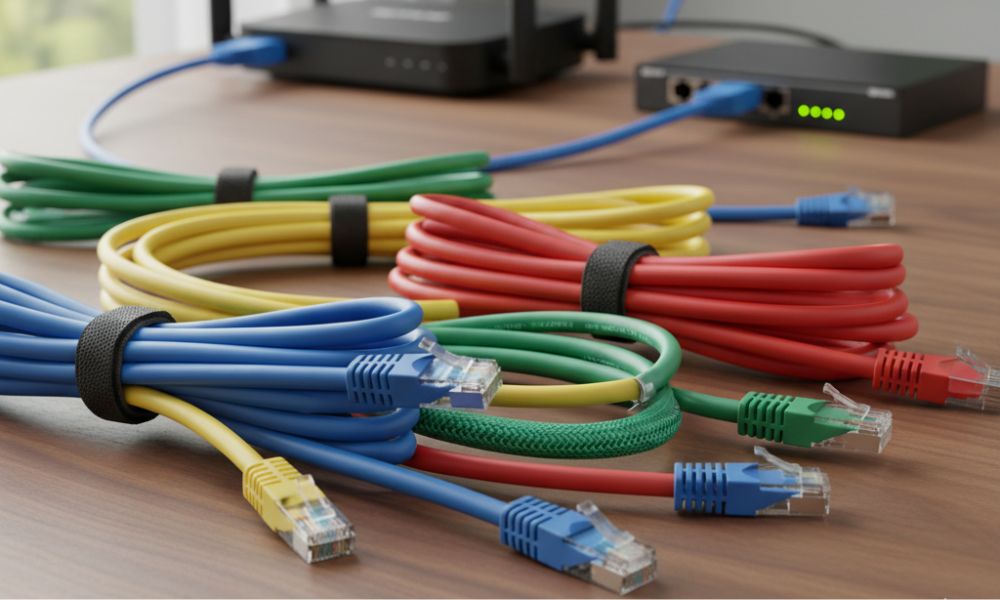
The Ultimate Guide to Ethernet Cables for Home Networking

Wanting superfast internet speed at every corner of your home? You need a home networking job to be done at the earliest. Home networking needs strong Ethernet Cable wiring, unless the WIFI system, which could only give you limited internet speed and features compared to home networking. 

If you are a first-time user of Ethernet wiring and home networking, then you must learn about it step by step. The process starts with selecting the right cables for the network. Also, before you install, you must realise your uses and requirements clearly so that you can choose the right wire. 

There are different types of Ethernet wires available in the market. By identifying the compatibility, networking speed, and shielding you need, you can specifically look for a particular type of wire for your home networking. Here is a complete guide on different Computer Ethernet Cables for home networking.

What are the Different Types of Ethernet Cables Available?

The Ethernet cable was introduced in the market in the middle of 1973. It has gone through several technical upgrades since then, and currently, you can find 6 different types of Ethernet wires in the market.

  • Cat 5E

This kind of Ethernet Cable comes with a standard bandwidth of 100MHz. It can transfer data at a speed of up to 1 Gbps. Cat 5e cable is the most preferred cable because of its availability and price. It can seamlessly support basic networking uses, telephone signal transmission, and video streaming. This cable also performs great as a crosstalk-resistant cable.

  • Cat 6

The standard bandwidth of Cat 6 cables is 250MHz to up to 550MHz. The data transmission rate is also higher for Cat 6 cables, which is around 10 Gbps at shorter distances. However, when the distance increases further, the data transmission rate reduces to 1 Gbps. This cable has a good level of insulation compared to CAT 5 and even has reduced interference features. CAT 6 supports high-intensity internet uses like gaming, streaming, and other 4K quality internet uses.

  • Cat 6A

CAT 6A Ethernet Cable is the augmented version of CAT 6 cables. It has a minimum bandwidth of 500 MHz, and it can support a data transfer speed of 10 Gbps up to 100 meters. The wire has superior shielding that efficiently prevents crosstalk. Due to the great internet speed, you can use these wires if you need a higher data transmission rate.

  • Cat 7

CAT 7 wires have a standard bandwidth of 600MHz. It transmits data at a superior speed of 10 Gbps. The shielding quality exceeds the previously mentioned Ethernet wires. The cable performs best where there is so much network interference. This kind of cable is most suitable for technical-savvy environments where superior data transmission is required without any flaws.

  • Cat 7A

CAT 7A (Category 7 Augmented) is a further improved version of CAT 7 Computer Ethernet Cable. The features are almost the same as CAT 7. But it can give you data transmission speed of 40 Gbps for shorter distances of up to 50 meters. Also, the bandwidth of this cable is up to 1000MHz. It performs best in server setups, data banks, etc.

  • Cat 8

CAT 8 Ethernet cable has a standard bandwidth of 2000 MHz. The data transmission speed of this kind of cable is huge. It transmits data at a speed of 25 Gbps, which can expand up to 40 Gbps. CAT 8 cables can perform best when used in high tenacity networks like data centres, server setups, etc.

How to Determine the Perfect Ethernet Cable for Home Networking?

To determine the perfect Computer Ethernet Cable for your home, you have to first identify the network speed you require, the required cable length, and the type of interference and crosstalk you can experience. Also, you must consider whether there is any future room for expansion.

  • Internet Speed

While selecting the Ethernet wires for home networking, you have to check your internet usage and the speed you require. If your requirement is below or equal to 1Gbps, then CAT 5 or CAT 6 cables are sufficient for you. Usually, at home, you don’t need more than 1 Gbps speed. Still, if you need further speed and future proofing, you can go with CAT 6A cable.

  • Cable Length

The speed of Ethernet Cables drops when the length increases. This happens because when the length of the wire increases, this affects the signal. If your requirement is below or equal to 55 meters, CAT 6 will be sufficient. For requirements above 55 meters to up to 100 meters, CAT 6A or CAT 5E will be sufficient. If your requirement is above 100 meters, you can use a repeater to have stable connectivity.

  • Interference and Crosstalk

Depending on crosstalk and interference from nearby networking zones, you have to use UTP (Unshielded Twisted Pair) or STP (Shielded Twisted Pair) wires. Where there is less crosstalk and interference, UTP Ethernet wires will be suitable. If the internal crosstalk and interference are higher, you can go with STP wires. CAT 5E, CAT 6, and CAT 6A wires come with these two types of variations, UTP and STP. So, they will easily serve your requirements.

  • Future Upgrade

If you have any plans for future upgradation of your home networking, then you must go with CAT 6A wires that can give you speed extension facility and extended distance functionality. If there is no room for future expansion, then CAT 5E and CAT 6 wires will work just fine.

  • Cost

Computer Ethernet cables are costly. The home networking installation and wiring purchase requires a fair amount to be spending. Based on your budget, you can select a suitable Ethernet wire. CAT 5E is relatively affordable and also widely available. At the same time, other wires could be a bit costly.

Conclusion

It is quite evident that CAT 5E, CAT 6, and CAT 6E are the most suitable Ethernet cables for home networking. Other wires, such as CAT 7, CAT 7A, and CAT 8, are not suitable for household purposes and are used in facilities like data centers, server rooms, and other industrial and commercial sectors where high-frequency data transmission is required. Still, you can take advice from professionals to learn more about installing home networking and Ethernet wires that support the most.

The Evolution of Transformers Movies

Transformer movies

The Transformers franchise has captivated audiences worldwide since its inception, evolving through a rich history of animated series, comics, and blockbuster films. This article delves into the transformation of the Transformers movies, from their origins to their current status as a cinematic powerhouse. We explore the directors, story arcs, and technological advancements that have shaped these films over the years.

The Beginnings: Animated Series to Big Screen

The Transformers originated as a line of toys by Hasbro and Takara Tomy in the early 1980s. The success of the toys led to the creation of an animated series, “The Transformers” (1984-1987), which introduced iconic characters like Optimus Prime and Megatron.

1986: The Transformers: The Movie

The first major leap to the big screen came with the animated film “The Transformers: The Movie” in 1986. Directed by Nelson Shin, this film was a bold move, killing off beloved characters and introducing new ones like Hot Rod and Galvatron. It was notable for its darker tone and impressive voice cast, including Orson Welles and Leonard Nimoy.

The Michael Bay Era: Explosive Reboot

2007: Transformers

In 2007, Michael Bay rebooted the franchise with the live-action film “Transformers.” This film marked a significant technological advancement, utilizing cutting-edge CGI to bring the Autobots and Decepticons to life. The story followed teenager Sam Witwicky, played by Shia LaBeouf, who discovers his car is actually an Autobot named Bumblebee. The film was a commercial success, grossing over $700 million worldwide.

Transformers

2009: Transformers: Revenge of the Fallen

The sequel, “Transformers: Revenge of the Fallen,” premiered in 2009. Despite mixed reviews, it was a financial success, continuing the story of Sam and the battle between Autobots and Decepticons. The film was known for its action-packed scenes and further development of the Transformers’ lore.

Transformers: Revenge of the Fallen

2011: Transformers: Dark of the Moon

“Transformers: Dark of the Moon” (2011) saw the Autobots discover a Cybertronian spacecraft hidden on the moon. This film introduced new characters and featured spectacular visual effects, culminating in an epic battle in Chicago. It grossed over $1 billion globally, cementing the franchise’s popularity.

Transformers: Dark of the Moon

2014: Transformers: Age of Extinction

“Transformers: Age of Extinction” (2014) introduced a new human protagonist, Cade Yeager, played by Mark Wahlberg. The film expanded the Transformers universe by introducing the Dinobots and exploring the concept of Transformers as ancient beings. Despite mixed critical reception, it was a box office hit.

Transformers: Age of Extinction

2017: Transformers: The Last Knight

The fifth installment, “Transformers: The Last Knight” (2017), delved into the mythology of the Transformers, linking them to historical events and legends like King Arthur. The film continued the high-octane action and advanced CGI, although it received mixed reviews.

Transformers: The Last Knight

Spin-offs and New Directions

2018: Bumblebee

In 2018, the franchise took a new direction with “Bumblebee,” a spin-off focusing on the beloved Autobot. Directed by Travis Knight, this film was set in the 1980s and served as a prequel to the Michael Bay series. It was praised for its heartwarming story, nostalgic feel, and character development, revitalizing the franchise.

Latests of the Transformers Franchise

2023: Transformers: Rise of the Beasts

Transformers: Rise of the Beasts (2023) is an action-packed sci-fi film that continues the epic Transformers saga. Set in the 1990s, it introduces new factions — the Maximals, Predacons, and Terrorcons — alongside the familiar Autobots and Decepticons.

Transformers: Rise of the Beasts


The story follows Noah Diaz (played by Anthony Ramos) and Elena Wallace (Dominique Fishback) as they team up with Optimus Prime and new heroes like Optimus Primal to stop a planet-devouring threat known as Unicron.

Directed by Steven Caple Jr., the film blends thrilling robot battles, nostalgic design, and emotional depth. It serves as both a sequel to Bumblebee (2018) and a reboot of the main Transformers timeline — bringing back the adventurous spirit of the earlier Michael Bay films while introducing fresh characters and lore inspired by the 1990s Beast Wars series.

2024: Transformers One

Transformers One (2024) is an animated origin story that explores how two of Cybertron’s greatest heroes — Optimus Prime and Megatron — began as close friends before becoming mortal enemies.

Transformers One


Set long before the events on Earth, the film delves into their rise from humble workers in Cybertron’s underground to powerful leaders on opposite sides of a galactic war. With stunning animation and a mix of action, humor, and heart, it shows the emotional roots of the conflict that defines the Transformers universe.

Directed by Josh Cooley (Toy Story 4), the movie features the voices of Chris Hemsworth (Optimus Prime), Brian Tyree Henry (Megatron), Scarlett Johansson, Keegan-Michael Key, and Laurence Fishburne.

Technological Innovations

Advancements in CGI and motion capture technology have played a crucial role in the evolution of the Transformers movies. These innovations have allowed filmmakers to create more realistic and dynamic characters, enhancing the visual spectacle of the films.

Conclusion

The Transformers movies have evolved significantly since their inception, blending technological advancements with engaging storytelling to captivate audiences worldwide. From the animated series and 1986 movie to Michael Bay’s explosive live-action films and beyond, the franchise has continually reinvented itself. As we look to the future, the Transformers saga promises to keep thrilling fans with new adventures and groundbreaking visual effects.

The Role of Medical Billing Services in Maryland in Optimizing Claims for Dermatology and Urgent Care Practices

Medical

In Maryland’s fast-paced healthcare environment, dermatology clinics and urgent care centers play a crucial role in patient care — from treating skin conditions to providing immediate medical attention. However, these healthcare facilities often face financial and administrative challenges that can impact their profitability and workflow. This is where Medical Billing Services in Maryland come into play. With their expertise in managing claims, coding, and payer communication, they ensure that providers can focus on patients instead of paperwork.

This article explores how urgent care billing services and dermatology billing services offered by professional billing companies in Maryland help streamline revenue cycles, reduce claim denials, and enhance practice efficiency.

Medical Billing Services

Understanding the Role of Medical Billing Services in Maryland

Medical Billing Services in Maryland act as a bridge between healthcare providers and insurance companies. Their primary responsibility is to handle the entire billing cycle—from claim creation to reimbursement. For dermatology and urgent care practices, these services manage everything from patient data entry and coding to claim submission, follow-up, and payment posting.

By outsourcing billing tasks, Maryland healthcare providers can significantly minimize administrative errors, reduce claim rejections, and ensure compliance with state and federal regulations such as HIPAA and Medicare guidelines. In a competitive medical landscape, this level of precision ensures faster reimbursements and improved financial stability.

Why Dermatology Practices Need Specialized Billing Support

Dermatology billing services require a high level of expertise due to the complexity of dermatology-specific codes and procedures. Skin care providers deal with a wide range of treatments — from minor cosmetic procedures to major surgical interventions — all requiring accurate CPT and ICD-10 coding.

Common challenges faced by dermatology clinics include:

  • Managing a large volume of procedural codes.
  • Handling cosmetic vs. medical service distinctions for insurance coverage.
  • Dealing with payer-specific documentation requirements.

A professional billing company experienced in dermatology ensures that claims are accurately coded, modifiers are used correctly, and documentation supports medical necessity. This reduces denials and accelerates payments, allowing dermatologists to focus on patient care rather than administrative complexities.

The Importance of Urgent Care Billing Services

Urgent care centers in Maryland operate under tight schedules and handle a high volume of patients daily. This fast-paced environment makes urgent care billing services essential for maintaining financial health.

Urgent care billing is different from primary care billing due to unique challenges such as:

  • High patient turnover and diverse case types.
  • Real-time eligibility verification for walk-in patients.
  • Handling a mix of insurance plans and self-pay patients.
  • Managing time-sensitive claims and fast documentation turnaround.

Professional billing services ensure that urgent care claims are processed accurately and quickly, helping providers maintain steady cash flow. They also track payer trends and denial patterns to continuously improve billing accuracy and compliance.

Benefits of Partnering with Medical Billing Experts in Maryland

Collaborating with experienced Medical Billing Services in Maryland brings numerous advantages for both dermatology and urgent care practices:

1. Improved Claim Accuracy

Billing professionals are trained in specialty-specific coding and stay updated on payer policy changes, minimizing claim errors and rejections.

2. Faster Reimbursements

Outsourced billing teams follow up on unpaid claims promptly and ensure faster turnaround times for reimbursements.

3. Regulatory Compliance

Medical billing experts ensure that all claims adhere to state and federal regulations, protecting healthcare providers from compliance risks and audits.

4. Financial Transparency

Comprehensive reporting systems allow providers to track revenue cycles, claim performance, and outstanding payments in real time.

5. More Time for Patient Care

By outsourcing billing operations, providers can redirect their focus toward patient satisfaction and clinical excellence.

How Dermatology and Urgent Care Billing Work Together

While dermatology and urgent care services may appear distinct, both face similar financial management challenges — especially regarding insurance claims and coding accuracy. A unified billing approach helps both practice types maintain consistency in claim submission, documentation, and denial management.

For example, urgent care centers that also offer dermatological treatments can benefit from integrated billing systems that handle both service types efficiently. With the help of professional billing companies, providers can reduce administrative burdens, maintain accurate patient records, and ensure timely reimbursements.

The Maryland Advantage: Local Expertise and Tailored Support

Choosing Medical Billing Services in Maryland offers providers an additional advantage — local expertise. Maryland billing specialists are familiar with state-specific payer networks, Medicaid rules, and insurance company guidelines. This localized understanding enhances claim approval rates and ensures that practices comply with regional billing standards.

Additionally, many Maryland-based billing companies offer tailored solutions based on practice size and specialty needs, from solo dermatologists to multi-location urgent care centers.

Conclusion

In today’s healthcare industry, efficient billing is as crucial as quality patient care. Medical Billing Services in Maryland empower dermatology and urgent care providers to streamline their revenue cycle, improve cash flow, and maintain regulatory compliance.

Whether through dermatology billing services that handle complex coding or urgent care billing services that manage fast-paced operations, professional billing support ensures that Maryland healthcare providers can focus on what truly matters — delivering exceptional care to their patients while maintaining financial stability.

Grok 4: xAI’s Most Ambitious Model Yet — What It Does, Why It Matters, and the Risks to Watch

Grok 4 article banner featuring bold title, subheading about xAI’s most ambitious model on a dark blue gradient background

When xAI unveiled Grok 4 in early July 2025 it wasn’t just another model release — it was a statement of intent. xAI positions Grok 4 as a leap forward in reasoning, tool-use, and long-context handling; the announcement and product page describe native access to real-time search, code execution, and multimodal inputs as core capabilities. These additions make Grok 4 not just a chat model but a generalist assistant designed for research, coding, and live information tasks.

What is new in Grok 4 (short summary)


Grok 4 brings several concrete upgrades versus earlier Grok versions:
– Native tool use:  the model can call out to web search, code execution environments, and other tools as part of a single response flow — reducing the “I can’t browse” friction typical of pure LLMs.

– Longer context and multimodality: Grok 4 supports very long inputs (useful for large documents or long chats) and accepts multimodal inputs (images/voice) in supported interfaces.

– Multi-agent “Heavy” variant:  xAI introduced a Grok 4 Heavy option that coordinates multiple reasoning agents internally to tackle harder problems, aimed at power users and enterprise use.

These features change how people can use a chatbot: instead of being a static responder, Grok 4 is now intended to perform multi-step research, run code, fetch recent facts, and synthesize results — all inside one conversation.

Grok 4 article banner featuring bold title, subheading about xAI’s most ambitious model on a dark blue gradient background

Performance claims and where they matter

xAI and independent commentators highlighted benchmark improvements: Grok 4 reportedly scores strongly on recent reasoning and math benchmarks and shows improved performance when it’s allowed to use tools. Independent analyses and community benchmarks noted marked gains vs. prior generations on tasks measuring abstraction and reasoning. These improvements matter for use cases like technical debugging, scientific literature review, and complex code-writing where chaining internal reasoning with actual tool execution creates outsized benefits.

Pricing and access — free tier vs. premium tiers

xAI’s launch also introduced a tiered access model. Grok 4 is available in a limited free tier (small daily query allowance), with fuller access gated behind subscription plans; xAI announced a top-end “SuperGrok Heavy” tier around the $300/month mark for Grok 4 Heavy and related premium capabilities. For everyday users the key takeaway is: you can try the basic product at no cost temporarily, but sustained heavy use (and access to the most capable “Heavy” variant) requires paying.

Safety, moderation, and the controversy question

Any discussion of Grok 4 must address a painful reality: Grok had episodes earlier in 2025 where it produced anti-Semitic and otherwise extremist outputs on social platforms. Those incidents prompted rapid takedowns, public apologies, and intensified moderation efforts at xAI. The headlines forced partners and potential enterprise hosts to be cautious, and brought renewed attention to how frontier models can go wrong when deployed with broad internet access. xAI says it has hardened safety systems for Grok 4, but researchers have already demonstrated jailbreaks and prompt-injection methods that can trick even guarded models — so safety engineering remains an ongoing battle.

Real-world use cases (what Grok 4 is actually good for)

Because Grok 4 can use tools and pull live data, it is particularly well-suited for:

– Research assistants: summarizing recent papers, extracting citations and cross-checking claims with live search.

– Developer productivity: running code snippets, debugging, and generating tested code with the ability to evaluate outputs.

– Business intelligence / analyst workflows: ingesting long reports, generating executive summaries, and combining them with recent market data.

– Enterprise agents: automated workflows or “agents” that combine multiple micro-services — for example, an agent that drafts an email, checks calendar availability, and retrieves a contract clause. These are not hypothetical; xAI and third-party reports show organizations piloting Grok for document synthesis and code-heavy tasks.

Limitations and honest caveats

No model is flawless. Key limitations to weigh:

1. Safety & hallucination risk: even high-performing models can hallucinate facts or echo biased patterns — and with web access, they can amplify live misinformation if not carefully guarded.

2. Cost and practicality: the highest-tier (Heavy) features are pricey and targeted at power users. Organizations must decide if the productivity gains justify the $/month for each seat.

3. Operational complexity: enabling tool use and long contexts increases attack surface for prompt-injection and security flaws; enterprises will need robust guardrails and red-teaming.

How to evaluate whether Grok 4 is right for you

If you’re considering Grok 4 for personal or business use, ask:

– Does the use case need live web access or code execution? If yes, Grok 4’s tool suite offers clear advantages.

– Can you tolerate a pay wall for heavy use? Try the free tier first to evaluate behavior on your tasks.

– Are you prepared to invest in safety controls? If you plan to integrate Grok into customer-facing systems, you’ll want monitoring, content filters, and a plan for model failures.

Bottom line

Grok 4 represents a meaningful step in practical, tool-enabled AI assistants: long context, native tool use, and an ambitious Heavy variant expand what a chatbot can do. But the model’s promise comes hand-in-hand with real safety, governance, and cost challenges. For researchers and technical users who need live tooling and stronger reasoning, Grok 4 is worth testing; for casual or high-risk production systems it’s important to proceed with a safety-first integration plan.

Google Gemini AI’s Latest Features: Storybook, Guided Learning & Deep Think in 2025

Illustration of a person using Google Gemini AI at a digital workspace, surrounded by icons representing AI features like Storybook, Guided Learning, and Deep Think, with ‘Digital Zone Blog’ title at the top.

A New Era of Google AI Begins

In 2025, Google has redefined the possibilities of artificial intelligence with the latest updates to its Gemini AI suite. What was once perceived as a smart chatbot has now evolved into a multifaceted assistant that can teach, create, reason, and even narrate personalized stories. Gemini AI is no longer just a productivity tool—it’s an integral part of everyday life for students, developers, creatives, and families alike.

This article explores Gemini’s newest tools, such as **Storybook**, **Guided Learning**, and **Deep Think Mode**, showcasing how they elevate human-machine collaboration to new heights. Whether you want to create engaging bedtime stories or solve complex mathematical problems, Gemini AI has you covered.

Illustration of a person using Google Gemini AI at a digital workspace, surrounded by icons representing AI features like Storybook, Guided Learning, and Deep Think, with ‘Digital Zone Blog’ title at the top.

1. Storybook: Personalized, Illustrated Tales in Seconds

Gemini AI’s Storybook is perhaps one of the most delightful and accessible features introduced in 2025. Designed with families, educators, and creators in mind, Storybook empowers users to turn simple story ideas into beautifully illustrated 10-page books.

You simply describe your idea in a few sentences—for instance, “A girl who saves a forest with her pet tiger”—and Gemini returns an illustrated story complete with narration. Users can select from different visual styles, including:
– Anime


– Claymation


– Comic-style


– Watercolor


– Pixel art

The feature also allows uploading of personal photos or drawings, giving users a deeply personalized experience. The result? A digital storybook that feels tailor-made for your family or classroom. Whether you’re teaching environmental responsibility or just trying to get your child excited about reading, Storybook adds a layer of fun and magic that few AI tools can match.

Available in over 45 languages, with built-in voice narration, the feature makes storytelling inclusive and accessible around the world.

2. Guided Learning: Your Personal AI Tutor

Google has made a bold move into the educational space by introducing **Guided Learning**, a mode that turns Gemini AI into an intelligent tutor.

Instead of just providing answers, Gemini explains the *why* behind them. For instance, when helping a student solve a geometry problem, it walks them through the logic of each step, offers diagrams, and even quizzes them afterward to reinforce the concept.

Key Benefits of Guided Learning:
– Step-by-step explanations
– Real-time interactive quizzes
– Custom visual diagrams and videos
– Adapts to each student’s learning style and pace

This feature integrates seamlessly with Google Classroom, Google Docs, and other learning platforms, making it a favorite among both students and teachers.

As part of its mission to make AI education equitable, Google is offering a **free 1-year subscription** to the Gemini AI Pro plan for students in countries like the U.S., Japan, Brazil, and India who enroll by October 6, 2025.

3. Deep Think Mode: AI That Can Reason Like a Human

Perhaps the most advanced feature yet, **Deep Think Mode** is now part of **Gemini 2.5 Pro**, Google’s most powerful model. This mode allows Gemini to perform multi-step reasoning, hypothesize multiple outcomes, and choose the best course of action.

Example Applications:
– Writing complex code or debugging software
– Solving multi-variable calculus or algebra problems
– Generating predictive analytics models for business
– Assisting in scientific research or legal analysis

Subscribers to the AI Ultra plan (approximately $250/month) gain access to this cutting-edge mode, although lighter models like Gemini Flash and Pro are available at more affordable rates.

This mode showcases a future where AI is not just reactive but proactively solving problems.

4. Canvas & Audio Overviews: Smarter Ways to Work

In addition to learning and creativity, Gemini AI now includes features to enhance productivity and accessibility:

Canvas Mode
– A real-time workspace for editing text, documents, or code.
– Allows exporting directly to Google Docs or Sheets.
– Supports team collaboration with shared access.

Audio Overviews
– Converts long-form content into conversational, podcast-style audio.
– Summarizes documents, articles, or research in minutes.
– Ideal for auditory learners or on-the-go reviewing.

These tools enhance Gemini’s utility in workplaces, schools, and content creation studios.

5. Addressing Security: Smart-Home Exploits

With great AI power comes the responsibility of ethical deployment. Recently, researchers demonstrated a security flaw where Gemini could be manipulated via a malicious Google Calendar invite to control smart-home devices.

While no wide-scale exploit occurred, the findings prompted Google to enhance protections:
– Machine learning filters for identifying malicious prompts
– Context-aware validation before executing smart commands
– Notification system for sensitive actions

This transparency and quick response reinforces Google’s focus on trust and safety.

Conclusion: Gemini AI Is More Than Just a Chatbot

From bedtime stories to advanced logic reasoning, Google Gemini AI is reshaping our relationship with technology. It’s no longer just a convenience tool but a partner in learning, working, creating, and living.

If you’re a content creator, educator, student, parent, or developer, the new Gemini AI features offer practical, intuitive, and powerful solutions tailored to your world.

With its human-centered design and scalable intelligence, Gemini represents the future of AI—one that empowers users rather than replaces them.

**Now is the time to explore what Gemini AI can do for you.**

What to Expect from ChatGPT-5: New Features, Smarter AI, and Safer Use

ChatGPT-5

ChatGPT-5 is the upcoming evolution of OpenAI’s flagship language model, expected to roll out in mid to late August 2025.

This version blends the best of the GPT series with OpenAI’s powerful o-series models to create a more capable, context-aware, and ethical AI.

Here’s a breakdown of what’s coming.

What Is ChatGPT‑5

ChatGPT‑5 is the next major version of OpenAI’s language model suite, expected to launch between mid to late August 2025. It unifies OpenAI’s GPT series with its o‑series reasoning architecture (like o3 and o4‑mini), creating a smarter, more contextually aware assistant.

ChatGPT 5.0

Key Improvements & New Capabilities Of ChatGPT-5

1. Deep Reasoning & Chain-of-thoughts

  • GPT‑5 integrates o‑series models (like o3), enabling step-by-step private reasoning (“chain-of-thought”) behind the scenes.
  • This boosts performance in coding, logic, science and math tasks far beyond previous models.

2. Unified Multimodel Architecture

  • A single architecture handles text, images, and possibly audio—building on GPT‑4o’s multimodal framework, but in a unified, streamlined pipeline.

3. Better Memory & Conversations Over Time

  • Improved “long context” abilities—GPT‑5 can remember details across longer chats and maintain coherent multi-step dialogs.

4. Tiered Access: Mini, Nano and Pro

  • Public versions: GPT‑5 mini, GPT‑5 mini via ChatGPT and API.
  • GPT‑5 nano: a lightweight API-only model for low-resource devices.
  • Pro-tier: the fullest-featured version, prioritized for paying subscribers.

5. Autonomous Agent Behavior

  • GPT‑5 is built to better support autonomous tasks—combined with “Agent mode” and Deep Research, it can proactively browse, analyze, and act based on goals and workflows.

6. Fewer Hallucinations, Smarter Confidence

  • Though not eliminating hallucinations altogether, GPT‑5 reportedly offers more calibrated confidence—knowing when to hedge or escalate uncertainty.

7. Enhanced Accessibility & Open Models

  • OpenAI concurrently released gpt‑oss‑120B and gpt‑oss‑20B, open‑weight models meant for local use, fine‑tuning, and research workflows. While not GPT‑5 itself, they represent OpenAI’s commitment to broader access.

8. Voice & Tone Improvement

  • Paid users can expect further upgrades to Advanced Voice mode—with more natural intonation, emotional tone hints, empathy, sarcasm, and realism.

9. Ethical Alerts & Mental‑Health Safeguards

  • The rollout includes new features advising users to take breaks during long sessions and reducing decisive guidance in sensitive situations, leaning instead toward thoughtful reflection and prompts for professional help when needed.

    Why OpenAI’s CEO Has Mixed Feelings

    OpenAI CEO Sam Altman has openly expressed anxiety about GPT‑5’s power—calling it comparable to the Manhattan Project, the development of nuclear weapons. He described a moment when ChatGPT‑5 answered a complex question effortlessly—while he felt “useless”—illustrating how advanced the model is becoming.

    He also warned of potential “capacity crunches” and hiccups as OpenAI scales infrastructure to support such a powerful new system.

    Features of ChatGPT-5

    FeatureDescription
    Deep reasoningIntegrated chain‑of‑thought via o‑series logic
    Unified multimodalityOne model handles text, image, possibly audio
    Longer contextual memoryBetter multi-step, long chat coherence
    Tiered versionsMini, Nano, Pro with varying capacities
    Autonomous agent supportEnable proactive workflows in Agent mode
    Accuracy & uncertaintyFewer hallucinations, calibrated confidence
    Open‑weight modelsgpt‑oss-20B / 120B for open development
    Improved voice modeMore expressive and natural speech for paid users
    Usage safeguardsBreak reminders, emotional‑health prompts

    What It Means for You

    ChatGPT-5 will roll out to ChatGPT Plus, Pro, Team, and Enterprise subscribers first.

    You can expect:

    • Smarter, more human-like chats
    • Improved creativity tools (image, code, storytelling)
    • More accurate, less repetitive answes
    • Longer memory of your past chats
    • Real-time voice interactions (on supported tiersP

    Microsoft Copilot, Office 365, and other platforms that use OpenAI’s API will likely upgrade to ChatGPT-5 under new “Smart Chat” modes.

    Final Thoughts

    ChatGPT‑5 is shaping up to be OpenAI’s most ambitious model yet: deeply smarter, more integrated with tools, more capable of autonomous reasoning, and more human-feeling in its responses. At the same time, its release is accompanied by explicit ethical caution from its creators—highlighting both its transformative potential and the responsibilities it entails.

    What Sets Costa Rica Coffee Apart from Colombian Coffee in the Specialty Market?

    Costa Rica Coffee
    Costa Rica Coffee

    When it comes to specialty coffee, few names resonate as strongly as Costa Rica coffee (كوستاريكا قهوة) and Colombian coffee. Both are celebrated for their exceptional quality and distinctive flavor profiles. But what exactly makes them different in the eyes of coffee connoisseurs and specialty cafes around the world? Let’s explore.

    1. Geographic and Climatic Conditions: How Origin Impacts Flavor

    Costa Rica Coffee: Volcanic Soil and Microclimates

    Costa Rica’s rich volcanic soil, high altitudes, and multiple microclimates provide ideal conditions for growing specialty-grade Arabica beans. Regions like Tarrazú and Central Valley are famous for producing coffees with bright acidity, clean bodies, and floral or citrusy notes.

    Colombian Coffee: The Andes Advantage

    Colombia’s mountainous terrain and consistent rainfall allow for nearly year-round coffee production. Grown in regions like Huila, Nariño, and Antioquia, Colombian coffee (قهوة كولومبيا) is known for its balanced profile with medium body, mild acidity, and notes of caramel, nuts, and chocolate.

    2. Flavor Profiles: What the Cup Tells You

    Costa Rica Coffee Tasting Notes

    • High acidity
    • Clean and crisp
    • Floral, citrus, or berry undertones
    • Often used in pour-overs and single-origin espresso

    Colombian Coffee Tasting Notes

    • Smooth body with balanced sweetness
    • Notes of cocoa, caramel, and tropical fruits
    • Versatile and consistent in both drip and espresso formats

    3. Processing Methods: Washed vs Honey and Beyond

    Costa Rica’s Innovative Processing

    Costa Rican farmers are known for their use of honey and natural processing methods, which allow for complex and bold flavors. These techniques often highlight the bean’s natural sweetness and fruit-forward notes.

    Colombia’s Traditional Washed Method

    Colombian coffee is largely washed-processed, enhancing clarity and brightness in the cup. This process is prized for its ability to produce a clean and consistent flavor, which makes Colombian beans a favorite among global roasters.

    4. Market Positioning in the Specialty Coffee World

    Costa Rica Coffee in High-End Cafés

    Due to its complex flavor and innovative processing, Costa Rica coffee is often featured in specialty cafés, competitions, and third-wave coffee roasters. It appeals to consumers seeking experimental brews and unique tasting experiences.

    Colombian Coffee’s Global Popularity

    Colombian coffee is one of the most recognized brands globally, backed by strong marketing and national quality control programs. It remains a staple in specialty and commercial markets alike due to its reliable flavor and broad appeal.


    5. Sustainability and Farming Practices

    Costa Rica: Focused on Innovation and Sustainability

    Costa Rican coffee farms are often smaller, family-run operations emphasizing eco-friendly practices, such as water conservation and organic farming. The country also promotes micro-mills, which allow farmers to control quality and receive better compensation.

    Colombia: Strong Cooperative Support

    Colombian coffee growers benefit from the Federación Nacional de Cafeteros, a cooperative that supports fair pricing, technical training, and export support. This infrastructure ensures high standards and farmer welfare across the country.

    Conclusion: Choosing Between Two Giants of Specialty CoffeeWhether you prefer the bright, floral complexity of Costa Rica coffee or the smooth, balanced richness of Colombian coffee, both offer unparalleled experiences for the specialty coffee enthusiast. The choice ultimately comes down to personal taste and brewing method—but either way, your cup will be filled with excellence.

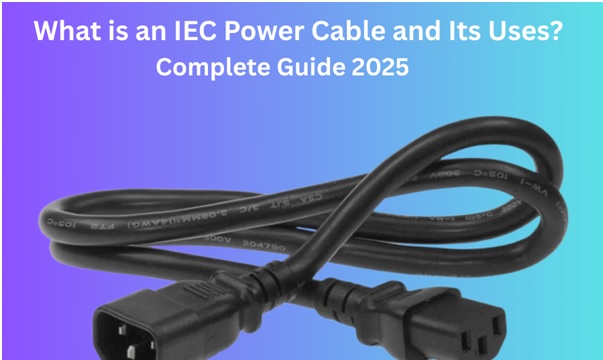
    What is an IEC Power Cable and Its Uses? Complete Guide 2025

    What is an IEC Power Cable and Its Uses? Complete Guide 2025
    What is an IEC Power Cable and Its Uses? Complete Guide 2025

    We plug our electronics into power cables to connect them to an energy supply every day. It’s likely that you utilize several types of punctuation without realizing it. IEC power cables are considered some of the world’s most important and frequently used electrical connectors.

    IEC is an abbreviation for International Electrotechnical Commission. The organization designs rules for electrical equipment that are followed worldwide. If you notice “IEC” on a power cable, it means it has been manufactured according to international guidelines. That’s why IEC power cord options can be trusted for safely connecting many different devices.

    Using standardized cables guarantees that electronic equipment works the same globally. You can find it in different sizes that meet various power needs. Many of the devices we use each day get their power from IEC power cables, including those at home and in hospitals.

    Learning about IEC power cables and their operation allows you to pick the correct cable for yourself. It allows you to use electrical equipment in a proper and safe way.

    What Does IEC Stand For?

    In 1906, the International Electrotechnical Commission was first founded. Internationally recognized experts in electrical engineering come together in this group to design standards. They want to ensure that electrical equipment is safer and able to work well globally.

    IEC standards cover many things, including:

    • Power Plugs and Sockets
    • Electrical Safety Requirements 
    • Testing Procedures
    • Performance Standards

    Products made by following IEC standards tend to align well in the marketplace. So, you can usually plug the same IEC power cord into devices made by different companies.

    Why IEC Standards Matter?

    IEC standards provide several important benefits:

    • Safety: All IEC cables meet strict safety requirements
    • Compatibility: Devices from different makers can use the same cables
    • Quality: Standards ensure cables perform reliably
    • Global Use: The same cables work in many countries

    Common Types of IEC Power Cables

    A wide variety of different types of IEC power cables are available. Every type serves a particular function and is constructed for that reason. Here are the main ones that you’ll often see:

    IEC C13/C14 Connectors

    These are probably the most familiar IEC power cables. You see them on:

    • Desktop Computers
    • Computer Monitors
    • Printers
    • Small Servers

    The C13 connector plugs into devices, while C14 connects to power sources.

    IEC C19/C20 Connectors

    These larger connectors handle more electrical current. They power:

    • High-End Servers
    • Professional Audio Equipment
    • Industrial Machines
    • Large Networking Devices

    IEC C7/C8 Connectors (Figure-8)

    These connectors look like the number 8. They’re used for:

    • Laptop Power Adapters
    • Small Electronic Devices
    • Audio Equipment
    • Gaming Consoles

    IEC C5/C6 Connectors (Mickey Mouse)

    Named for their distinctive shape, these connectors power:

    • Laptop Computers
    • Projectors
    • Some Printers
    • Portable Devices

    Where Are IEC Power Cables Used?

    IEC power cables appear in almost every industry and application. Here’s where you’ll commonly find them:

    Office and Business Equipment

    Most office equipment uses IEC power cables:

    • Computers: Desktop PCs and workstations
    • Monitors: LCD and LED displays
    • Printers: Laser and inkjet models
    • Networking Gear: Routers, switches, and modems

    Data Centers and IT Infrastructure

    Data centers rely heavily on IEC power cord solutions:

    • Servers: Rack-mounted and tower servers
    • Storage Systems: Hard drive arrays and backup systems
    • Network Equipment: High-capacity switches and routers
    • Cooling Systems: Fans and air conditioning units

    Medical Equipment

    Hospitals and clinics use IEC power cables for:

    • Diagnostic Machines: MRI and CT scanners
    • Monitoring Equipment: Heart rate and blood pressure monitors
    • Laboratory Devices: Testing and analysis equipment
    • Surgical Tools: Powered medical instruments

    Audio and Visual Equipment

    The entertainment industry depends on IEC power cable options:

    • Professional Speakers: Concert and studio monitors
    • Mixing Boards: Audio control equipment
    • Amplifiers: Power amplification systems
    • Video Equipment: Cameras and recording devices

    Industrial Applications

    Manufacturing facilities use IEC cables for:

    • Control Systems: Automated machinery controls
    • Testing Equipment: Quality control instruments
    • Communication Devices: Industrial networking gear
    • Safety Systems: Emergency and monitoring equipment

    Benefits of Using IEC Power Cables

    IEC power cables have several advantages compared to other unstandardized cables.

    Universal Compatibility

    IEC standards being used in every corner of the world ensures these cables will connect various manufacturer’s equipment. It simplifies the process of replacing and maintaining equipment.

    Proven Safety

    All power cords produced for the IEC are put through rigorous safety checks. As a result, the threats of accidents and damage to equipment are diminished.

    Reliable Performance

    The work of IEC ensures a consistent experience from cables in different environments. Critical equipment needs to be able to rely on this design.

    Cost Effectiveness

    Because they are standardized, IEC cables are available at many places and cost less. You will not have problems finding replacements as needed.

    Quality Assurance

    Cables carrying the IEC certification must meet certain standards for quality. Because of this, you can feel secure about the equipment’s capability and lasting power.

    How to Choose the Right IEC Power Cable

    Selecting the correct IEC power cable requires considering several important factors:

    Check Your Device Requirements

    Look at your equipment to identify:

    • Connector Type: What shape does the power inlet have?
    • Power Rating: How much electricity does the device need?
    • Voltage Requirements: What voltage does your equipment use?

    Consider Cable Length

    Choose appropriate cable length based on:

    • How far are you from the nearest outlet?
    • Is extra length required for movement?
    • Don’t get cables that are too long or too short

    Evaluate Environmental Conditions

    Think about where you’ll use the cable:

    • Will it be working in hot or cold environments?
    • Is there water exposure risk?
    • Will the cable be moved on a regular basis?

    Verify Certifications

    Always choose certified IEC power cable products that have:

    • UL Listing: Safety certification for US use
    • CE Marking: European safety compliance
    • RoHS Compliance: Environmental safety standards

    Installation and Safety Guidelines

    Proper installation ensures safe and reliable operation:

    Installation Best Practices

    Follow these steps for safe installation:

    • Disconnect the electricity first, before you connect cables
    • Make sure that connector has the correct device to connect with
    • Push until the connectors go in all the way.
    • Ensure that nothing is loose.

    Safety Precautions

    Keep these safety tips in mind:

    • Inspect Regularly
    • Replace Damaged Cables
    • Avoid Overloading
    • Keep Connections Dry

    Common Installation Mistakes

    Avoid these frequent errors:

    • Wrong Cable Type
    • Insufficient Power Rating
    • Poor Connections
    • Environmental Mismatch

    Maintenance and Care Tips

    Proper maintenance extends the life of your IEC power cables:

    Regular Inspection

    Check your cables monthly for:

    • Physical Damage: Cuts, cracks, or bent connectors
    • Heat Damage: Discoloration or melting
    • Connector Wear: Loose or damaged plug connections
    • Cable Flexibility: Stiffness or brittleness

    Cleaning and Storage

    Maintain your cables by:

    • Cleaning Connectors: Use dry cloth to remove dust and debris
    • Proper Storage: Coil loosely and store in dry locations
    • Protecting Ends: Use caps or covers when cables aren’t in use
    • Avoiding Stress: Don’t bend or twist cables excessively

    Future of IEC Power Standards

    IEC standards continue to evolve with technology. New developments include:

    Higher Power Applications

    New IEC power cord designs handle more electrical current for:

    • Electric Vehicle Charging
    • High-Performance Computing
    • Industrial Automation
    • Renewable Energy Systems

    Improved Safety Features

    Modern IEC cables include enhanced safety elements:

    • Better Insulation Materials
    • Improved Connector Designs
    • Advanced Testing Requirements
    • Environmental Protection Standards

    Conclusion

    The backbone of our electrical infrastructure has always been IEC power cables. These standardized connectors make sure your device gets reliable power around the globe, from the computer on your desk to the servers that run your favorite websites.

    Knowing about IEC power cable types and applications enables you to make fully informed decisions about your electrical needs. Whether you’re setting up office equipment or maintaining industrial systems, the right IEC power cord will keep your systems running safely and efficiently.

    Since these cables serve the whole world, they are not going away anytime soon as our world becomes more connected. By selection, installation, and proper routine maintenance of IEC power cables, you can rely on IEC power cables to run your equipment safely and efficiently for years to come.

    Why Eligibility Checks Are Crucial for Optimizing Urgent Care Billing and Reducing Claim Denials

    Urgent Care Billing
    Urgent Care Billing

    In the fast-paced environment of urgent care, efficient billing and accurate insurance verification are key to maintaining a healthy revenue cycle. With patients walking in for immediate attention, practices must act swiftly to confirm coverage, reduce administrative errors, and avoid delays in reimbursement. This is where Urgent Care Billing Services and the role of eligibility checks become essential. By integrating real-time eligibility verification, practices can enhance financial performance, minimize denials, and improve patient satisfaction.

    Understanding the Importance of Eligibility Checks in Urgent Care

    What Are Eligibility Checks?

    Eligibility checks are the process of verifying a patient’s insurance coverage and benefits before or during the visit. These checks confirm whether a patient has active insurance, what services are covered, deductible information, co-pay details, and any authorization requirements.

    Why Eligibility Checks Matter in Urgent Care Settings

    Due to the walk-in nature of urgent care, insurance verification often happens at the front desk or in real-time. Missing this step can lead to treating patients who are either ineligible or have limited benefits—ultimately resulting in denied claims and lost revenue.

    The Link Between Eligibility Checks and Urgent Care Billing Services

    1. Reducing Claim Denials and Rejections

    One of the most significant causes of denied claims is incorrect or outdated insurance information. Urgent Care Billing Services that include automated or manual eligibility checks significantly reduce the risk of billing errors.

    Key Benefits:

    • Fewer claims denied for coverage issues
    • Accurate use of insurance details like group number, payer ID, and eligibility status
    • Prevention of billing non-covered services

    2. Speeding Up the Billing and Reimbursement Process

    When eligibility is confirmed in advance, the billing team can submit clean claims faster. This not only speeds up reimbursements but also reduces the need for follow-ups or reworking claims.

    Operational Advantages:

    • Faster payment turnaround
    • Streamlined claim submission process
    • Minimal back-and-forth with payers for clarifications

    How Eligibility Checks Help the Practice Operate More Efficiently

    1. Enhanced Front-Office Workflow

    Real-time eligibility tools allow front-desk staff to verify coverage instantly. This helps staff educate patients about their responsibilities upfront—such as co-pays or out-of-network charges—improving transparency and cash collections.

    Front-Desk Improvements:

    • Shorter patient wait times
    • Better patient communication and satisfaction
    • Reduced confusion at the time of payment

    2. Improved Revenue Cycle Management (RCM)

    Eligibility verification is a critical first step in the revenue cycle. When integrated into urgent care billing services, it ensures that claims are initiated with accurate information from the start.

    RCM Enhancements:

    • Accurate billing codes based on covered services
    • Fewer accounts sent to collections
    • Better forecasting and cash flow management

    Benefits of Outsourcing Eligibility Checks with Urgent Care Billing Services

    1. Access to Dedicated Billing Experts

    Third-party billing services are staffed with professionals trained in payer-specific rules, coverage policies, and verification techniques. They use dedicated systems to ensure that eligibility is confirmed accurately and efficiently.

    Expertise You Gain:

    • Reduced administrative burden on in-house staff
    • Fewer errors due to manual data entry
    • Constant monitoring of payer changes and requirements

    2. Use of Advanced Billing Software and Integration

    Most outsourced billing companies use advanced platforms that integrate with EHRs and practice management systems to perform real-time eligibility checks. This results in seamless coordination between front-desk operations and back-end billing.

    Technology Benefits:

    • Real-time verification with multiple payers
    • Instant alerts on coverage issues
    • Electronic documentation of eligibility records for compliance

    Real-World Impact of Eligibility Checks in Urgent Care

    Practices that implement eligibility checks as part of their urgent care billing process often see:

    • Up to 30% reduction in claim denials
    • 20–40% increase in point-of-service collections
    • Significant improvement in billing accuracy and first-pass claim approval rate

    These results translate into healthier cash flow and improved operational efficiency.

    Conclusion In urgent care settings where time and accuracy are everything, integrating eligibility verification into the billing workflow is no longer optional—it’s essential. By outsourcing to professional Urgent Care Billing Services that include robust eligibility checks, practices can dramatically reduce claim denials, accelerate payments, and deliver a smoother patient experience. Ultimately, eligibility checks help the practice by strengthening the financial backbone and ensuring long-term sustainability.