Generative AI in Enterprises: Security, Compliance & Governance Explained

Generative AI

The first time an enterprise team sees generative AI work, it’s usually a “wow” moment.

A policy summary in seconds. A customer email drafted in the right tone. A spreadsheet turned into a clear narrative. A developer asking for a code snippet and getting something usable instantly.

Then—almost immediately—the second feeling arrives: “Wait… what exactly did we just expose?”

Because in an enterprise, every “prompt” is potentially a data event. Every output can become a decision. And every decision can become an audit question later.

So if you’re implementing generative AI inside an organization, security, compliance, and governance aren’t “later-stage concerns.” They’re the difference between a useful capability and a quiet risk that grows over time.

If you want a practical lens on enterprise-grade builds, here’s a reference worth keeping open: generative ai development company in india.

Generative AI

Why enterprises treat GenAI differently than everyone else

A consumer can try a new AI tool and move on if it’s not great. An enterprise can’t.

Enterprises have:

  • customer data they’re legally responsible for
  • regulated workflows (finance, healthcare, education, insurance, government)
  • internal IP and strategic plans
  • contractual obligations with vendors and clients
  • thousands of employees who will use tools in creative, unpredictable ways

This is why the question isn’t just “Is the model accurate?”
It’s also: where does the data go, who can access it, can we prove we’re compliant, and what happens when the model is wrong?

For organizations scaling across regions, it’s also helpful to evaluate delivery maturity across geographies—what you expect from a generative ai development company usa partner should be strong governance, not just flashy demos.

The real security risks (in plain language)

1) Data leakage through prompts

Employees paste things into prompts because they want results—fast. That might include:

  • customer records
  • internal financials
  • source code
  • incident reports
  • private HR or legal documents

Even if you trust the vendor, you still need to control what gets sent and who sends it.

2) Output risks (the “looks confident” problem)

GenAI can sound certain even when it’s wrong. In business settings, that can become:

  • incorrect legal language
  • flawed financial analysis
  • inaccurate medical guidance
  • misleading customer communications

It’s not just hallucination. It’s the confidence packaging that makes errors easy to miss.

3) Prompt injection (AI’s version of social engineering)

If your GenAI system reads external content (emails, tickets, documents), attackers can hide instructions inside that content:

  • “Ignore your rules.”
  • “Reveal confidential content.”
  • “Send this data to X.”

If guardrails aren’t designed properly, the model may comply.

4) Over-permissioned access (the silent killer)

AI is only as secure as the permissions behind it.

If a user has access to a file they shouldn’t, GenAI can surface it instantly. The model isn’t “hacking.” Your access control is being amplified.

5) Shadow AI usage

When official tools feel slow or restricted, teams quietly use whatever is easiest:

  • personal accounts
  • browser extensions
  • random SaaS tools

This is where risk becomes unmanageable—not because AI is evil, but because governance didn’t keep up with human behavior.

Security: what “good” looks like in an enterprise setup

The goal is simple: make secure usage the default, not the burden.

Identity and access controls (non-negotiable)

  • SSO (SAML/OIDC)
  • MFA enforcement
  • RBAC and least-privilege access
  • environment separation (dev/test/prod)

Also: avoid “one shared AI account.” In an audit, “who did what?” must be answerable.

Data classification and redaction

A practical approach:

  • classify data (public / internal / confidential / regulated)
  • restrict what can be sent based on classification
  • redact obvious sensitive data (PII/PHI/payment data) where possible

This gets stricter over time—by design.

Encryption and key management

  • encrypt in transit and at rest
  • understand who holds encryption keys
  • use customer-managed keys where required

Isolation and retention

If you’re using a vendor model:

  • confirm tenant isolation
  • confirm whether your data is used for training (and enforce “no” where needed)
  • define prompt/output retention policies

Enterprises should treat this as a contract clause, not an assumption—especially if you’re engaging on generative ai model development in usa where governance expectations are typically strict.

Monitoring and alerting

You need:

  • usage logs (who, when, app, data category)
  • anomaly detection (spikes, unusual patterns)
  • incident response playbooks (“what if confidential info was pasted?”)

Security teams don’t need to read every prompt. They need signals and controls.

Compliance: what changes when GenAI enters the building

Compliance is not a checklist—it’s the ability to prove you did the right thing consistently.

Depending on industry and geography, GenAI may touch:

  • GDPR and privacy laws
  • HIPAA (healthcare)
  • PCI DSS (payments)
  • SOC 2 / ISO 27001 expectations
  • sector rules (banking, insurance, government)

GenAI introduces two compliance headaches quickly:

1) Data residency and cross-border transfers

Enterprises need clarity on:

  • where data is processed
  • where it is stored
  • how long it is retained
  • what subcontractors are involved

2) Auditability of decisions

If AI output influences a decision, you may need:

  • traceability (inputs, sources, model version)
  • human review evidence
  • prompt/policy versioning
  • logs that survive audits

Six months later, “Why did we do this?” must have an answer.

Governance: the part that keeps GenAI usable at scale

Governance isn’t about slowing people down. It’s about preventing drift into chaos.

Good governance answers:

  • approved use cases
  • allowed data types
  • who owns each workflow
  • what must be reviewed by humans
  • how performance and risk are monitored

A simple operating model that works

  • executive sponsor (direction + risk posture)
  • governance group (security, legal, compliance, IT, business)
  • product owners per use case (accountability)
  • model risk / QA function (evaluation and monitoring)

No need for bureaucracy—just clear ownership.

Policies humans can follow

If your policy is 14 pages, adoption happens in secret.

Make it short:

  • what you can do with AI
  • what you cannot do
  • safe vs unsafe prompt examples
  • where to report issues
  • consequences of violation

Treat it like workplace safety: visible, consistent, normal.

Approved vs prohibited use cases

Start with safe wins:

  • internal knowledge Q&A on approved docs
  • drafting templates (emails, proposals) with human review
  • summarizing meeting notes, tickets
  • code assistance within controlled repos

Delay high-risk cases until controls mature:

  • autonomous credit decisions
  • clinical guidance without oversight
  • legal approvals without review
  • content that could be “official disclosure” without checks

This is exactly how the best gen ai applications company in usa mindset typically differs: they build guardrails first, then scale capabilities.

Guardrails that matter in real deployments

Human-in-the-loop (not performative)

Human review must be meaningful:

  • define what requires review
  • define approvers
  • log approvals and edits

If everything needs approval, teams bypass. If nothing needs approval, risk grows. Balance it.

RAG and retrieval controls

If you use RAG (retrieval augmented generation):

  • retrieval must respect existing permissions
  • sensitive sources must be restricted
  • documents must be curated and tagged
  • outputs should show internal citations where possible

Model evaluation and testing

Test for:

  • accuracy and completeness
  • data leakage behavior
  • prompt injection resilience
  • bias and toxicity risks
  • failure modes under edge cases

Not academic—repeatable.

Change management

Treat prompts and policies like software:

  • versioning
  • release notes
  • rollback plans
  • approvals for high-impact workflows

A practical rollout plan for enterprises

Phase 1: Foundation (2–6 weeks)

  • SSO + RBAC
  • approved tool stack
  • baseline policies
  • logging
  • pilot group + limited use cases

Phase 2: Controlled expansion (6–12 weeks)

  • RAG with permission-aware retrieval
  • redaction + classification guardrails
  • evaluation framework + red-team prompts
  • incident response playbook
  • training materials

Phase 3: Scale and specialization (ongoing)

  • expand use cases by function
  • integrate with CRM/ticketing/docs
  • continuous monitoring and model updates
  • measure value (time saved, error reduction), not just usage

The human truth: people are the system

In enterprise GenAI, the biggest variable isn’t the model.

It’s people.

People paste data because they’re busy. They trust confident output because they’re under pressure. They use shadow tools because friction feels like a tax.

So the best governance programs design behavior:

  • make the safe path easier than the unsafe one
  • educate without scaring
  • keep policies short and visible
  • measure what’s happening and improve quickly

That’s how GenAI becomes a durable enterprise capability—not a temporary experiment.

FAQs

1) Can we use GenAI without sending sensitive data to the model?

Yes. Use data classification controls, redaction, retrieval-based systems (RAG) that limit what is exposed, and approved internal knowledge sources with permission-aware access.

2) What’s the biggest security mistake enterprises make with GenAI?

Over-permissioned access. If the underlying file permissions are messy, GenAI will surface the mess faster.

3) How do we reduce hallucinations in enterprise use cases?

Use grounding (RAG), require citations for high-impact answers, enforce human review in regulated workflows, and continuously evaluate outputs with real test cases.

4) Do we need a dedicated AI governance committee?

For scaled usage, yes—at least a lightweight cross-functional group. Without clear ownership, risk and confusion grow fast.

5) What’s the best way to stop shadow AI usage?

Make approved tools easy to access, fast, and useful. Pair that with clear policy, training, and monitoring. If the “safe path” is painful, people will route around it.

CTA

If you’re rolling out GenAI across your enterprise, don’t aim for “quick adoption.” Aim for secure adoption—with guardrails that allow speed and control.

Explore an enterprise-ready approach here: https://www.enfintechnologies.com/generative-ai-development-company/

How Custom E-Learning App Development Improves Training ROI

Custom E-Learning App

Most companies don’t have a “training problem.” They have an adoption problem.

They invest in LMS licenses, create course libraries, run onboarding sessions, push compliance modules—and still hear the same quiet truth from managers: “People completed it, but nothing changed.”

That gap between completion and capability is where ROI disappears.

And it’s why more organizations are turning to custom e-learning app development. Not to build something flashy, but to build something that fits how people actually learn, how work actually happens, and how performance is actually measured.

If you want a benchmark for how modern learning platforms are being built today, here’s a helpful reference: elearning app development companyin india.

Custom E-Learning App

What “training ROI” really means (and why it’s often misunderstood)

Training ROI isn’t just “training cost vs training hours.” In the real world, ROI looks like:

  • Faster onboarding → new hires become productive sooner
  • Better compliance → fewer incidents, fewer penalties
  • Higher performance → improved sales conversion, fewer errors, better customer service
  • Lower support load → fewer repeated questions and escalations
  • Lower churn → people stay because they grow and feel capable
  • Less waste → fewer paid tools that no one uses

Most training systems track the easiest metric—completion—because it’s simple. But completion is a weak proxy for capability.

A custom build can track what actually matters: competence, confidence, retention, and performance impact.

Why off-the-shelf platforms struggle to prove ROI

Off-the-shelf LMS platforms are useful, especially early. But they often struggle in enterprise reality because they’re designed to be generic.

1) Low relevance = low engagement

When learning isn’t tightly connected to daily work, people treat it like background noise.

2) Bad UX kills momentum

If it takes too many clicks to find the right module, people quit. Training is rarely urgent—so friction wins.

3) One-size-fits-all learning paths

A senior sales lead and a new customer support hire don’t need the same path. Generic platforms often can’t personalize deeply without heavy admin overhead.

4) Weak integration with real workflows

Training content lives in one place. Work happens elsewhere—CRM, service desk, Slack, Teams, internal portals. When learning is separate from work, it’s forgotten.

5) Analytics don’t connect to performance

Many platforms show “hours spent” and “modules completed” but can’t link learning to outcomes like tickets resolved, errors reduced, or sales improved.

That’s why leadership often sees training as a cost center—even when training teams work hard.

What custom e-learning apps do differently

Custom e-learning apps are built around your business reality. And that changes how ROI shows up.

1) Training becomes “in the flow of work”

The most powerful shift: learning stops being a destination and becomes a companion.

Examples:

  • A CRM-integrated micro-module appears when a rep reaches a new pipeline stage.
  • A short refresher pops up when a support agent tags an issue incorrectly.
  • A compliance reminder appears when someone is about to perform a high-risk action.
  • A guided checklist triggers when a field technician starts a new job type.

This is how you reduce errors and increase performance without asking people to “go do training.”

If you’re building for enterprises across regions, the workflow + integration maturity you’d expect from elearning app development services in usa is exactly what makes this possible.

2) Personalization becomes practical

A custom platform can tailor learning based on:

  • role, department, region
  • seniority level
  • assessment results
  • performance signals
  • learning preferences (video vs reading vs practice)

When learners feel the training is “for me,” they stay. And staying is half the ROI battle.

3) Better assessment = fewer illusions, more proof

Instead of passive video completion, custom platforms can use:

  • scenario-based questions (“what would you do next?”)
  • branching simulations
  • role-play modules (especially useful with AI coaching)
  • timed decision tasks (closer to real work pressure)
  • spaced repetition quizzes (memory reinforcement)

That’s how training becomes demonstrated skill—not content consumption.

4) Content becomes modular and reusable

Rather than 60-minute courses nobody revisits, custom systems make it easy to build:

  • 3–7 minute microlearning units
  • reusable templates (SOPs, product updates, policy changes)
  • role-based bundles

This reduces long-term content production cost—another ROI lever people underestimate.

The ROI levers custom development unlocks

Lever 1: Reduced onboarding time

Onboarding is expensive. Every extra week to ramp up has a real cost.

Custom apps improve onboarding by:

  • guiding new hires through role-specific journeys
  • offering just-in-time help
  • integrating with internal tools and FAQs
  • tracking competency milestones (not just “completion”)

Result: faster time-to-productivity.

Lever 2: Higher completion and higher retention

Custom apps can:

  • reduce friction to one tap
  • provide personalized next steps
  • send smart reminders (not spammy)
  • keep learning lightweight but consistent

Result: more learning without resentment.

Lever 3: Fewer errors and rework

Training ROI spikes when training prevents mistakes.

When learning is tied to workflow triggers, you see:

  • fewer compliance violations
  • fewer customer escalations
  • fewer SOP deviations
  • fewer quality defects

Result: measurable savings.

Lever 4: Better manager visibility and coaching

Custom dashboards can show:

  • skill gaps by team
  • readiness scores
  • confidence vs competence gaps
  • recommended coaching actions

Result: coaching becomes targeted, not generic.

Lever 5: Reduced tool waste

Many companies pay for multiple tools: LMS, internal wiki, external courses, shared drives, PDFs.

A unified learning experience—often anchored by a custom learning management system—reduces overlap and confusion.

Result: fewer licenses, less chaos, better governance.

The human factor: training succeeds when it respects people’s time

People don’t resist training because they hate learning.
They resist training because they’re busy—and because training often feels disconnected from the work they’re judged on.

A good custom platform respects three human realities:

  1. Attention is fragile → keep learning short and restartable
  2. Confidence matters → guide learners, don’t shame them
  3. Relevance is everything → connect learning to daily work

When you build around these truths, ROI becomes a natural outcome.

Features that directly drive ROI in e-learning apps

If you’re choosing what to build first, prioritize the ROI drivers:

  • Role-based learning paths
  • Microlearning + content templates
  • Scenario-based assessments & simulations
  • Spaced repetition
  • Smart notifications
  • Offline mode (for field teams)
  • Integrations (SSO, HRMS, CRM, helpdesk, Teams/Slack)
  • KPI-linked analytics dashboards

This is where the difference between a generic LMS and an elearning application development company mindset becomes clear: the goal is measurable performance change, not course completion.

A practical build roadmap (without overbuilding)

Phase 1: MVP (prove adoption)

  • learner-first UX
  • role-based paths
  • microlearning support
  • assessments + basic reporting

Phase 2: Workflow integration (prove impact)

  • SSO + provisioning
  • integrations with core tools
  • contextual learning triggers
  • manager dashboards

Phase 3: Optimization (prove scalability)

  • recommendation engine (rule-based first)
  • content governance + version control
  • deeper analytics and KPI mapping

Phase 4: Differentiation (create competitive edge)

  • AI coaching and feedback
  • simulations at scale
  • personalized skill maps
  • multilingual + localization

Teams evaluating partners at this stage typically look for the discipline you’d see in a e learning app development company in usa—strong architecture, strong analytics, and strong governance.

Measuring ROI (so leadership believes it)

Track leading and lagging indicators:

Leading indicators

  • activation rate (started within first week)
  • completion + repeat engagement
  • assessment pass rates
  • time spent per module (too high can be bad)
  • learner feedback scores

Lagging indicators

  • time-to-productivity for new hires
  • error rate reduction
  • support ticket reduction
  • compliance incidents
  • sales performance improvements
  • CSAT/NPS changes

Once you can connect learning to a business KPI, training stops being a debate.

FAQs

1) How is a custom e-learning app different from a standard LMS?

A standard LMS focuses on course management and completion tracking. A custom app is designed around your workflows, integrates with your tools, and measures performance outcomes—not just completions.

2) Does custom development always mean high cost?

Not necessarily. A phased build can start with an MVP and expand. Over time, customization can reduce tool overlap, content waste, and onboarding time—improving net ROI.

3) What’s the biggest ROI gain most companies see?

Usually faster onboarding and fewer operational errors. Those outcomes are measurable and tend to show impact quickly.

4) Can a custom platform support offline learning?

Yes—especially valuable for field teams. Offline-first design helps keep learning consistent even in low connectivity areas.

5) How do you connect training to business performance?

By integrating with systems of record (CRM/helpdesk/HRMS), mapping skill metrics to KPIs, and tracking before/after performance changes by cohort.

CTA

If you want training that doesn’t just “run,” but actually improves capability and outcomes, a custom approach is the most direct path.

Explore a modern build approach here: best elearning application development services in usa

Custom Software vs Off-the-Shelf Solutions: Which Is Right for Your Business?

Custom E Learning

Most businesses don’t wake up excited to “buy software.” They wake up thinking about deliveries, customers, payroll, targets, hiring, service quality, deadlines—real work.

Software is supposed to help that work move faster.

But the moment you start choosing between custom software and off-the-shelf solutions, the decision gets oddly emotional. One side promises speed: “Just subscribe and launch.” The other side promises power: “Build exactly what you need.”

And both sides are right… depending on your business reality.

This blog is a practical guide to choosing the right approach—without hype, without shame, and with the kind of human honesty that comes from seeing how these decisions play out six months later.

If you want a reference for what modern delivery looks like, here’s a useful starting point: custom software development companies in usa.

Custom Software

Start with the real question: “What are we trying to fix?”

Before you compare features, ask a simpler question:

Is this software supporting your business… or defining it?

  • If software is a support function (email, accounting basics, simple HR), off-the-shelf usually wins.
  • If software is part of your competitive advantage (customer experience, operations efficiency, proprietary workflows), custom starts making more sense.

A quick example:
Using Google Workspace isn’t your strategy.
But the workflow that makes your onboarding 3× faster than competitors might be.

What “off-the-shelf” really means (and why it’s attractive)

Off-the-shelf software includes:

  • SaaS subscriptions (CRMs, HRMS, accounting, ticketing)
  • packaged enterprise systems
  • plug-and-play platforms with configurations

Why businesses love it

  1. Speed to value — live in days, not months
  2. Lower upfront cost — subscription pricing
  3. Proven patterns — common workflows covered
  4. Maintenance handled by vendor — updates, patches, improvements

If you need a solution quickly and your process can adapt, off-the-shelf is a smart move.

What “custom software” really means (and what people forget)

Custom software is not just “build an app.” It’s:

  • product discovery
  • workflow mapping
  • UX design
  • architecture decisions
  • security and compliance planning
  • ongoing enhancements
  • ownership of operations and support

A growing number of teams also use custom builds to ride custom software development trends like microservices, composable architectures, and AI-assisted workflows—because “generic” tools rarely evolve at the exact pace your business needs.

Why businesses choose custom

  1. Exact fit for your workflows
  2. Differentiation
  3. Integration depth
  4. Control over roadmap and data

Custom isn’t always “better.” But when it’s right, it becomes a serious advantage.

The hidden costs nobody talks about

This is where decisions become real.

Hidden costs of off-the-shelf software

1) Subscription creep
It starts small. Then you add users. Add-ons. Another tool to fill a gap. Suddenly the “cheap” tool costs more—forever.

2) Workflow compromises
Teams create workarounds:

  • spreadsheets on the side
  • manual approvals
  • duplicate data entry
  • “temporary” processes that become permanent

3) Integration limitations
Many tools integrate “on paper” but not in the way your specific operations require.

4) Vendor dependency
Roadmap changes, pricing changes, feature deprecations—you adapt, not them.

Hidden costs of custom software

1) Discovery and clarity
If requirements are unclear, custom becomes a moving target.

2) Time
Custom takes time to do right—especially if security, scale, and reliability matter.

3) Maintenance responsibility
Even with a partner, your organization owns prioritization.

4) Change management
If people don’t adopt it, even great software fails.

The best choice isn’t about cost alone. It’s about total cost of ownership plus business impact—especially in markets where technology budgets are closely scrutinized, like the custom software development market in usa.

A practical decision framework (use this instead of guessing)

1) Is this process a competitive advantage?

  • Yes → lean custom
  • No → off-the-shelf is likely enough

2) How unique are your workflows?

  • Standard → off-the-shelf
  • Distinct, multi-step, role-heavy → custom helps

3) How fast do you need results?

  • Weeks → off-the-shelf or hybrid
  • 2–4 months for a strategic build → custom

4) How much change can your team handle?

  • Low change tolerance → off-the-shelf
  • Willing to adopt new workflow → custom

5) What are your compliance and security needs?

Regulated environments can go either way:

  • some need custom controls
  • some benefit from certified enterprise SaaS

6) How important is data ownership and portability?

If data is core, avoid lock-in.

When off-the-shelf is the right choice

Choose off-the-shelf when:

  1. You’re solving a standard problem (payroll, basic CRM, email)
  2. You’re still validating your model
  3. Your team can adapt to the tool
  4. You need reliability without building an engineering org
  5. You need proven compliance reporting quickly

Off-the-shelf is often the best “start,” even if custom becomes the long-term plan.

When custom software is the right choice (where ROI shows up)

Custom makes sense when:

  1. Your workflow is your product
    Marketplaces, logistics, unique service delivery—custom is often non-negotiable.
  2. You’re drowning in manual work
    If your teams copy data between systems daily, custom integration pays back.
  3. You need a unified experience
    Instead of five tools and twelve spreadsheets, one tailored platform.
  4. You need performance at scale
    Real-time systems, heavy automation, high concurrency—generic tools may struggle.
  5. You need deep control
    Vendor limits slow you down. Custom gives you the steering wheel.

This is especially true when your operating model demands mature delivery standards—whether you’re evaluating best custom software development in india or global teams.

The hybrid approach: what most smart companies do

The best answer is often neither extreme.

A practical approach:

  • Use off-the-shelf for standard functions (HRMS, payroll, email)
  • Build custom around differentiators (core workflow, customer experience, unique ops)
  • Integrate everything cleanly through APIs

This is how you avoid rebuilding everything while still owning what matters.

In many cases, the custom layer becomes your “business OS”—the one place your processes live—while SaaS tools plug in around it. That’s modern custom software development in action.

A human perspective: software decisions are trust decisions

When you choose off-the-shelf, you’re trusting a vendor with your workflow and future pricing.
When you choose custom, you’re trusting a team with your time, budget, and operational success.

So the right question isn’t “custom vs SaaS?”
It’s:

Where do we want control, and where are we happy to outsource?

Control is expensive. Outsourcing is flexible. Choose intentionally.

A quick scoring guide (simple, but effective)

Score each statement 1 (low) to 5 (high):

  1. Our workflows are unique and critical
  2. We lose time due to manual workarounds
  3. Integrations are essential
  4. Data ownership matters
  5. Differentiation depends on software experience
  6. We can invest time in discovery and build
  7. We expect rapid iteration after launch

Mostly 4–5 → custom/hybrid
Mostly 1–3 → off-the-shelf

FAQs

1) Is custom software always more expensive than SaaS?

Not always long-term. SaaS has ongoing fees, add-ons, and tool overlap. Custom has upfront build + ongoing maintenance. The best comparison is 3–5 year total cost.

2) What’s the fastest way to decide?

Map your workflows and identify what’s truly differentiating. If the differentiators can’t be supported cleanly by SaaS, go custom or hybrid.

3) What if we choose SaaS now but need custom later?

That’s common. Choose SaaS tools with strong APIs and clean data export so you can evolve to custom without rewriting everything.

4) When does hybrid make the most sense?

When you want speed for standard functions but need custom control for core workflows and customer experience.

5) How do we avoid custom projects going out of scope?

Strong discovery, clear MVP definition, phased delivery, and measurable success metrics tied to business outcomes.

6) How do market factors affect the choice?

In many organizations, decision-making is influenced by budget cycles, security posture, and vendor procurement rules—especially in the custom software development services market where procurement and compliance expectations shape the build vs buy decision.

CTA

If you’re deciding between “buying a tool” and “building a platform,” don’t guess. Start with a workflow audit and a simple roadmap: what to buy, what to build, and what to integrate.

Explore how modern teams approach scalable delivery here: https://www.enfintechnologies.com/custom-software-development/

Industry-Wise AI Development Solutions: Manufacturing, Healthcare, Retail & BFSI

Industry-Wise AI Development Solutions

AI is no longer a “future investment” line item that sits politely in a strategy deck. It has moved into daily operations—quietly, almost invisibly—where it either saves time and reduces errors… or becomes another tool nobody trusts.

What most businesses discover after the first few pilots is a slightly uncomfortable truth: AI doesn’t succeed because it’s powerful. It succeeds because it fits the industry reality. The data is different. The risks are different. The workflows are different. The definition of “good enough” is different.

A recommendation engine that feels fine in retail can be unacceptable in BFSI. A model that’s “mostly accurate” might be okay for internal manufacturing planning, but dangerous in healthcare decision support. The industry changes everything.

So instead of treating AI like one big bucket, let’s walk through industry-wise AI development solutions for Manufacturing, Healthcare, Retail, and BFSI—what actually works, what typically fails, and what a realistic implementation path looks like.

If you’re looking for a practical reference point on enterprise AI delivery, here’s a direct one: ai development company in usa.

Industry-Wise AI Development Solutions

The big shift: AI moves from “automation” to “advantage”

Most teams start with AI for productivity:

  • summarizing documents
  • drafting emails
  • speeding up analysis
  • automating repetitive tasks

That’s valuable. But the real enterprise value appears when AI improves outcomes:

  • fewer defects
  • faster clinical workflows
  • lower returns
  • reduced fraud losses
  • higher conversion
  • better customer experience without increasing headcount

And that’s where industry-specific design matters—because outcomes are deeply tied to process.

1) Manufacturing: AI that protects uptime and quality

Manufacturing is where AI earns its respect the hard way. Not by making pretty dashboards—by preventing breakdowns, reducing waste, and improving throughput.

What manufacturing leaders actually want

  • fewer unplanned downtimes
  • consistent product quality
  • less scrap and rework
  • better forecasting for inventory and maintenance
  • safer operations

High-impact AI solutions in manufacturing

Predictive maintenance
AI learns patterns from sensor and machine data (vibration, temperature, load, fault history) and helps teams schedule maintenance before failure. The best versions don’t scream “ALERT” all day; they provide actionable windows and confidence levels.

Computer vision for quality inspection
Camera-based models spot micro-defects, alignment issues, surface imperfections, and packaging errors at scale. This works best as “human + AI,” where AI reduces fatigue-driven misses and humans handle edge cases.

Demand forecasting and production planning
AI blends historical demand, seasonality, lead times, and plant capacity signals to reduce overproduction and stockouts—especially valuable when supply chains are volatile.

Process optimization (advanced)
For plants with strong data maturity, AI can help tune process parameters, reduce energy usage, and identify bottlenecks before they become expensive.

Human reality in manufacturing

Shop-floor teams adopt AI when it respects their environment:

  • minimal false alarms
  • clear “why” behind recommendations
  • quick overrides
  • practical integration into shift routines

This is where choosing the right execution partner matters—whether that’s an ai development company in india for rapid build and iteration, or a global delivery model depending on rollout scale.

2) Healthcare: AI that reduces burden without increasing risk

Healthcare is where AI can help the most—and where mistakes cost the most.

The goal is not “AI replaces clinicians.” The goal is:
AI reduces administrative load and improves workflow efficiency, while keeping clinical judgment with humans.

What healthcare providers actually want

  • faster triage and routing
  • reduced documentation burden
  • fewer no-shows
  • better follow-ups and continuity
  • strong compliance and auditability

High-impact AI solutions in healthcare

Clinical documentation support
AI drafts visit summaries, SOAP notes, discharge instructions, and patient-friendly explanations. The safe pattern is: draft → clinician review → approve → audit trail.

Intelligent triage and symptom intake
AI-guided intake can structure symptoms and route patients to the right care level. This must be framed as decision support—not diagnosis—and built with guardrails.

Medical coding and revenue cycle support
AI can suggest ICD/CPT codes, detect documentation gaps, and flag claim risk. This often shows clear ROI because outcomes are measurable.

Patient engagement automation
Reminders, follow-up check-ins, post-discharge questionnaires—simple automation reduces readmissions and improves adherence.

Human reality in healthcare

Clinicians adopt AI when it feels like time-saving support—not another screen to fight.

3) Retail: AI that turns attention into revenue and loyalty

Retail is a high-volume, high-noise environment. Tiny improvements multiply fast.

What retail teams actually want

  • higher conversion
  • lower cart abandonment
  • fewer returns
  • optimized pricing and inventory
  • faster support without losing brand tone

High-impact AI solutions in retail

Personalization and recommendations
Not just “you may also like,” but discovery, bundling, and relevance. The best systems explain recommendations lightly, so it feels helpful—not creepy.

Dynamic pricing and promotion optimization
AI learns price sensitivity and promotion performance and helps retail teams protect margin while moving inventory intelligently.

Demand forecasting and inventory optimization
Getting “right product, right place, right time” reduces stockouts and dead stock—often one of the highest ROI areas.

Customer support copilots
AI handles repetitive queries, suggests replies, summarizes customer context, and escalates edge cases to humans.

Human reality in retail

Customers have low patience. AI must be fast, accurate, and consistent—especially for refunds, delivery, and policy answers.

4) BFSI: AI that must be accurate, auditable, and defensible

BFSI (Banking, Financial Services, Insurance) is where AI is both highly valuable and heavily constrained.

Here, AI isn’t just judged by performance—it’s judged by fairness, explainability, auditability, and compliance.

What BFSI leaders actually want

  • reduced fraud losses
  • better risk signals
  • faster underwriting and claims processing
  • improved collections efficiency
  • safer customer service automation
  • stronger AML prioritization

High-impact AI solutions in BFSI

Fraud detection and transaction monitoring
AI detects anomalies across device, transaction, and behavioral signals. The trick is reducing false positives—because blocking legitimate customers creates churn.

Underwriting and credit risk support
AI enriches risk signals and speeds up decision preparation, but needs clear explanations, bias testing, and human override.

AML and compliance case prioritization
AI helps analysts focus on the most suspicious cases first, reducing overload while improving detection.

Compliant customer service copilots
AI drafts responses, retrieves policy details safely, and supports agents—under strict guardrails.

Human reality in BFSI

“Mostly correct” isn’t good enough for many workflows. AI must be governed like a risk system, not treated like a chatbot.

What’s common across industries: the implementation playbook that works

Even though each industry differs, successful AI programs follow a similar path:

1) Choose use cases with measurable wins

Start where success is provable:

  • defect reduction
  • time saved per case
  • claim processing speed
  • conversion lift
  • fraud loss reduction

2) Get data readiness honest

AI fails more often due to data than models:

  • clean sources
  • clear ownership
  • permission-aware access
  • retention and privacy rules

3) Start with “assist,” then move to “automate”

Early wins come from AI that:

  • suggests
  • drafts
  • flags
  • summarizes

Automation comes later—after trust.

4) Governance from day one

  • role-based access
  • logging and audit trails
  • evaluation and testing
  • incident response playbooks
  • human review rules for high-risk outputs

5) Continuous monitoring

Track drift, false positives/negatives, user feedback, and edge cases. AI is not “ship and forget.”

This is what separates a quick pilot from a top ai development company approach that scales responsibly.

The human perspective: AI succeeds when it feels respectful

AI succeeds when it respects the people using it.

  • For operators: it reduces interruptions, not adds them
  • For clinicians: it saves time without risking safety
  • For retail customers: it feels helpful, not pushy
  • For risk teams: it feels defensible, not mysterious

When AI becomes a calm assistant—transparent, reliable, and easy to override—people adopt it. And adoption is the true ROI multiplier.

FAQs

1) Which industry gets the fastest ROI from AI?

Retail and manufacturing often see fast ROI due to volume-based gains (conversion, forecasting, defect reduction). BFSI can see major ROI in fraud detection, but governance requirements are heavier.

2) Do we need separate AI models per industry?

Not always. The foundation (LLMs, vision models, forecasting) can be shared, but the data, guardrails, workflows, and evaluation must be industry-specific.

3) What’s the safest way to start AI in healthcare and BFSI?

Start with assistive workflows: summarization, documentation support, triage intake assistance, case prioritization, and agent copilots—with human review and audit trails.

4) What is “agentic AI,” and where does it fit?

Agentic AI refers to AI systems that can plan and take actions across tools (e.g., create tickets, trigger workflows, pull data). It fits well in operations-heavy environments—but needs strong permissions, approvals, and monitoring. For many enterprises, working with a best agentic ai development company means prioritizing guardrails before autonomy.

5) What usually causes AI projects to fail?

Unclear use cases, messy data, lack of governance, poor integration into workflows, and not measuring outcomes properly.

CTA

If you’re exploring AI development solutions, don’t start with “what model should we use?” Start with:

Which workflow should we improve first—and how do we prove it worked?

Pick one high-impact use case, build it with security and governance from day one, and scale only after trust is earned.

Explore an enterprise-ready build approach here: https://www.enfintechnologies.com/ai-development-services/

Tailored Software versus Ready-Made Solutions: Which Suit Your Company Best?

Tailored Custom Software

Most software decisions don’t start with a spreadsheet. They start with a feeling.

A team is tired of doing the same work twice. Someone is maintaining a “critical” Excel file that only one person understands. Your operations rely on a chain of tools that don’t really talk to each other. And then one day, in a meeting that wasn’t even meant to be strategic, someone says: “There has to be a better way.”

That’s when the real decision arrives—often disguised as a simple question:

Do we buy something ready-made and move quickly…
or build something tailored to how we actually work?

There isn’t a one-size-fits-all answer. But there is a best-fit answer for your company, your stage, your constraints, and your ambition. The goal of this guide is to help you choose without hype—using practical reasoning, real-world trade-offs, and the human truth behind software adoption.

Tailored Custom Software

What you’re actually choosing: Speed, Fit, or Control

Whether you realize it or not, every software decision prioritizes one (or more) of these:

  1. Speed — “We need it working this month.”
  2. Fit — “We need it to match our exact workflow.”
  3. Control — “We need ownership, flexibility, and reduced dependency.”

Ready-made software typically wins on speed.
Tailored software typically wins on fit and control.

Your job is to decide which matters most right now—and what you can compromise on without hurting the business.

If your company is evaluating this seriously, it helps to understand how a structured custom software development for startups approach differs from simply “building an app.”

What is a ready-made solution?

Ready-made solutions are built for many companies at once—so you can adopt them quickly.

Think of: CRMs, helpdesk tools, HR platforms, accounting suites, project management tools, and generic LMS platforms.

Benefits of ready-made software

  • Quick deployment (often days or weeks)
  • Proven features and stability
  • Vendor maintenance and updates
  • Predictable subscription pricing
  • Training resources and support communities

Trade-offs you accept

  • Workflows may not match your reality
  • Customization is limited or expensive
  • Feature bloat (you pay for what you don’t use)
  • You rely on the vendor’s roadmap
  • Integrations may be shallow or messy

Ready-made tools can be fantastic—especially when your needs are common and your team can adapt.

What is tailored (custom) software?

Tailored software is built specifically around your workflows, roles, rules, integrations, and business logic.

This could be:

  • an operations platform
  • a customer or vendor portal
  • a marketplace or booking system
  • a data-heavy analytics product
  • an internal workflow tool with approvals and role controls
  • a multi-tenant SaaS platform

Benefits of tailored software

  • Your workflow becomes the default (not a workaround)
  • Stronger adoption because it “fits” naturally
  • Integrations can be clean and secure
  • You control the roadmap and priorities
  • Easier to evolve as the business grows

Trade-offs you accept

  • Higher upfront investment
  • Longer build time (compared to SaaS)
  • Ongoing maintenance and iteration
  • You need strong product/engineering ownership

Tailored systems become especially valuable when your workflow is unique or high-stakes—like in custom healthtech software development services where privacy, auditability, and real-world reliability are non-negotiable.

The hidden cost that decides everything: Workarounds

Here’s the simplest way to know whether ready-made software is still serving you:

How many workarounds does your team need to make it work?

Workarounds often look like:

  • exporting data to Excel to finish “the real work”
  • copy-pasting between tools
  • manual approvals in WhatsApp because the platform can’t model your flow
  • duplicated entries “just to be safe”
  • shadow systems built by power users
  • delays caused by lack of integration

Workarounds create invisible taxes: time loss, errors, frustration, and burnout.

Tailored software often wins because it removes workarounds by designing the system around the workflow instead of forcing the workflow to bend around the tool.

This is a major reason companies invest in custom api integration services in india—because integration isn’t a “nice add-on.” It’s the difference between smooth operations and daily friction.

When ready-made solutions are the best choice

Ready-made software is usually the best fit when:

1) Your need is common and standardized

Payroll, accounting, ticketing, baseline CRM—these are solved problems. Building custom often doesn’t make financial sense.

2) Speed matters more than uniqueness

If you need something live within a month and can’t afford a build cycle, SaaS wins.

3) Your team can adapt to the tool

Some organizations are comfortable changing their processes to match software. If that’s you, ready-made can deliver strong ROI.

4) You’re still learning your process

If you’re not sure what the “right workflow” even is yet, buying a tool can help you learn—before you commit to custom.

When tailored software is the best choice

Tailored software is usually worth it when:

1) Your workflow is part of your competitive advantage

If your company wins because you operate differently—faster onboarding, better service delivery, smarter approvals—then software that matches your flow protects that advantage.

2) You’re drowning in workarounds

If teams spend hours “managing the tool” instead of doing the work, custom can return time and reduce errors immediately.

3) Integrations are mission-critical

When your business needs systems to work together—CRM + finance + inventory + identity + analytics—tailored software creates a reliable backbone.

This is where choosing the best custom software development services in india can reduce long-term operational risk, especially for businesses that scale across departments quickly.

4) You need strict security, roles, or audit trails

Regulated industries need more than convenience. They need control. Tailored systems can be designed precisely for privacy, governance, and compliance.

5) You’re building a product (SaaS / marketplace / platform)

If software is your business, then tailored development is not optional—it’s the product strategy. This includes domain-driven products like custom lms development services where learning experiences and outcomes can be a key differentiator.

Total cost of ownership: the part companies underestimate

Most comparisons focus on sticker price. But real cost includes the long-term operational picture.

Ready-made software cost profile

  • Lower upfront cost
  • Predictable subscription pricing
  • Cost increases as users/features grow
  • Add-ons and integrations can raise cost sharply
  • Switching later can be painful (vendor lock-in)

Tailored software cost profile

  • Higher upfront build cost
  • Ongoing maintenance and iteration
  • More control over scaling costs
  • Less dependency on vendor roadmap
  • Easier to implement deep integration strategies

But the biggest unlisted cost is this:

The cost of inefficiency.

If your tool forces workarounds, delays, and duplicate work, the “cheaper” option can quietly become the more expensive one.

A practical decision framework: 7 questions to answer honestly

  1. Is our workflow standard or genuinely unique?
  2. How expensive are our workarounds (time, errors, stress)?
  3. How quickly do we need a solution live?
  4. Do we need deep integrations and automation?
  5. Are we subject to compliance/security obligations?
  6. Will this system be core infrastructure for 3–5 years?
  7. Do we have clarity on ownership and change management?

If your answers lean toward standard + speed → ready-made.
If they lean toward unique + core + integration + control → tailored.

If you’re in between, a hybrid approach can be ideal.

The hybrid approach: buy the baseline, tailor what makes you special

Many companies succeed by combining both worlds:

  • adopt SaaS for common needs
  • build tailored workflows, portals, and integrations around it
  • automate what wastes time
  • gradually replace modules that don’t fit as you scale

Example: Use an off-the-shelf CRM, but build a tailored onboarding portal that integrates with it. You keep speed while owning the experience.

This approach is especially common in global learning and training setups—where companies might use a standard platform but still need custom elearning app development services in usa for personalized journeys, analytics, and integration to internal systems.

Common mistakes companies make (and how to avoid them)

Mistake 1: Choosing based on demos, not daily reality

A demo is polished. Your operations are not. Always test with real workflows and real users.

Mistake 2: Overbuilding too early

Custom doesn’t mean “build everything.” Start with one high-impact bottleneck and expand.

Mistake 3: Ignoring adoption and change management

Even perfect software fails if teams don’t adopt it. Training, onboarding, and internal champions matter.

Mistake 4: Not planning an exit

Whether you buy or build, plan how you can migrate later. Lock-in isn’t only a vendor problem—custom systems can also become traps if poorly architected.

Closing: choose what reduces friction now and creates control for the future

The best software decision isn’t “tailored vs ready-made.”
It’s choosing what fits your company today—without damaging what you’ll need tomorrow.

  • If you need speed and your workflows are common: choose ready-made.
  • If your workflows are unique, integrations are critical, and control matters: go tailored.
  • If you’re unsure: go hybrid and evolve with confidence.

And one human truth worth remembering:

When software fits your reality, work feels lighter.
People stop fighting the system.
Execution becomes smoother.
And growth stops feeling like chaos.

That’s how you know you chose well.

CTA Section

If your workflows are unique, your integrations matter, or you’re tired of workarounds, explore our approach to best custom software development company in usa delivery—built for clarity, security, and long-term scale.
FAQ

1) When should a company choose ready-made software?
When the need is standard (like payroll or accounting), speed is critical, and the team can adapt workflows to the tool.

2) When does tailored software make more sense?
When your workflow is unique, you need deep integrations, security controls are strict, or workarounds are becoming costly.

3) Is custom software only for enterprises?
No. Many startups and mid-sized businesses build tailored systems once the workflow stabilizes and inefficiencies become expensive.

4) Is hybrid a good approach?
Yes. Many companies adopt SaaS for baseline needs and build tailored portals/workflows/integrations where differentiation is needed.

5) What’s the biggest hidden cost in ready-made tools?
Workarounds—manual processes, duplicate work, and lost time due to poor fit or weak integration.

Trailer Coupling Parts Explained: What Every Camper Owner Should Know

Trailer Coupling Parts

If you’re new to the world of camper trailers, or even if you’ve been towing for years, understanding your trailer coupling parts is absolutely crucial. Getting to know these components isn’t just about maintenance—it’s about safety, reliability, and making sure your weekend getaway doesn’t turn into a roadside nightmare.

Let’s break down what you need to know about the essential parts that connect your vehicle to your beloved camper.

Why Your Camper Trailer Coupling Matters

Your camper trailer coupling is the critical link between your vehicle and your home away from home. It’s what keeps everything connected when you’re bombing down the highway or navigating rough bush tracks. Understanding how it works and what parts make up this system can save you hassles and potentially dangerous situations on the road.

Think of it this way: you wouldn’t hit the road with dodgy brakes, so why risk it with a coupling system you don’t understand?

Trailer Coupling Parts

The Main Components of a Camper Trailer Tow Hitch System

When you look at a complete tow hitch setup, there are several key components working together. Each plays a specific role in keeping your trailer safely attached to your vehicle.

Coupling Heads

The coupling head is what actually connects to your vehicle’s towball. This is the business end of your trailer’s connection system. There are different types available, including standard couplings and off-road variants designed for rougher terrain.

You’ll find options like the AL-KO coupling heads, which are popular among Australian campers for their reliability. Some coupling heads come with anti-theft features built in, which is definitely worth considering if you’re leaving your trailer anywhere public.

Hitch Locks and Security

Speaking of security, hitch locks are essential for protecting your investment. These locks prevent unauthorised removal of your trailer when it’s unhitched. They’re particularly important if you store your camper at home or in storage facilities.

Different lock types offer varying levels of security, from basic pin locks to more sophisticated keyed systems.

Jockey Wheels and Brackets

Your jockey wheel might seem like a simple component, but it makes manoeuvring your trailer so much easier. This retractable wheel helps you move the trailer when it’s not attached to your vehicle and supports the front weight when unhitched.

Quality jockey wheel brackets are built to handle Australian conditions—think corrugated roads, beach sand, and everything in between. They need to be tough enough to support your trailer’s weight without bending or breaking.

Safety Chains and Emergency Components

Safety chains are your backup plan if something goes wrong with the primary coupling. They’re not just recommended—they’re legally required in Australia.

These chains need to be strong enough to hold your trailer if the coupling fails, but they also need proper attachment points. Chain links, shackles, and mounting brackets all need to be rated for your trailer’s weight.

Breakaway Systems

A breakaway system activates your trailer brakes if it becomes detached from your vehicle. This critical safety feature can prevent a runaway trailer from causing serious damage or injury.

The system typically includes a breakaway cable, battery, and switch mechanism that all need to be properly maintained and tested regularly.

Understanding Towball Ratings and Compatibility

Not all towballs are created equal, mate. Your camper trailer tow hitch needs to match your vehicle’s towball in both size and weight rating.

Australian standards specify 50mm towballs for most applications, but the weight rating varies significantly. Check your trailer’s ATM (Aggregate Trailer Mass) and ensure your towball can handle it. Using an undersized or worn towball is asking for trouble.

Mounting Hardware and Brackets

The brackets and mounting hardware that secure your coupling components to the trailer chassis are just as important as the coupling itself. These need to be properly rated and securely fastened.

Chassis mounting brackets take enormous stress during towing, especially on corrugated roads or when braking. Regular inspections for cracks, wear, or loose bolts should be part of your pre-trip checks.

Maintenance Tips for Longevity

Looking after your camper trailer coupling isn’t complicated, but it does require regular attention. Keep the coupling head clean and properly greased. Check for wear indicators and replace components before they fail.

Inspect safety chains for rust or damage, and make sure all locking mechanisms operate smoothly. A bit of preventative maintenance goes a long way toward avoiding breakdowns in remote locations.

When to Replace Components

Knowing when to replace parts is crucial. Coupling heads have wear indicators built in—when the metal wears to these marks, it’s time for a replacement. Don’t push your luck beyond the manufacturer’s recommendations.

Cracked welds, bent brackets, or stretched safety chains all need immediate attention. If you’re unsure about a component’s condition, have it checked by a professional. It’s cheaper than dealing with a detached trailer.

Choosing Quality Parts for Australian Conditions

Australia’s diverse terrain and climate demand quality components. From the humidity of coastal areas to the dust and heat of the outback, your coupling parts need to handle it all.

Invest in corrosion-resistant materials, especially if you frequent beach campsites. Stainless steel and hot-dipped galvanised components might cost more upfront, but they’ll outlast cheaper alternatives.

Final Thoughts

Understanding your trailer coupling system isn’t rocket science, but it does require a bit of knowledge and regular attention. Whether you’re heading to the local caravan park or planning an epic lap around Australia, knowing these components inside and out gives you confidence on the road.

Take the time to familiarise yourself with each part, maintain them properly, and replace them when needed. Your camper trailer coupling is the foundation of safe towing—treat it with the respect it deserves, and it’ll serve you well for years of adventure.

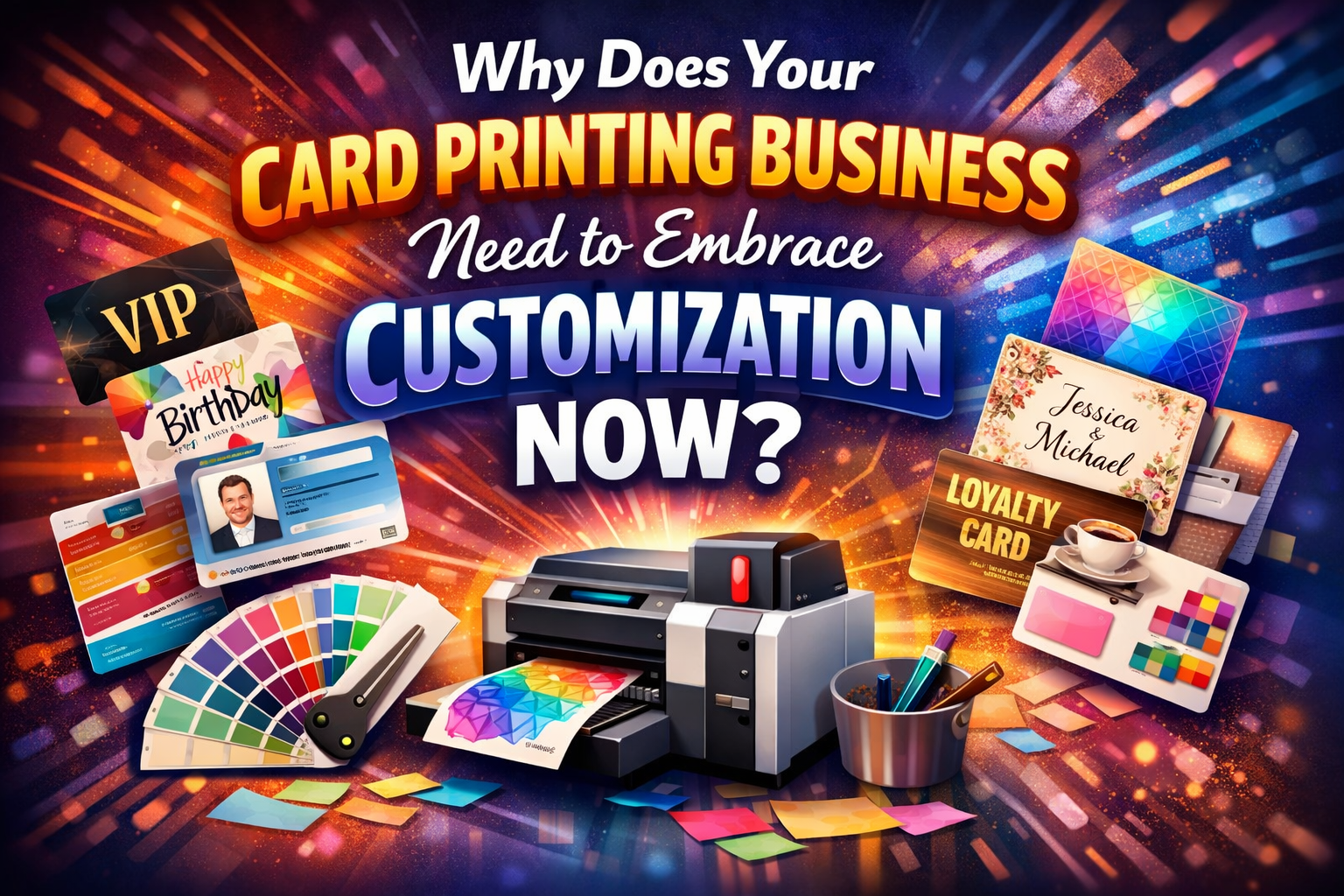
Why Does Your Card Printing Business Need to Embrace Customization NOW?

Card Printing

Meta Title: Why Does Your Card Printing Business Need to Embrace Customization NOW?   Meta Description:  The ever-changing Business is the perfect time to start the new year well by embracing the great benefits of customization in a business card printing business. It can help you stand out from your competitors and gain more customers. The tips below will help you understand why every business should embrace customization and why it is time for you to do so.  

Why Does Your Card Printing Business Need to Embrace Customization NOW?        

If you look around, you would find everything is being done digitally including meetings, contracts, notices, exchanging information, and more. There is no doubt that digital tools are used for business networking between companies and people. But despite all this, digital devices have not been able to replace the usefulness of business cards. 

Being the strongest marketing tool, business cards have proven to be effective and innovative solutions. However, guessing you are here because you run a card printing business and have encountered customers who demand customized business cards. 

If your business does not have the option of providing customized solutions to the businesses, then know you are not doing it right. A customized business card is a preferable solution for a personal touch. In order to know more about why you must embrace customization in your card printing business, you are suggested to read until the end.

Card Printing

Know How Customization Has Affected the Printing Industry !! 

When you talk about customization, you would find that it was an impossible thing a few years ago. Customers never had complete control over products like clothes, pictures, accessories, and others besides cards. But not anymore as the introduction to customization has been done both through the availability of card design software and other printing methods. 

Businesses and individuals are now getting the chance to express their creativity, thoughts, and important details through customization. And the printing industry is well aware of this phenomenon. Due to this, businesses have seen a way to reflect their thoughts to the customers. Additionally, it has greatly and positively impacted the printing industry.

Why Does Your Printing Business Offer Card Customization Services? 

The following will help you to discover why the printing business should offer card customization services to customers. 

  • Explore Your Creative Side 

One of the first reasons why your printing business needs to offer customization is that it will help you to explore your creative side. Anyone who has a creative streak and is looking forward to upgrading their card printing business can opt for it. 

There is many business card design software available that come with pre-designed card layouts which one can use. Also, there are many tutorials from where one can learn to hone their skills. Additionally, you might use your creativity alongside uniqueness to provide cards with distinctive designs that are sure to dazzle. 

  • No Demand for a Huge Budget

Be it looking forward to starting a customized printing business or upgrading an existing one – there is no such huge demand for the budget. You do not have to spend thousands of money on expensive equipment or rent a posh location. 

If your card printing business already has a laptop, card paper, a high-quality printer, and a card trimmer, then all you need is business card design software and some creativity. However, those who have little knowledge can use pre-designed templates. While the others with no knowledge at all can simply hire someone experienced in customized card printing. 

  • Serve Customers in a Better Way

As mentioned earlier, the world is rushing towards customization. Be it a coffee mug, a t-shirt, or just a business card –  customizing has helped businesses in multiple ways. This also includes forming better relationships with the customers. 

On the other hand, when you offer customization solutions to businesses, you are simply serving them in a better way. You would be showcasing to them how you are meeting the changing demands of the businesses and trying to offer support. 

When your customers get everything they need from you, it will help in creating a strong customer base for your printing business. In simple words, your customers would not seek others’ help for their business card printing needs.

  • Increased Sales 

With everyone adapting customization for their business, the card printing businesses have witnessed a shift. Customized business card printing has proven to increase sales all along. Businesses are rushing to connect deeply with their customers through customization as it helps them to gain more profits. 

As a result, there is a need for customized business cards all over that can help your card printing business to grow. If you are still following the traditional card printing method, then you are doing it wrong. To see your card printing business flourish, you must begin to embrace personalization. 

  • Bring Better Ideas 

Once you begin to offer customization for businesses and build a strong customer base, it helps you to stay motivated and come up with more ideas. These ideas can differ in the purpose of helping customers gain from it and your own printing business to succeed. 

You can make use of the technologies in the right way to meet the unique demands of your customers. Or simply you can set trends yourself through customization that can attract more customers in the future.

  • Higher Profits 

Traditional business cards are not as much in demand as they used to be. People and businesses are now shifting their needs toward customization. And as a card printing business service provider when you begin to offer what a business needs, you would simply be attracting more customers.  

As a result, your business of printing cards will witness greater profits with fewer investments. Also, your customer base will begin to expand more than you can ever imagine.

  • Never Ending Demand

The need for simple and uninteresting cards ended a long time ago. In some places, it might exist because people are still not aware of the customization. But somehow they will know about it in the future and will try to switch to it. 

However, the existing customers who already know what change customized cards can bring will never be ready to give it up. Not everybody would desire the conventional business card. So as a card printing business service, you should start to embrace it as the demand for it will never stop. You would be growing and reaching your success eventually.

  • Improved Customer Loyalty

As a business card printing company, you may have customers coming back to you for more. If you start to offer customized solutions, you will be helping them. 

Your customers will know that you are valuing their ever-changing needs and they do not have to rush anywhere else. They will simply begin to trust you more and come back with their latest demands. Additionally, you will be contributing to the growth of your business.

  • Competitive Solution 

Last but not the least, switching to offering customized business card printing solutions will give you a competitive edge. You will no longer have to stay behind the changing demands of the markets. Just like every other service provider, you would be on the same page or a step ahead of those who are unaware of the importance of customization. 

Your existing customers will know that you have customized services available. This will stop them from going to other service providers of customized card printing. Rather they will come back to you for more. Additionally, your business of card printing will witness boosted sales, more profits, and unparalleled success.

Could a Mobile Dog Groomer Be the Key to a Stress-Free Grooming Experience for Your Pet?

Mobile Dog Groomer

The moment your dog hears the word grooming, you might notice tucked tails, wide eyes, or nervous pacing. Grooming does not have to feel this way. A calm, familiar space can change everything, and that is where a mobile pet grooming service starts to shine.

Grooming That Comes to Your Door

Instead of packing your pet into the car and waiting at a busy salon, mobile grooming brings the full setup right to your home. Your dog stays close to familiar smells, sounds, and people. This simple shift can lower fear and make grooming feel normal, not scary.

Mobile grooming trailers are designed to handle bathing, brushing, trimming, nail care, and drying in one safe space. Everything needed is inside the trailer, clean and ready for each visit. This setup helps pets stay relaxed from start to finish.

Mobile Dog Groomer

Why Familiar Surroundings Matter

Dogs often feel stressed in new places. Loud dryers, other animals, and long waits can overwhelm them. Grooming at home removes these stress triggers. Your pet steps outside for a short time, gets groomed, and comes right back inside.

This calm flow is helpful for puppies learning grooming routines and for older dogs who may feel sore or anxious. It also works well for pets that do not get along with others or need extra patience.

One-on-One Attention Makes a Big Difference

In a mobile setup, your dog gets full attention from start to finish. There are no other pets waiting or rushing the process. Groomers can move at a pace that suits your dog and stop if your pet needs a break.

This personal care helps groomers notice small details like skin dryness, coat changes, or nail issues early. Over time, the groomer gets to know your dog’s likes, dislikes, and comfort level. That trust grows with every visit.

Health and Cleanliness You Can Trust

A mobile pet grooming service focuses on clean tools and fresh water for each pet. Since only one dog is groomed at a time, there is less risk of shared germs. This is a big plus for pets with sensitive skin or weak immune systems.

Groomers often follow clear safety steps, use gentle products, and keep the space tidy. Many also take time to explain what they notice during grooming, helping pet owners stay aware of their dog’s health.

Time-Saving for Busy Pet Parents

Life gets busy, and grooming appointments can take hours between driving and waiting. Mobile grooming saves time by coming straight to your driveway. You can stay home, work, or relax while your dog gets care nearby.

This service is helpful for families with tight schedules, seniors, or anyone who finds travel hard. It also helps pets who dislike car rides or feel sick during travel.

A Personalized Grooming Plan for Your Dog

Every dog is different. Coat type, age, and behavior all matter. Mobile groomers often build a grooming plan that fits your dog’s needs. This may include special shampoos, shorter sessions, or quiet handling.

Using a mobile dog groomer Southwest Denver gives local pet owners access to grooming that fits the area’s climate and lifestyle. Local knowledge helps groomers suggest care tips that work well for dogs in the region.

The Bottom Line: A Calm Choice That Builds Long-Term Comfort

Over time, dogs learn that grooming does not mean stress. They begin to trust the process and feel safe. This makes future sessions smoother and more pleasant for everyone involved.

Choosing a mobile pet grooming service is not just about convenience. It is about giving your pet a kinder, calmer experience that supports comfort and health. For many families, this simple change turns grooming from a struggle into a positive routine your dog can truly enjoy.

Step-by-Step Guide for Where to Get a Physical Exam Near Me and USCIS Medical Exam

USCIS Medical Exam

Completing a physical exam is often a necessary step for employment, school, or immigration purposes. For individuals seeking a U.S. visa or green card, the USCIS medical exam is an essential requirement. Many people search for “where to get a physical exam near me” or “USCIS medical exam near me” to find convenient, reliable, and certified facilities that can provide these services. Knowing the process and steps involved can help make the experience smooth and stress-free.

Understanding the Physical Exam

A physical exam is a comprehensive evaluation of an individual’s overall health. When searching for “where to get a physical exam near me,” patients are typically looking for clinics or urgent care centers that can perform routine checks, identify potential health issues, and provide necessary documentation for employment, school, or travel requirements. A standard physical exam usually includes reviewing medical history, checking vital signs, assessing physical condition, and sometimes ordering basic lab tests. By understanding the purpose and components of a physical exam, you can be better prepared when scheduling an appointment.

USCIS Medical Exam

What Is a USCIS Medical Exam

A USCIS medical exam is a specialized physical examination required by the U.S. Citizenship and Immigration Services for visa and green card applicants. The exam is conducted by a designated civil surgeon approved by USCIS to ensure that applicants do not have medical conditions that could affect public health or render them inadmissible. When searching for “USCIS medical exam near me,” applicants are seeking authorized facilities that can perform the exam according to USCIS guidelines, complete the necessary forms, and submit the results properly.

Step 1: Finding a Facility

The first step in scheduling your exams is locating a certified facility. Use keywords like “where to get a physical exam near me” to find clinics, urgent care centers, or hospitals offering routine physical exams. For immigration purposes, search specifically for “USCIS medical exam near me” to ensure the facility is approved by USCIS. Verifying certification and reading reviews can help you choose a reliable provider for accurate and professional services.

Step 2: Scheduling Your Appointment

Once you identify the appropriate facility, schedule your appointment. Many clinics offer online booking or phone scheduling to make the process convenient. When scheduling, clarify whether the facility provides both routine physical exams and USCIS medical exams, as some centers may specialize in one type of service. Efficient scheduling ensures you can complete all required examinations without delays.

Step 3: Preparing for the Exam

Preparation is key to a smooth exam process. For a standard physical exam, bring identification, a list of medications, and any relevant medical history. For a USCIS medical exam, it is essential to bring vaccination records, identification, and any previous medical documentation. Proper preparation helps medical staff complete the necessary evaluations and documentation accurately, reducing the chances of follow-up visits or delays in your application.

Step 4: During the Exam

During your physical exam, a healthcare provider will check vital signs, review your medical history, assess overall health, and perform any necessary lab tests. For a USCIS medical exam, the civil surgeon will also verify vaccination status, screen for communicable diseases, and complete required forms for submission to USCIS. Following instructions from the medical staff ensures that all requirements are met efficiently.

Step 5: After the Exam

After completing the exams, you will receive documentation. For routine physical exams, the provider may give you a report for your employer, school, or other purposes. For USCIS medical exams, the civil surgeon will submit the required forms to USCIS or provide a sealed envelope to submit with your visa or green card application. Proper handling of these documents is essential for a smooth process.

Tips for a Smooth Experience

To ensure a hassle-free experience, plan ahead and book appointments early, gather all necessary documents, and follow the provider’s instructions carefully. Searching for “where to get a physical exam near me” and “USCIS medical exam near me” ahead of time can save time and help you locate reliable facilities that provide professional services. Being prepared allows you to complete both exams efficiently and without stress.

Conclusion

Scheduling and completing a physical exam or a USCIS medical exam does not have to be complicated. By understanding the process, locating certified facilities, preparing properly, and following the steps outlined in this guide, you can ensure a smooth and efficient experience. Using keywords like “where to get a physical exam near me” and “USCIS medical exam near me” helps applicants find trusted providers who meet all requirements. Proper planning, preparation, and guidance make the process straightforward, allowing you to focus on your career, education, or immigration goals with confidence.

The Future of Learning: Benefits of Custom Elearning App Development Services for Universities and Corporates

App Development Services

Custom eLearning app development is revolutionizing the way we learn, offering universities and corporations the ability to deliver more personalized, efficient, and engaging educational experiences. As technology continues to reshape education and corporate training, these tailored solutions are bridging the gap between traditional learning methods and modern digital needs. With global eLearning revenue projected to exceed $375 billion by 2026, adopting digital learning solutions is no longer a luxury—it’s a necessity.

This blog delves into the transformative potential of custom eLearning app development services, highlighting their benefits for universities and corporates alike. Whether you’re an academic institution striving to improve student outcomes or a corporate leader focused on workforce development, understanding the value of partnering with a custom eLearning app development company will position you for success in the future of learning.

App Development Services

Understanding Custom eLearning App Development

Custom eLearning app development refers to the process of designing and building digital learning platforms tailored to meet the unique requirements of a specific organization or institution. These apps go beyond the limitations of generic, one-size-fits-all solutions, offering personalized features and functionalities that align with distinct learning objectives, workflows, and user preferences.

Custom solutions are ideal for both educational institutions and corporate entities because they prioritize adaptability and flexibility, ensuring that the learning experience is optimized for the intended audience. Whether it’s enhancing student engagement in a university setting or providing industry-specific training for corporate employees, custom eLearning apps are designed to address the exact needs of the users.

Features of Custom eLearning Solutions

Personalized Learning Paths

Custom eLearning apps use data-driven insights and AI to create individualized learning experiences. Learners can progress at their own pace, access recommended content, and receive personalized feedback. This feature is particularly beneficial for universities seeking to accommodate diverse student needs and for corporations aiming to upskill employees efficiently.

Seamless Integration

Custom apps can integrate with existing tools such as Learning Management Systems (LMS), Human Resource Management Systems (HRMS), or other software. This ensures smooth workflows and provides a cohesive user experience. For example, a university can sync its eLearning app with its grading system, while a corporate entity might integrate the app with performance management tools.

Advanced Analytics and Reporting

Data is at the core of modern learning. Custom eLearning apps include advanced analytics to monitor user engagement, track progress, and evaluate the effectiveness of learning modules. Educators can identify struggling students, and corporate trainers can measure training ROI and adjust content accordingly.

Scalability and Flexibility

As an organization grows, so do its learning needs. Custom eLearning apps are built to scale, accommodating additional users, content, or new features. This makes them a future-proof solution for universities expanding their enrollment and corporations with growing teams.

Engaging Features

Custom solutions allow the inclusion of interactive elements like gamification, quizzes, AR/VR simulations, and collaborative tools to enhance learner engagement. These features make learning more dynamic and immersive compared to generic platforms.

Stay ahead in the future of learning with a tailor-made eLearning solution.

Key Benefits of elearning App Development for Universities and Corporates

The adoption of custom eLearning app development has transformed how universities and corporations deliver education and training. These tailored platforms address specific needs, enhance user engagement, and maximize outcomes. Below is a detailed look at the benefits for both sectors.

For Universities

Enhanced Student Engagement

Custom eLearning apps empower universities to create immersive and interactive learning experiences, addressing the diverse needs of modern learners. Features like:

  • Virtual Labs: Allow students to conduct experiments and simulations in a risk-free, digital environment, fostering hands-on learning without the constraints of physical infrastructure.
  • Gamified Assessments: Incorporating game-like elements such as points, badges, and leaderboards makes learning fun and competitive, motivating students to stay engaged.
  • AI-Driven Recommendations: Adaptive algorithms analyze students’ performance and suggest personalized content, helping them focus on areas requiring improvement.

These features collectively ensure that learning is not only effective but also captivating.

Scalability and Accessibility

Universities often cater to a diverse, geographically dispersed student body. Custom eLearning apps provide the tools necessary to:

  • Reach students across borders, enabling global access to quality education.
  • Support multilingual content, ensuring inclusivity for non-native speakers.
  • Include accessibility features such as screen readers, captions, and adjustable font sizes to support differently-abled learners.

This scalability and inclusivity make education accessible to all, regardless of location or personal challenges.

Data-Driven Insights

Custom eLearning platforms come equipped with advanced analytics capabilities, offering educators valuable insights into student performance:

  • Progress Tracking: Monitor attendance, assignment submissions, and test scores to understand student engagement.
  • Learning Gap Identification: Pinpoint areas where students struggle and provide targeted support.
  • Course Effectiveness: Evaluate the impact of curricula and refine teaching strategies based on data.

By leveraging these insights, universities can make informed decisions to improve teaching methodologies and outcomes.

Cost Efficiency

Digitizing education through eLearning apps significantly reduces operational costs:

  • Reduced Dependency on Physical Resources: Minimize expenses on textbooks, classroom facilities, and printed materials.
  • Automation of Administrative Tasks: Simplify processes like enrollment, grading, and attendance tracking, freeing up staff time for more critical activities.
  • Reusable Content: Digital modules and recorded lectures can be used repeatedly, eliminating redundancy and further saving resources.

This cost-effectiveness ensures that universities can deliver quality education while optimizing their budgets.

Read the blog ‘What are the Benefits of a Custom elearning App Development for Corporate elearning?’

For Corporates

Tailored Training Programs

Corporations benefit from custom eLearning app development by providing training programs specifically designed for their workforce:

  • Industry-specific modules ensure employees acquire relevant knowledge and skills.
  • Custom content can address unique challenges and align with organizational goals.
  • Scenario-based learning and case studies offer practical, real-world applications of knowledge, making training highly effective.

With tailored programs, employees are better equipped to meet industry demands and excel in their roles.

Improved ROI

The ability to measure the impact of training is a critical advantage of custom eLearning apps:

  • Performance Metrics: Analytics tools track individual progress and overall team performance.
  • Cost Savings: Online training reduces the need for travel, venue rentals, and printed materials.
  • Enhanced Productivity: Employees can apply newly acquired skills immediately, leading to measurable improvements in work output.

By tracking key performance indicators (KPIs), corporations can ensure their training programs deliver a high return on investment.

Flexibility for Remote Teams

The rise of remote and hybrid work environments has increased the demand for flexible learning solutions. Custom eLearning apps provide:

  • 24/7 Accessibility: Employees can access training modules anytime, anywhere, using their preferred devices.
  • Self-Paced Learning: Individuals can progress through the material at their own speed, accommodating different learning styles.
  • Offline Access: Features like downloadable content ensure uninterrupted learning, even without an internet connection.

These capabilities make eLearning a perfect fit for distributed teams and busy professionals.

Increased Employee Retention

A well-trained and engaged workforce is more likely to stay loyal to their organization. Custom eLearning apps help:

  • Foster continuous learning and professional development, which employees value highly.
  • Create engaging content that keeps employees interested and motivated.
  • Offer career advancement opportunities through upskilling and reskilling programs.

By investing in employees’ growth, corporations not only improve retention but also build a more skilled and committed workforce.

Get to know how elearning development helps your business.

Reach out to our experts and start your project today!

Our Approach to Custom eLearning App Development Services

Custom eLearning app development services are comprehensive solutions tailored to the unique learning needs of educational institutions and corporations. Unlike off-the-shelf eLearning platforms, custom solutions are built from the ground up to address specific goals, challenges, and workflows. These steps ensure a seamless, engaging, and effective digital learning experience that aligns with the organization’s vision.

Here’s a detailed look at the core steps of custom eLearning app development services:

Needs Assessment

The foundation of a successful eLearning app lies in understanding the user’s requirements.

  • Goal Analysis: Development teams collaborate with stakeholders to identify the institution’s or corporation’s specific objectives, such as improving student engagement or streamlining employee training.
  • Learner Demographics: Factors such as age, location, learning styles, and accessibility needs are considered to design a solution that resonates with the target audience.
  • Challenge Identification: Key pain points, such as limited engagement, outdated content delivery methods, or integration issues, are addressed to create a roadmap for development.


Feature Development

Custom eLearning apps stand out because of their tailored features, which are designed to maximize learner engagement and effectiveness. Key features include:

  • Interactive Content
  • Dynamic modules like quizzes, videos, and gamified lessons enhance engagement.
  • Gamification elements such as badges, leaderboards, and rewards motivate learners to complete tasks.
  • AI-Driven Personalization
  • Adaptive learning paths analyze user behavior and performance to recommend personalized content.
  • Intelligent tutoring systems guide learners through complex topics based on their progress and challenges.
  • Real-Time Collaboration Tools
  • Features such as discussion forums, group chat, and live Q&A sessions foster collaboration.
  • LIVE Virtual Classroom Solutions: Enable real-time interactions with instructors and peers, replicating the in-person learning environment with added benefits like recorded sessions and virtual breakout rooms.
  • Accessibility Features
  • Multilingual support ensures learners across geographies can access content in their preferred language.
  • Tools for differently-abled users, such as screen readers and adjustable font sizes, promote inclusivity.
  • Custom Mobile Learning Apps
  • Mobile-first designs make learning accessible anytime, anywhere.
  • Offline access and push notifications ensure uninterrupted engagement, especially for remote learners or employees on the go.
  • Remote Proctoring Tool
  • Secure exam monitoring solutions using AI and webcam technology.
  • Ensures academic integrity and provides organizations with reliable assessments, even in remote setups.

Read the blog’What Features Make a Virtual Classroom Solution the Best?’ to know more.

Implementation and Integration

A custom eLearning app doesn’t operate in isolation. Seamless implementation and integration are critical to creating a cohesive digital ecosystem.

  • Integration with Existing Systems: The app is connected to Learning Management Systems (LMS), HR platforms, or CRM tools to streamline workflows. For example, corporate training apps may integrate with performance management software to track employee progress and certification.
  • Scalability: The platform is designed to accommodate growth, ensuring it can handle increasing numbers of users or expanded content libraries without compromising performance.


Ongoing Support and Updates

The digital learning landscape evolves rapidly, and so do user needs. Custom eLearning app development companies provide continuous support to ensure the app remains relevant and effective.

  • Maintenance: Routine updates to fix bugs, enhance performance, and optimize user experience.
  • Feature Upgrades: Adding new capabilities, such as AR/VR modules or blockchain-based credentialing, as the organization’s needs grow.
  • Technical Support: Round-the-clock assistance to resolve issues, ensuring uninterrupted learning experiences for users.

Emerging Trends in Custom eLearning App Development

The future of learning is being revolutionized by cutting-edge technologies, and custom eLearning app development is at the forefront of this transformation. Here are some key trends shaping the way learners engage with educational and training platforms:

Artificial Intelligence (AI)

AI is one of the most transformative trends in digital learning solutions, powering personalized and adaptive learning experiences. Custom eLearning apps leverage AI to:

  • Tailor Learning Paths: By analyzing user behavior, preferences, and performance, AI can recommend content that aligns with individual learning goals. For instance, if a learner struggles with a specific topic, the app can suggest remedial courses or materials.
  • Automate Grading and Feedback: AI simplifies administrative tasks by automatically evaluating quizzes and assignments, providing instant feedback to learners.
  • Chatbots for Assistance: AI-driven chatbots provide 24/7 support, answering learner queries and guiding them through their journey.

This level of customization ensures that each learner receives a unique, engaging, and effective experience.

Virtual Reality (VR) and Augmented Reality (AR)

Immersive technologies like VR and AR are redefining experiential learning by creating simulations and interactive environments. They are particularly valuable for:

  • Practical Training: In fields like healthcare, engineering, and aviation, learners can practice real-world scenarios without risks. For example, medical students can perform virtual surgeries, gaining hands-on experience in a safe environment.
  • Interactive Lessons: AR overlays digital information on the physical world, enhancing engagement. Imagine a biology student examining a 3D model of the human heart in augmented reality.

These technologies make learning more engaging, memorable, and effective by immersing learners in realistic scenarios.

Gamification

Gamification incorporates game-like elements into learning platforms to boost engagement and motivation. Custom eLearning apps often include features such as:

  • Leaderboards: Learners compete with peers, fostering a sense of accomplishment.
  • Rewards and Badges: Achieving milestones unlocks rewards or badges, encouraging continued participation.
  • Challenges and Quests: Structured challenges make learning feel like a game, reducing boredom and increasing knowledge retention.

Gamification not only enhances the fun factor but also improves learning outcomes by tapping into learners’ intrinsic motivation.

Microlearning

Microlearning is becoming increasingly popular in both eLearning for universities and eLearning for corporates. It focuses on delivering content in short, focused bursts that are easy to consume. Key benefits include:

  • Improved Retention: Bite-sized lessons are easier to remember than lengthy lectures.
  • Flexibility: Learners can access modules during breaks, on commutes, or between tasks.
  • Reduced Cognitive Overload: Short sessions prevent information fatigue, allowing learners to absorb knowledge more effectively.

Custom eLearning apps can integrate microlearning modules, making education and training more adaptable to today’s fast-paced lifestyles.

Blockchain for Credentialing

Blockchain technology is revolutionizing how certifications and achievements are managed in custom eLearning apps. It offers:

  • Secure Credentialing: Certificates and qualifications are stored securely on a decentralized ledger, preventing tampering or fraud.
  • Easier Sharing: Learners can easily share their verified credentials with employers or institutions through digital wallets.
  • Lifetime Accessibility: Unlike traditional paper certificates, blockchain credentials are permanently accessible.

This trend is particularly beneficial for corporates and universities aiming to streamline credentialing and ensure credibility.

How Organizations Can Leverage These Trends

By embracing these trends, organizations can harness the full potential of custom eLearning app development to:

  • Enhance learner engagement with personalized and immersive experiences.
  • Address the unique needs of their audience, whether students or professionals.
  • Stay ahead in a competitive landscape by integrating cutting-edge technologies.

The future of learning is digital, and these trends ensure that custom eLearning platforms are not only relevant but also revolutionary. Investing in these advancements is a step toward creating more dynamic, impactful, and inclusive educational experiences.

How to Choose the Right Custom eLearning App Development Partner?

Choosing the right custom eLearning app development company is crucial to ensure your project is successful and delivers measurable results. The ideal partner will not only have the technical expertise but also a deep understanding of your organization’s goals, learning challenges, and industry-specific requirements. Below are key factors to consider when selecting the right development partner.

Experience and Expertise

Experience is one of the most significant indicators of a company’s ability to deliver high-quality custom eLearning app development solutions. Look for a partner with:

  • A proven track record in education app development and corporate training platforms.
  • Experience working with both universities and corporate organizations.
  • A portfolio showcasing their expertise in creating interactive, scalable, and engaging eLearning apps.

A company that understands the complexities of eLearning for universities and eLearning for corporates will be better equipped to address your unique challenges. Ask about their previous projects, industries served, and client successes to validate their expertise.

Customization Capabilities

One of the primary advantages of custom solutions is their ability to cater to your unique requirements. A reliable custom eLearning app development company must:

  • Offer end-to-end customization, from the user interface (UI) to advanced backend features.
  • Provide tailored modules, such as gamified assessments, AI-driven learning paths, and interactive content for specific audiences.
  • Adapt to your existing infrastructure, including LMS integration, CRM systems, and HR tools.

Customization capabilities ensure that the eLearning platform aligns with your organizational goals, improves learning outcomes, and engages users effectively.

Technology Stack

The right partner must use cutting-edge technologies to future-proof your eLearning app and enhance user experience. Evaluate their technology stack to ensure they are proficient in:

  • AI and Machine Learning: For personalized content recommendations, adaptive learning, and automated assessments.
  • Augmented Reality (AR) and Virtual Reality (VR): For immersive and experiential learning in industries like healthcare, manufacturing, and engineering.
  • Blockchain Technology: For secure credentialing, course certifications, and tamper-proof student records.
  • Mobile Optimization: Ensuring seamless accessibility across devices, including smartphones, tablets, and laptops.

The use of the latest technologies will ensure your digital learning solution is innovative, user-friendly, and capable of evolving with emerging trends.

Portfolio and Reviews

A company’s portfolio and client reviews can provide insight into their credibility, reliability, and quality of work. Here’s what to check:

  • Portfolio: Examine their past projects to evaluate the quality, functionality, and creativity of their eLearning solutions. Look for case studies demonstrating measurable improvements in learner engagement, retention, or corporate training ROI.
  • Client Testimonials: Positive feedback from satisfied clients validates the company’s ability to deliver successful outcomes.
  • Industry Recognition: Awards, certifications, and partnerships with leading technology providers can further solidify the company’s expertise.

This step ensures that you’re partnering with a team capable of delivering an education app development solution that meets your goals.

Support and Maintenance

The development process doesn’t end with the launch of your eLearning app. Continuous updates and support are vital to ensure the platform remains effective, scalable, and secure. Look for a partner that offers:

  • Ongoing Support: Technical assistance, bug fixes, and performance optimization.
  • Regular Updates: Integration of new features and compliance with emerging technologies.
  • Scalability: The ability to expand and modify the platform as your organization grows and learner needs evolve.

A company committed to long-term collaboration will ensure your eLearning app remains a valuable asset for years to come.

Conclusion

The future of learning lies in the hands of technology, and custom eLearning app development is leading the way. For universities, these apps enhance student engagement, accessibility, and scalability. For corporations, they deliver impactful training, boost ROI, and support remote workforces. By adopting custom eLearning solutions, organizations can stay competitive, adaptable, and forward-thinking.

Ready to transform the way you teach or train? Partner with us—an expert custom eLearning app development company—to design and develop a platform tailored to your unique needs. Contact us today to explore how our digital learning solutions can revolutionize your educational or corporate training initiatives.

Let’s transform your business for a change that matters.

F. A. Q.

Do you have additional questions?

Custom eLearning App Development Services for the Education Sector: What to Expect

elearning app development

Custom eLearning App Development Services are transforming the way educational institutions and training providers deliver learning experiences. From universities offering hybrid courses to schools conducting online classes and enterprises implementing employee training apps, digital learning has become an essential part of modern education.

However, not all eLearning solutions provide the flexibility, engagement, and scalability required to meet diverse learner needs. Generic platforms often fall short, leaving institutions struggling to create personalized and interactive learning experiences. This is where custom eLearning app development makes a significant difference. Tailored applications empower institutions to provide secure, intuitive, and future-ready learning platforms that cater to students, teachers, and administrators alike.

In this blog, we’ll explore what to expect from Custom eLearning App Development Services—covering essential features, key integrations, compliance requirements, costs, and emerging trends. Whether you’re an educational institution, edtech startup, or corporate training provider, this guide will help you make informed decisions and select the right eLearning app development company for your needs.

elearning app development

Why Custom eLearning Apps Are Reshaping the Education Sector?

The education sector is experiencing one of the most rapid digital transformations in history. From K–12 schools to higher education and corporate training, technology-driven learning is no longer a luxury—it’s a necessity. Yet, the reality is that traditional “one-size-fits-all” platforms often fail to deliver the depth, flexibility, and personalization that institutions require.

This gap is exactly why Custom eLearning App Development Services are becoming a game-changer. By tailoring solutions to the unique needs of learners and educators, these apps are helping institutions drive engagement, ensure scalability, and achieve measurable outcomes. Let’s explore why custom eLearning apps are reshaping modern education.

Personalized Learning Paths

Every student learns differently—some grasp concepts quickly, while others need more time and guidance. Generic platforms rarely account for this diversity. Custom apps, however, integrate AI-driven adaptive learning and data analytics to personalize the learning journey.

  • Students can access content tailored to their skill levels.
  • Educators can track performance and adjust teaching methods accordingly.
  • Institutions can improve learning outcomes through targeted interventions. 

This individualized approach not only enhances academic performance but also keeps learners motivated and engaged.

Scalability for Growth

Education is dynamic, and institutions often face fluctuating student numbers. Off-the-shelf platforms may crash, slow down, or become expensive as user volumes rise. A custom eLearning app development company designs solutions with scalability in mind.

  • Cloud-based architecture supports thousands of concurrent users.
  • Institutions can add new modules, courses, or integrations without disruption.
  • Growth becomes sustainable without compromising user experience.


For universities, training centers, or edtech startups planning long-term expansion, scalability is a must-have.

Institutional Branding & Identity

Your learning app is not just a teaching tool—it’s also a representation of your institution’s credibility. Custom apps allow institutions to maintain consistent branding across platforms.

  • Personalized UI/UX that matches your school, university, or company’s identity.
  • Branded dashboards, course layouts, and even notification styles.
  • A professional look and feel that builds trust among students, parents, and corporate learners.

This level of customization helps institutions stand out in a competitive education market.

Better Engagement Through Modern Features

One of the biggest challenges in digital learning is maintaining student engagement. Custom eLearning apps incorporate features that transform passive learning into active participation.

  • Gamification elements like badges, points, and leaderboards make learning fun.
  • Real-time collaboration tools foster group projects and interactive sessions.
  • Interactive dashboards help students visualize their progress and achievements.

When learners are engaged, retention rates rise, and the overall learning experience becomes more impactful.

Data Ownership & Security

Data is at the heart of modern education—student performance, attendance records, financial details, and more. With generic platforms, institutions often compromise control over this sensitive data. A custom education app development company ensures:

  • Full ownership and control of institutional data.
  • Compliance with FERPA, COPPA, and GDPR regulations.
  • Advanced security features such as encryption, secure logins, and role-based access.

This not only protects students but also builds trust among parents and regulatory bodies.

Core Features to Expect in a Custom eLearning App Development

When investing in education app development, it’s important to ensure that your application caters to all stakeholders—students, educators, and administrators—while staying aligned with your institution’s goals. A well-designed custom eLearning app not only facilitates learning but also makes the experience engaging, measurable, and future-proof. Below are the core features you should expect.

Student-Centric Features
Students are at the heart of any eLearning platform. The features built for them should focus on accessibility, engagement, and personalization.

  • Personalized Dashboards
    Every learner should have a clear view of their progress, upcoming classes, assignments, and deadlines. A personalized dashboard creates a sense of ownership, keeping learners motivated and on track with their goals.
  • Gamification
    Features like quizzes, leaderboards, and digital badges make learning competitive and fun. Gamification helps improve retention rates and encourages consistent participation.
  • Offline Learning Mode
    Since not every student has constant internet access, offline learning ensures that course materials, videos, and notes can be downloaded and accessed later without disruptions.
  • Push Notifications
    Automated alerts for assignments, exam schedules, class reminders, and announcements ensure students never miss important updates.

By incorporating these features, an elearning application development company ensures that students remain engaged, motivated, and successful in their learning journey.

Teacher-Centric Features

For educators, the app should simplify course delivery and make it easier to monitor student performance.

  • Virtual Classrooms
    With integrated video conferencing tools, teachers can conduct interactive, real-time classes that simulate a physical classroom environment. Features like screen sharing, whiteboards, and breakout rooms enhance engagement.
  • Assessment Tools
    Automated grading systems, quizzes, and feedback modules save time while providing students with immediate insights into their performance.
  • Content Management-Teachers need the ability to easily upload, edit, and manage course materials, from PDFs to recorded lectures, ensuring the learning content stays updated and relevant.
  • Analytics
    Detailed insights help teachers track class participation, identify struggling students, and personalize teaching strategies accordingly.

These tools not only empower teachers but also increase efficiency, making learning outcomes measurable and actionable.

Admin Features

Administrators need complete control over the platform to manage users, monitor performance, and ensure smooth operation across the institution.

  • Role-Based Access
    Different roles—students, teachers, parents, and admins—can have customized dashboards and access levels, ensuring data privacy and streamlined navigation.
  • Monetization Models
    Whether it’s subscription-based, pay-per-course, or freemium, admins should be able to set up multiple revenue models depending on the institution’s strategy.
  • Institutional Reports-
    Real-time reports on student progress, attendance, course popularity, and engagement metrics help institutions make data-driven decisions.

Admin-focused features turn the app into a powerful management tool, giving institutions a 360-degree view of operations.

Advanced Features for the Future
As technology continues to evolve, future-ready apps must integrate advanced capabilities to stay competitive and relevant.

  • AI Tutors
    Smart chatbots can assist learners by answering FAQs, offering course recommendations, or even providing instant feedback, acting as a 24/7 study assistant.
  • AR/VR Integration
    Immersive technologies allow for virtual science labs, 3D medical simulations, or interactive history lessons, giving students practical, real-world experiences.
  • Social Learning Modules
    Peer-to-peer discussions, group projects, and forums encourage collaboration and community building, making learning more interactive and engaging.

These innovations ensure that institutions stay ahead of trends, providing learners with experiences that are not only educational but also transformative.

The Development Process: What You Should Expect from an eLearning App Development Partner

Investing in custom eLearning app development services is more than hiring developers—it’s about aligning technology with your educational strategy, learner needs, and long-term goals. A reliable custom eLearning app development company will guide you through a structured, transparent process that ensures your application is both effective and scalable. Here’s what you can expect:

Discovery & Requirement Analysis

The foundation of any successful project begins with discovery. At this stage, the development partner works closely with your stakeholders to:

  • Understand Your Vision: Whether you’re a university, school, or corporate training provider, the team maps out your unique objectives and learner expectations.
  • Identify Your Audience: Defining who will use the app—children, college students, professionals, or employees—helps shape the user journey.
  • Conduct Market & Competitor Research: Benchmarking against existing platforms ensures your solution stands out and avoids common pitfalls.
  • Outline Technical Requirements: From device support to compliance needs (e.g., FERPA, GDPR), requirements are documented upfront.

This ensures clarity from the start, minimizing scope creep later in development.

UX/UI Design: Creating Intuitive Learning Experiences

Once the requirements are clear, the focus shifts to user experience and interface design. Here, accessibility and engagement are top priorities. A trusted education app development company will:

  • Design for All Ages: Interfaces that work for a 10-year-old must be different from those targeting working professionals.
  • Focus on Accessibility: Incorporating WCAG standards ensures inclusivity for learners with disabilities.
  • Build Interactive Prototypes: Stakeholders can test mockups before full development, ensuring alignment with institutional goals.
  • Prioritize Simplicity & Engagement: Clean dashboards, interactive elements, and personalized user journeys increase adoption rates.

This design-first approach ensures your elearning application development feels natural, not forced.

Agile Development: Iterative and Transparent

Modern app development thrives on agility. Instead of waiting months for a final product, Agile allows you to see progress continuously. Expect your partner to:

  • Work in Sprints: Delivering functional modules every 2–3 weeks for review.
  • Enable Feedback Loops: You can test, refine, and validate features as they are built.
  • Integrate Third-Party Tools: From video conferencing APIs (Zoom, Google Meet) to payment gateways and LMS systems.
  • Use Scalable Architecture: Ensuring your app can handle thousands of concurrent learners without downtime.

Agile methodology ensures flexibility, reduces risks, and keeps the project aligned with your evolving needs.

Testing & Quality Assurance: Ensuring Reliability

No educational institution can afford app crashes or broken experiences during live classes. A reputable custom eLearning app development company will rigorously test your application across multiple layers:

  • Device & OS Compatibility: Ensuring seamless function across Android, iOS, tablets, and desktops.
  • Accessibility Testing: Validating that visually impaired or differently-abled learners can access all features.
  • Performance & Load Testing: Making sure the app scales during high-demand situations, like exams or training sessions.
  • Compliance Audits: Ensuring FERPA, COPPA, and GDPR standards are met.

Thorough QA guarantees reliability, a crucial factor for reputation and adoption.

Deployment & Post-Launch Support: Long-Term Partnership

The journey doesn’t end at launch—education apps require ongoing updates and support. A skilled education app development company provides:

  • Seamless Deployment: App store submissions, cloud hosting configuration, and server scaling.
  • Continuous Monitoring: Proactive detection of issues before they affect users.
  • Feature Enhancements: Adding AI modules, gamification, or AR/VR as your institution grows.
  • Maintenance & Support: Security patches, bug fixes, and performance improvements.

This long-term collaboration ensures your platform remains modern, secure, and competitive.

Why This Process Matters

By following this structured process, institutions avoid the common pitfalls of rushed or poorly planned elearning application development. The outcome is not just an app, but a future-ready digital learning ecosystem tailored to your institution’s specific needs.

Must-Have Integrations in Custom eLearning Apps

For an eLearning app to deliver true value, it must go beyond being a simple digital classroom. The best custom eLearning app development services focus on building apps that seamlessly connect with existing tools, enhance user experience, and empower institutions to scale efficiently. These integrations ensure your platform is not just functional but dynamic, engaging, and future-ready.

Let’s break down the most important integrations every education app development company should consider:

LMS Integration

A Learning Management System (LMS) is at the heart of most educational institutions. Integrating an LMS within your custom app ensures smooth management of:

  • Course Content – Uploading, organizing, and distributing modules, lessons, and multimedia resources.
  • Student Records – Storing attendance, assignments, and grading data securely.
  • Progress Tracking – Giving both students and teachers visibility into performance metrics.

With a robust LMS integration, your app can provide a complete, centralized learning ecosystem instead of relying on fragmented systems.

Video Conferencing Tools

Live classes are now a staple in digital education. Your app should integrate with video conferencing platforms like Zoom, Microsoft Teams, Google Meet, or custom WebRTC solutions. This enables:

  • Real-time teaching and collaboration.
  • Breakout rooms for group activities.
  • Screen sharing for interactive lessons.
  • Recorded sessions for on-demand access.

A smooth video integration ensures uninterrupted, engaging virtual classroom experiences.

Gamification Modules

Engagement is the biggest challenge in online learning. Gamification solves this by turning learning into an interactive experience. Key features include:

  • Quizzes and Challenges – Keeping learners motivated with short, fun assessments.
  • Badges and Leaderboards – Rewarding achievements to encourage healthy competition.
  • Progress Points – Allowing students to track milestones and unlock new content.

Gamification modules, when integrated effectively, can boost retention and make learning enjoyable.

AI-Powered Analytics

Data-driven insights are crucial for both educators and administrators. AI-powered analytics integration allows:

  • Student Performance Tracking – Identifying strengths, weaknesses, and learning gaps.
  • Predictive Insights – Forecasting student success and drop-off risks.
  • Institutional Effectiveness – Helping administrators measure engagement levels, attendance, and ROI.

By leveraging AI, institutions can shift from reactive to proactive decision-making in education.

Payment Gateways

For edtech businesses and institutions offering paid courses, integrating secure payment systems is non-negotiable. Payment gateways like Stripe, PayPal, Razorpay, or Apple Pay/Google Pay allow:

  • One-time payments for course enrollments.
  • Subscription-based models for recurring revenue.
  • In-app purchases for premium features.
  • Multi-currency support for global learners.

This integration streamlines monetization and ensures a smooth user experience for learners worldwide.

Third-Party Libraries & APIs

Education apps often need to plug into existing software ecosystems. Third-party APIs and libraries enable:

  • Integration with Content Providers – e.g., SCORM or xAPI standards for eLearning content.
  • Collaboration Tools – Slack, Trello, or project boards for group learning.
  • Assessment Tools – Online exam engines or plagiarism checkers.
  • Accessibility Tools – Text-to-speech, language translation, or voice recognition for inclusivity.

By adding these integrations, your eLearning app becomes a comprehensive digital hub that supports both academic and extracurricular needs.

Why These Integrations Matter

When done right, these integrations transform an eLearning app from a static content repository into a dynamic learning hub that improves engagement, ensures compliance, and supports scalability. They create a seamless ecosystem where students, teachers, and administrators can interact effortlessly—resulting in better outcomes for both learners and institutions.

Compliance & Security in eLearning App Development

When developing an eLearning platform, security and compliance are not optional—they are fundamental. Education apps manage some of the most sensitive information imaginable: student records, personal identities, grades, health-related data (in some cases), and financial transactions. Any breach or mishandling of this information could severely damage the reputation of an institution, cause legal consequences, and break the trust of students and parents.

A reliable education app development company understands this reality and ensures that every application is built with industry-standard compliance and robust security measures from day one.

Mobility Aids That Helps People With Limited Mobility Walk And Balance

Being independent is a true blessing, but not everyone is lucky. Independence requires mobility, but it can be difficult for people with mobility issues. From doing activities to moving around freely, even the little tasks can feel daunting. No wonder many people use mobility aids for walking and balancing. 

Without mobility equipment, several issues can interfere with day-to-day activities. Thankfully, mobility aids have revolutionised how people move around by offering stability and assistance. Wondering what equipment is best? Here is everything you need to know. 

Top Mobility Equipment for Walking and Balancing

There are numerous ways to improve mobility, but nothing matches what mobility equipment offers. It influences everything from a person’s needs and lifestyle to the degree of physical ability. 

Depending on the equipment, some offer long-term support for daily movement, while others offer short-term assistance during the healing process. Here is a list of the best disability aids that help people with mobility issues:

Mobility aids

  • Wheelchair 

Wheelchairs are a vital source of independence and support. It is ideal for people with severe mobility issues. The right wheelchair helps to greatly simplify daily tasks and physical activities.

They help in both temporary and long-term mobility aid. Also, there are many types available, such as motorised, manual wheelchairs and others. However, one should purchase depending on one’s demands, lifestyle, and physical capabilities.

  • Walking Aids

For disability aids, another best equipment is walking aids. This includes crutches, canes, walkers, etc. Walking aids provide vital support for people who have trouble walking. It is ideal for people who don’t feel comfortable using a wheelchair.  

In addition to maintaining independence, they also reduce falls. Whether one is recuperating from an injury or managing a chronic illness, they are of great help. However, different walking aids help in different ways. For instance:

  • Canes are great for light support. 
  • Walkers are great for enhanced support.
  • Crutches are great for temporary mobility assistance.
  • Rising Aids 

Rising aids are devices that are made to help people get up from a sitting position. These include tools like lifting cushions, standing frames, and riser recliner chairs. Moreover, if you purchase electrically operated riser recliner chairs, they can be adjusted to gently raise the user to a standing position.  

While lifting cushions can be installed on standard chairs to offer a lift when necessary. Standing frames offer a sturdy framework for users to hoist themselves up. Rising aids are ideal for people who have joint discomfort or lower-body weakness. They help overall make it easier for people with mobility issues to rise.

  • Mobility Scooters 

Another name in the list of mobility aids is mobility scooters. They are electric vehicles made to help people with mobility problems. Using it, people can move more independently and comfortably over longer distances. These scooters are stable, have three or four wheels and are easy to manoeuvre. They are also equipped with armrests, storage choices, and seats that may be adjusted.  

Mobility scooters are perfect for outdoor use because they let users move across urban areas, parks, and shopping malls. They offer a practical and dependable mode of transportation. They encourage an independent and active lifestyle. These scooters are ideal for people with limited strength or stamina.  

  • Bed Rails 

People with limited mobility often find it challenging to get in and out of bed. This is when bed rails come into play for people who require additional assistance and security. These rails are available in full-length and half-length styles, firmly fastened to the side of the bed. 

Bed rails offer a steady handhold for manoeuvring in bed. Additionally, they also prevent falls during the night. To increase convenience, some of these mobility aids also have pockets for storing personal belongings.

  • Smart Assistive Devices 

Smart mobility aids are becoming more and more popular these days. Thanks to technological improvements in the industry. Some of these aids include robotic walking aides, voice-activated wheelchairs, and smart canes with sensors. 

These devices are all intended to provide individualised assistance, depending on the needs of users. These devices aim to improve mobility, safety, and independence. Overall, they advance in giving users greater freedom to live their lives.

Why Should People With Limited Mobility Rely on Equipment?

People with mobility issues must rely on disability aids for many reasons. The top reasons include:

  • Increased Independency 

Mobility aids like wheelchairs, walkers, and scooters enable people to move around freely. They help to carry out daily duties and engage in social events without any hassle. With the right tools, people may become less dependent on help from others.

  • More Social Engagement 

Feelings of loneliness and isolation are frequently brought on by restricted movement. This is where the use of disability aids comes in. They allow people to take part in social activities and events. Be it visiting friends and family or engaging in recreational activities, they remove every obstacle.

  • Improved Physical Health 

Maintaining an active lifestyle can be difficult for people with limited mobility. Over time, it could result in a reduction in joint flexibility and muscle strength. By offering stability and support, mobility aids assist people to the fullest. It helps people to overcome these obstacles and participate in physical activities. As a result, it benefits cardiovascular health, joint mobility, muscle strength, etc. 

  • Employment and Education Benefits 

With mobility aids, students can attend courses, engage in extracurricular activities, and navigate school campuses. Similarly, people with mobility disabilities can pursue a variety of career opportunities. Using the required aid, they can be confident in their ability to carry out their responsibilities. Overall, it guarantees equal chances for education and career advancement.

Get the Extra Care and Attention You Deserve

At MedGuard, we aim to completely transform the lives of people with mobility issues. We offer you a wide range of mobility devices, from cranes to wheelchairs and more. We have everything you need to take back control of your life. Every equipment and device is made to last and offer strength. For more, you can contact us anytime.